

“Whenever people say, 'Oh, well, the Treasury secretary is taking a risk,' well, it's my dream. I have asymmetric information. I am the house now”- Scott Bessent, September 2026.
2026 is proving to be an unforgettable year for the financial markets across the board.
Regulators are openly boasting about manipulating global financial markets and going head-to-head with the trading community.
Price discovery has seen a complete overhaul over the years, but this year’s outcome will decide who the " house " is and to what level the manipulation will work.
In the past, we have seen that intervening in markets has been catastrophic for regulators; however, this year's persistent intervention could lead to something extraordinary and will likely transform how we trade and invest.
The highlight of the week was UST yields touching decadal highs as crude once again topped $100 as inflation fears resurfaced.
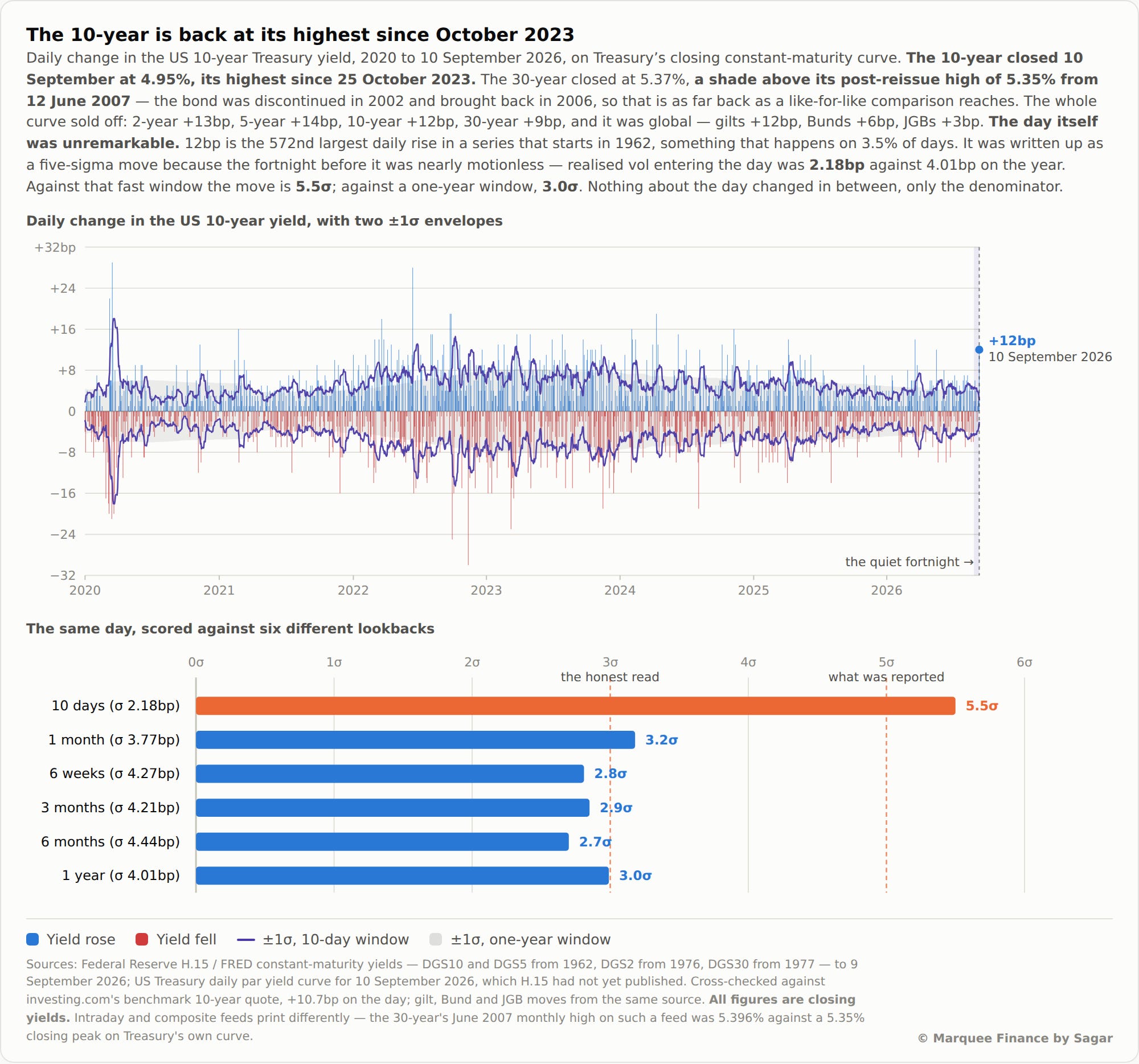
The move was chilling, especially coming hours after Bessent's “I am the house” comment.
Furthermore, Trump’s announcement of a $5000 dividend to every US citizen (adult) if Republicans win the midterms shook the bond markets.
The one All-Time High (ATH) that nobody saw coming in 2026 is the record diesel price.
Retail diesel crossed $6 per gallon this week in the US.
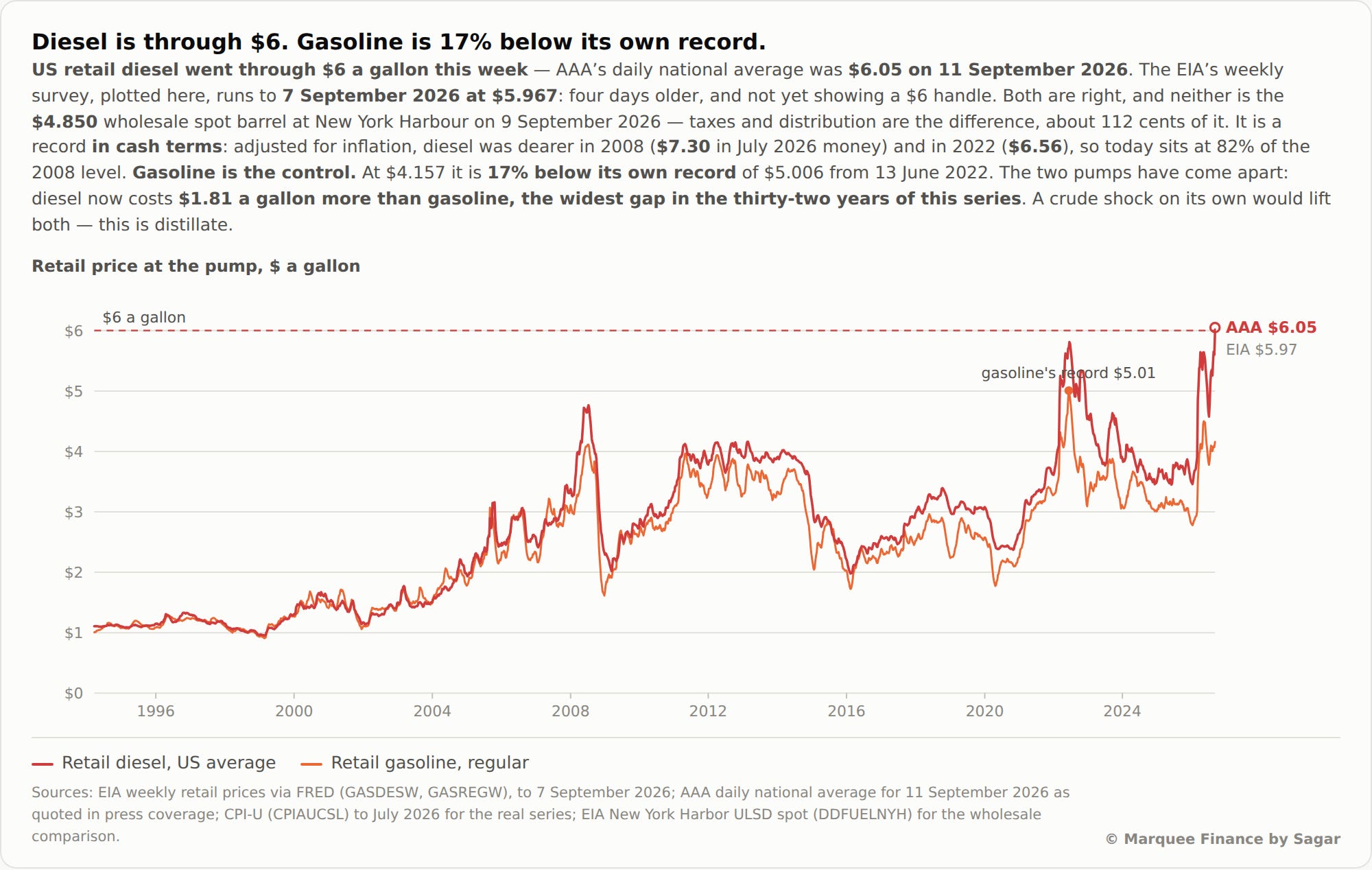
We've been warning our paid subscribers about attacks on the “global refining infrastructure” since the war broke out in the Middle East.
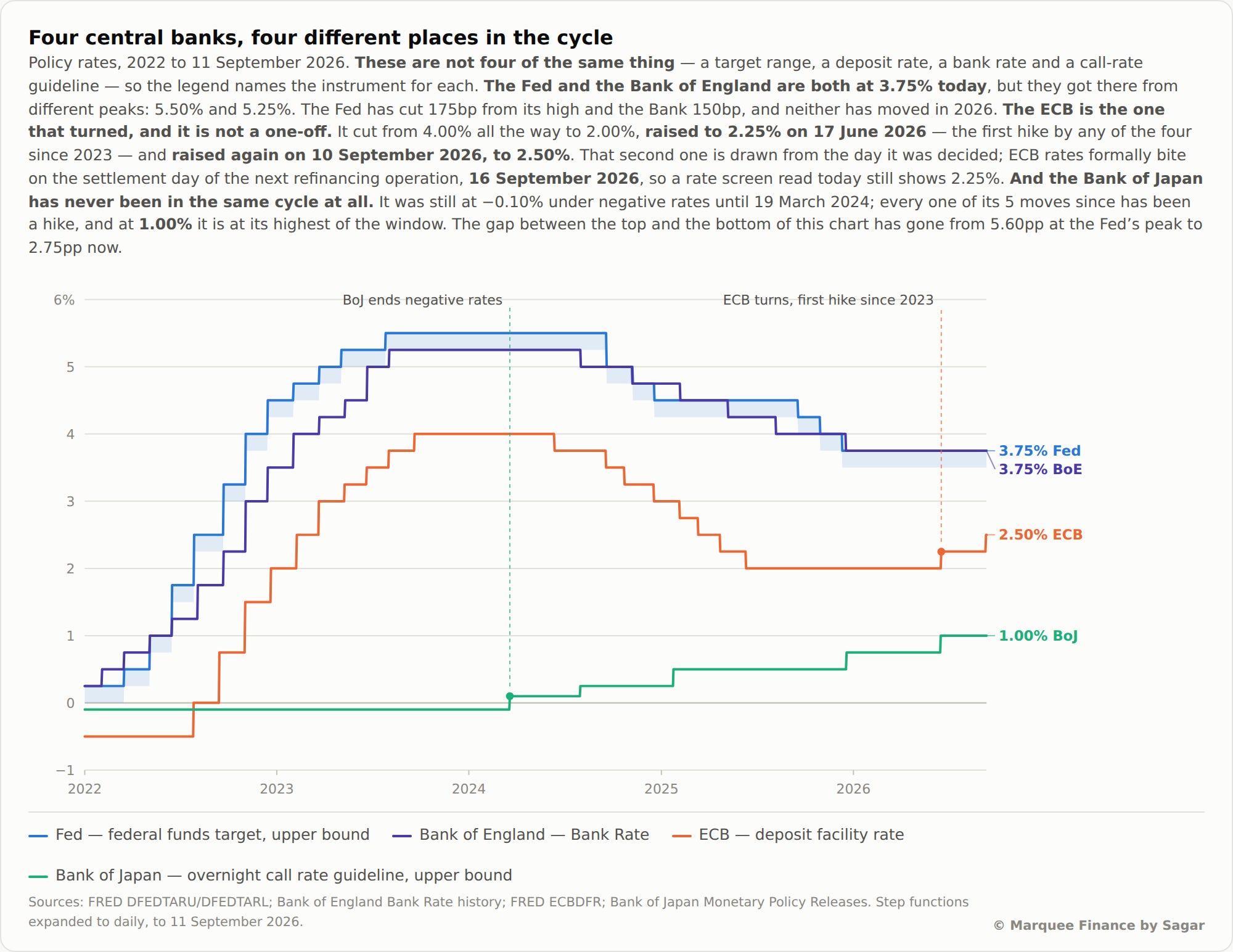
As supply shocks lead to a resurgence in global inflationary pressures, the ECB raised rates by 25 bps, and bond markets are now pricing in a significant hiking cycle for global central banks.
In the AI world, we again saw the Chinese open-source model ruining the party for the Americans.
This time it was Deepseek, which startled the world by announcing that V4.1 (it’s latest model) needs 1/4 of the HBM and 1/8 of the SSD storage; in other words, they have significantly reduced the memory and chip requirements.
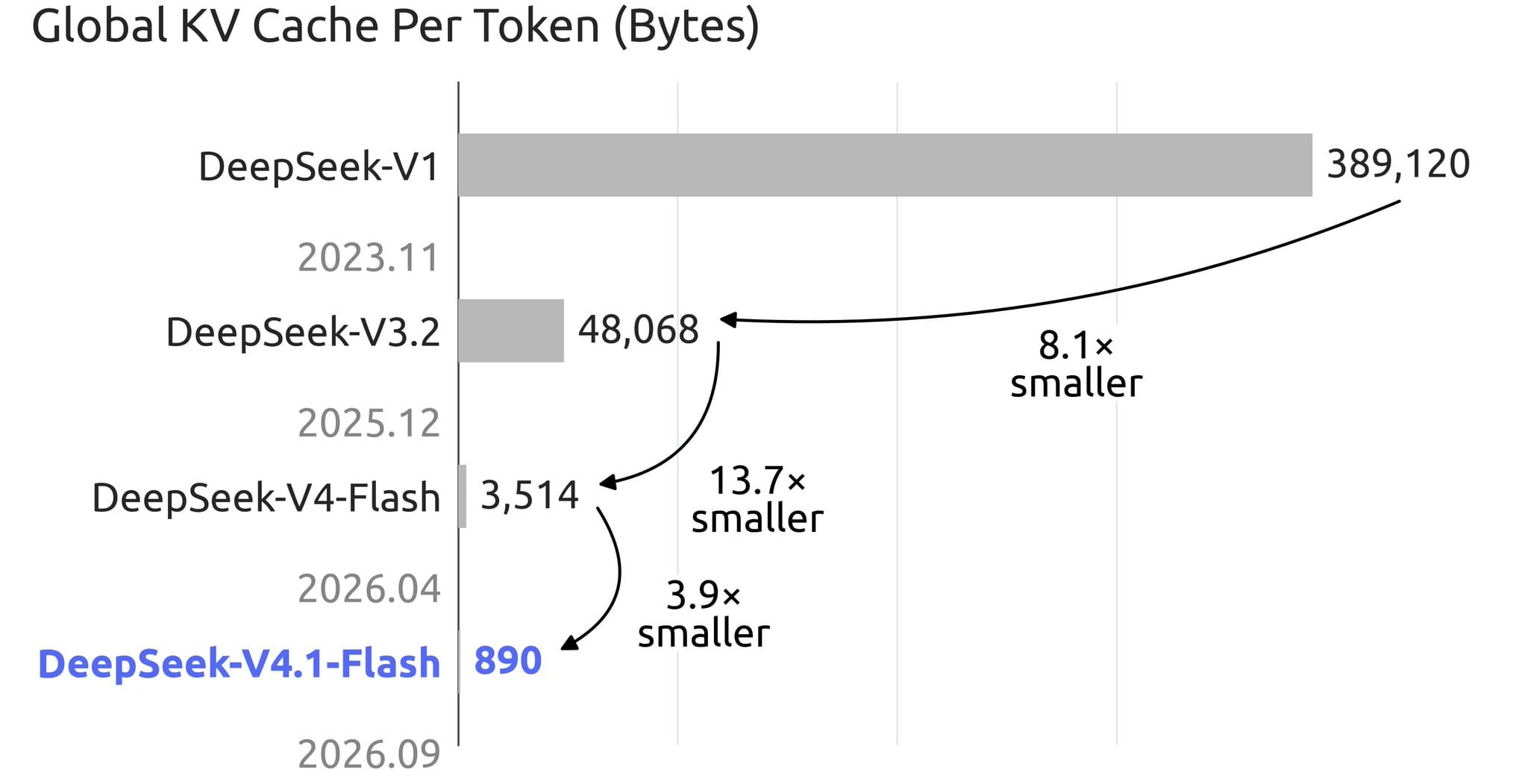
This further cements our view that the semiconductor bubble has popped. As we progress (along with rising chip production in China), chip demand will normalise and inflated semi margins will mean revert.
This week, PF took a drawdown on the chin as broader equity markets underperformed the headline indices.

In the last two years, we have had only three negative months, and we expect September to turn around as the month progresses.
Let us take a deep dive into the geopolitical and macro universe and comprehend the cross-asset moves.
US/Equities/Bonds/Oil/Dollar/Gold!
The US headline CPI came in line with expectations at 0.4% MoM, and the Core CPI came in at 0.3% MoM v/s expectations of 0.2% (rounding off, the exact number was 0.29%).
Looking at the 3-month annualised rates, the Supercore came in at 1.3%, while the core came in at 2%.
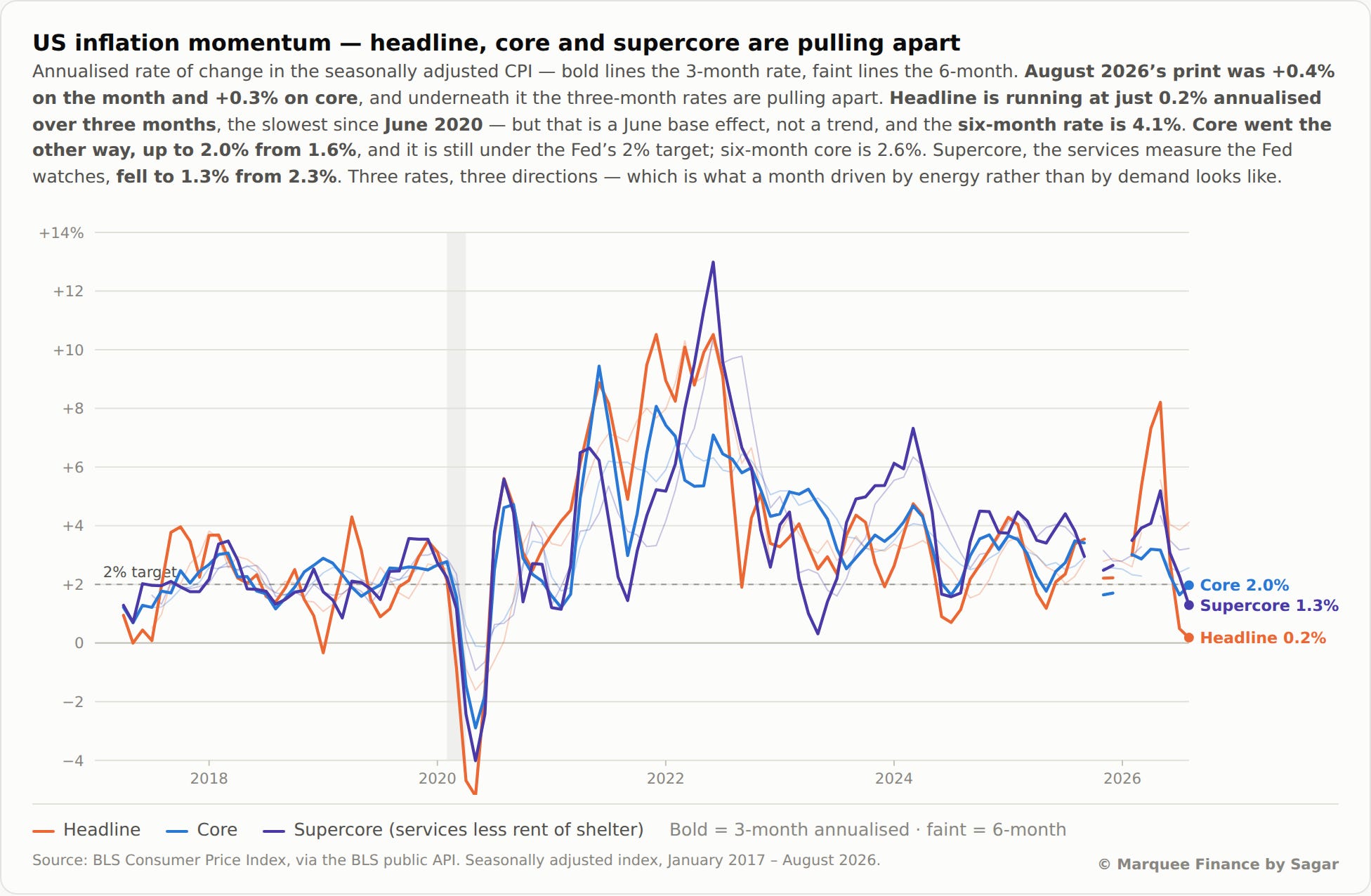
However, six-month annualised rates are trending up.
Note that CPI reports higher prices with a lag; with diesel prices shattering records, expect CPI to move higher in the coming months.
When we dig deeper, energy and airline fares added significantly to the headline CPI.
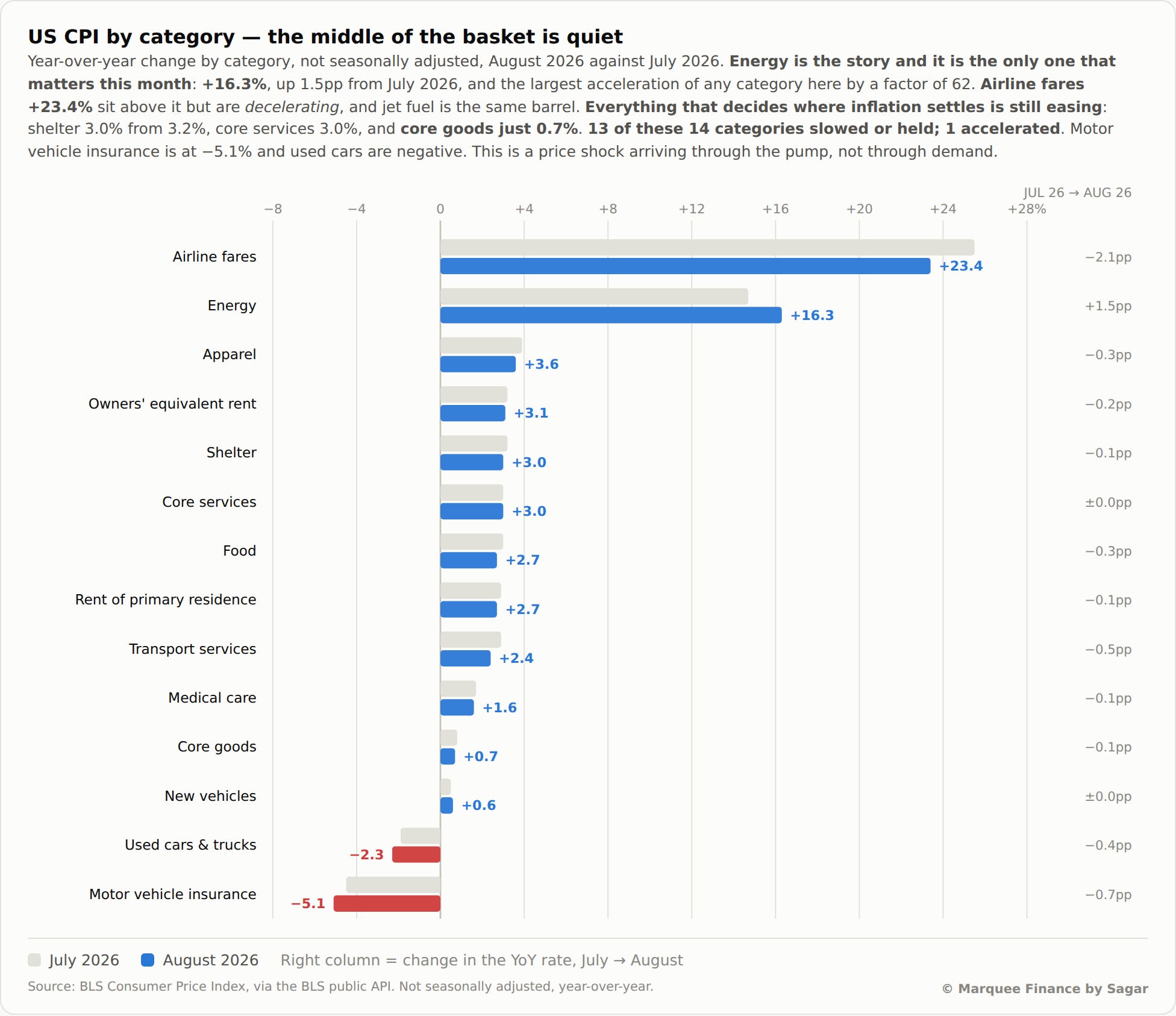
Used cars and trucks, along with Motor vehicle insurance, remain in the deflationary category.
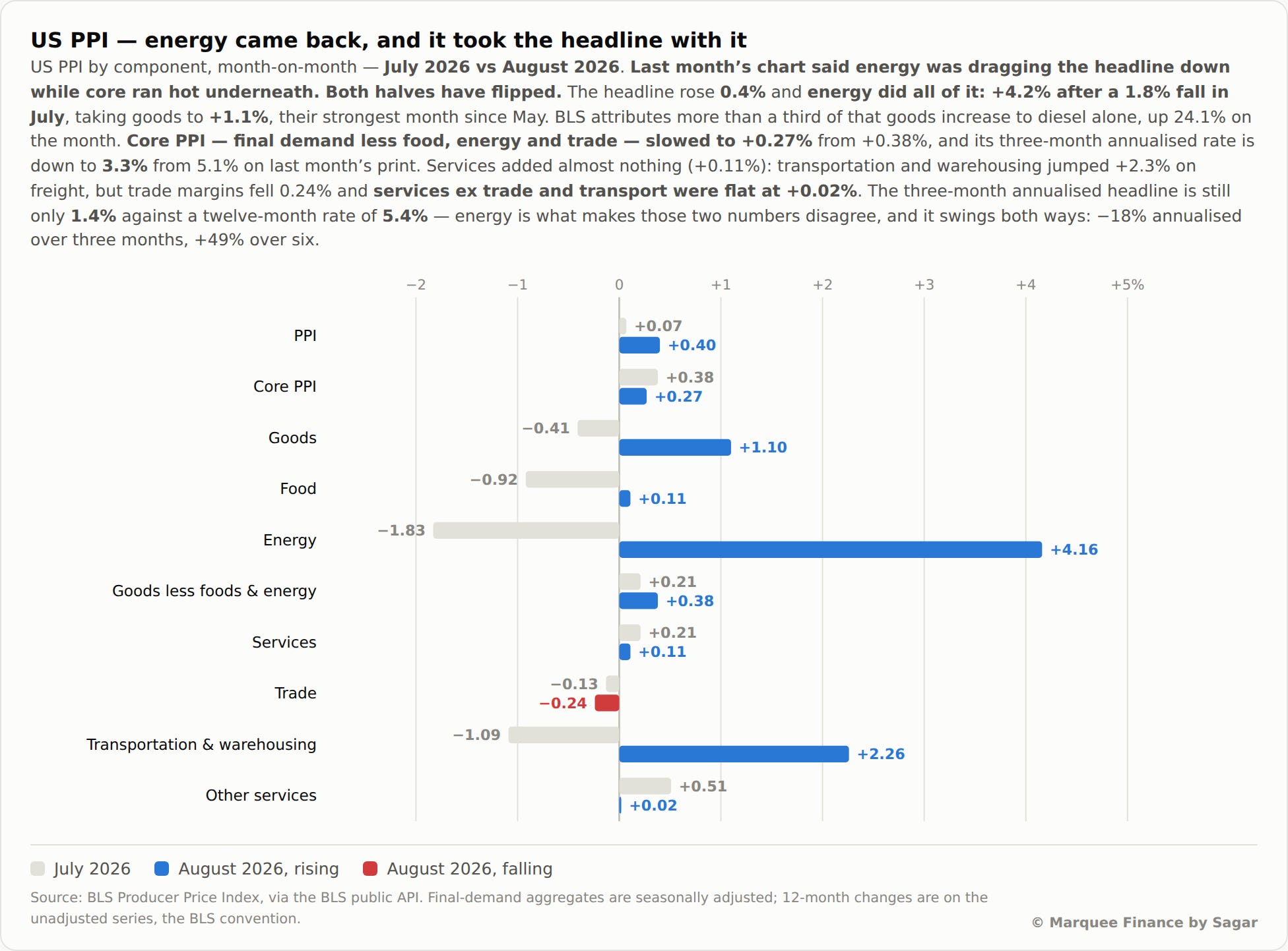
The headline PPI came in line with expectations at 0.4% MoM, and the Core PPI came in at 0.2% MoM, 10 bps lower than expectations.
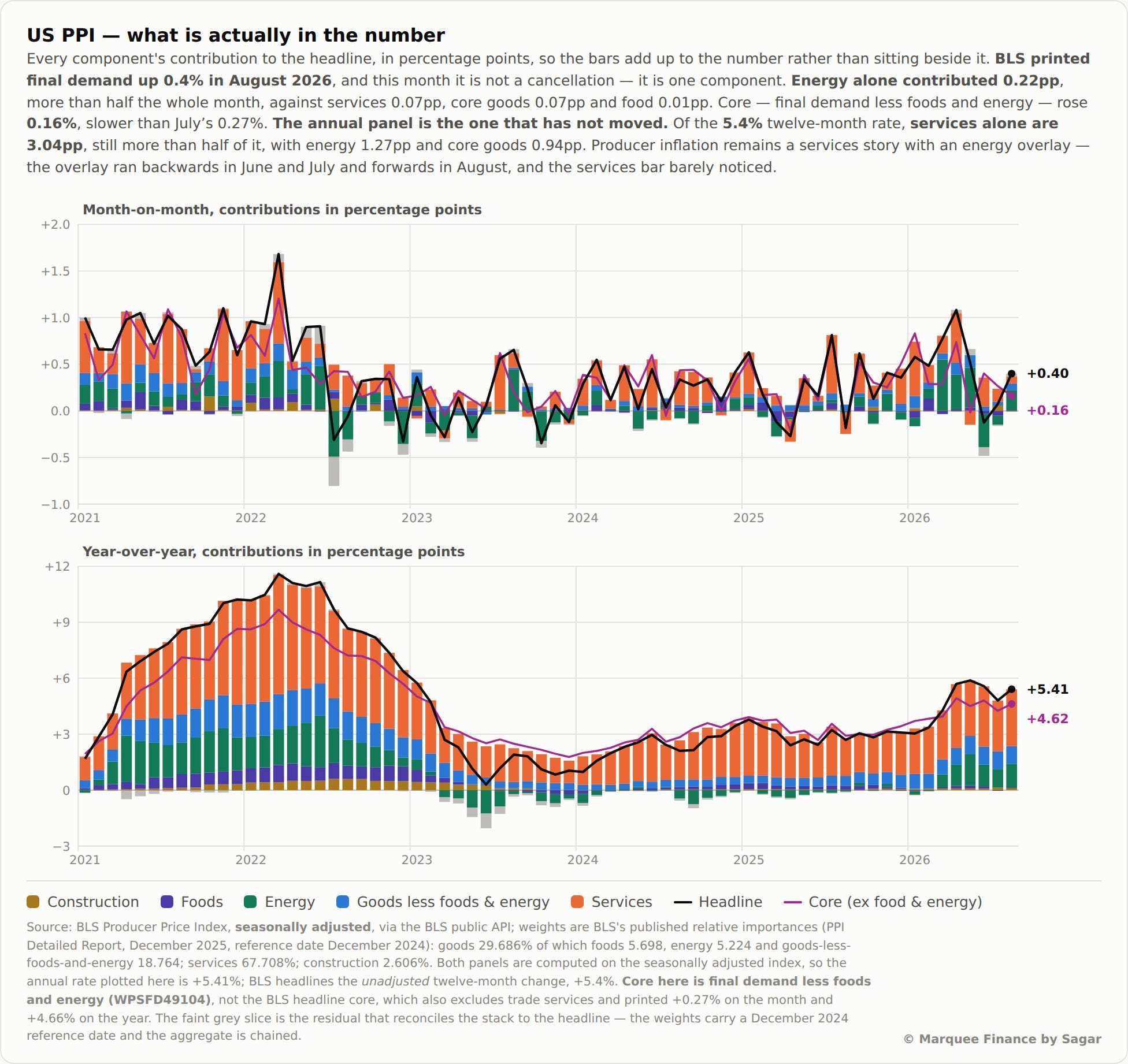
Energy continues to dominate, with more than half of the rise arising from fuel prices.
Meanwhile, goods PPI jumped more than 1.1% MoM.
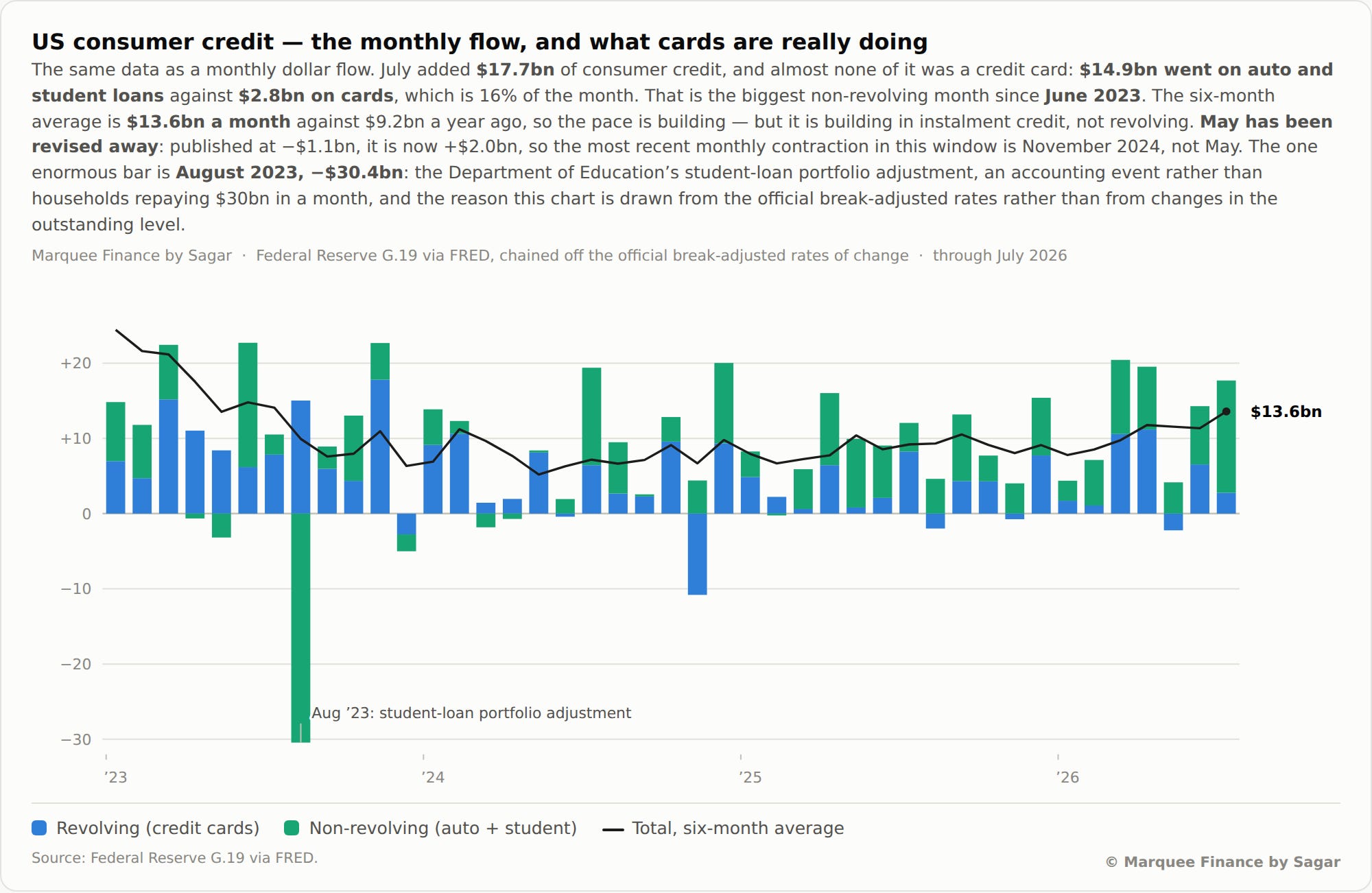
US consumer credit shattered estimates, coming in at $18.1 billion vs $11.7 billion.
While the absolute number looks enormous, the “real” change in consumer credit (inflation-adjusted) remains negative.
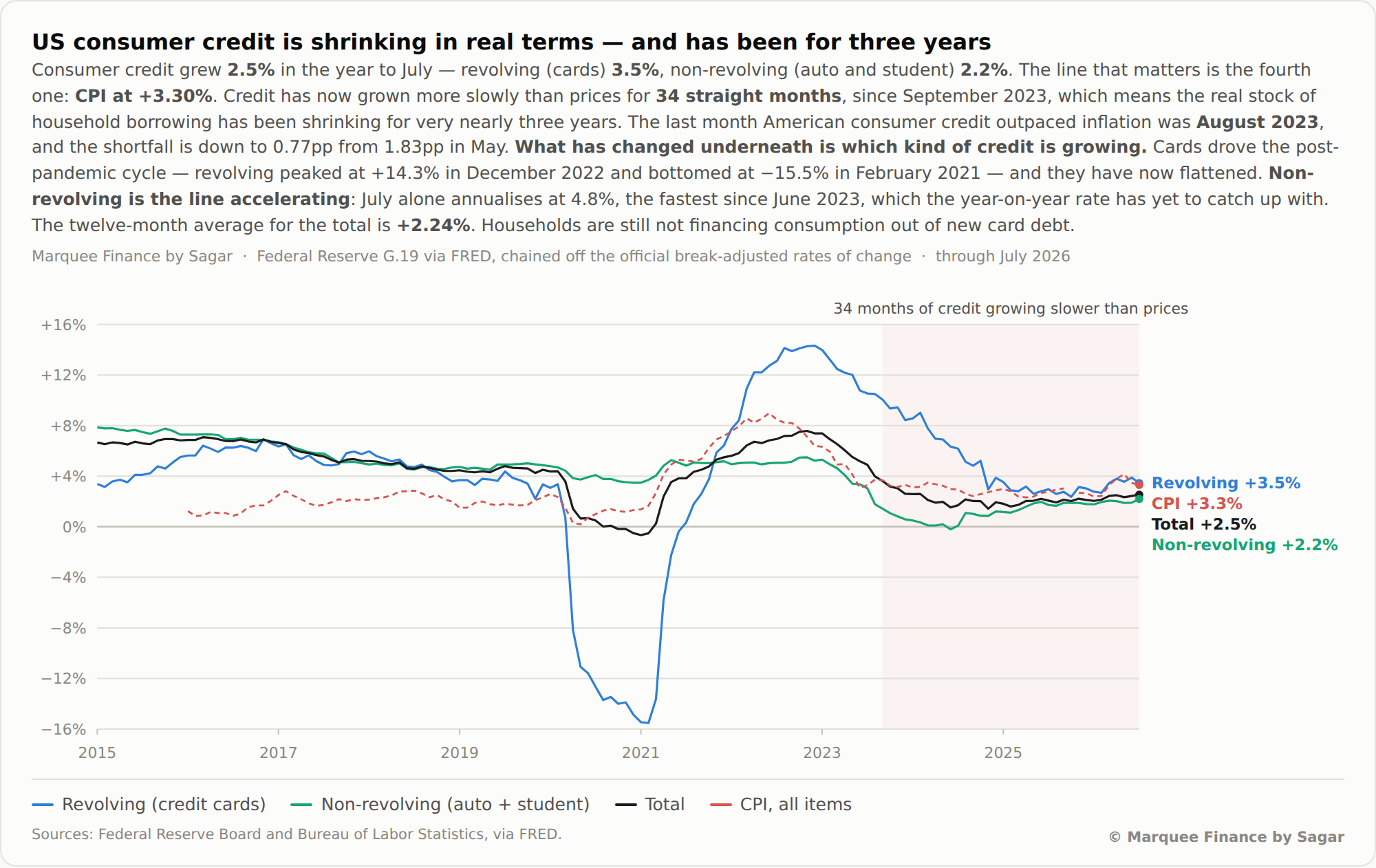
Furthermore, the growth in revolving credit (credit cards) has been subdued, and student and auto loans, aka non-revolving credit, boosted July’s number.
Equities!
Last week, we mentioned the critical level of 7620, and SPX once again defended the level.
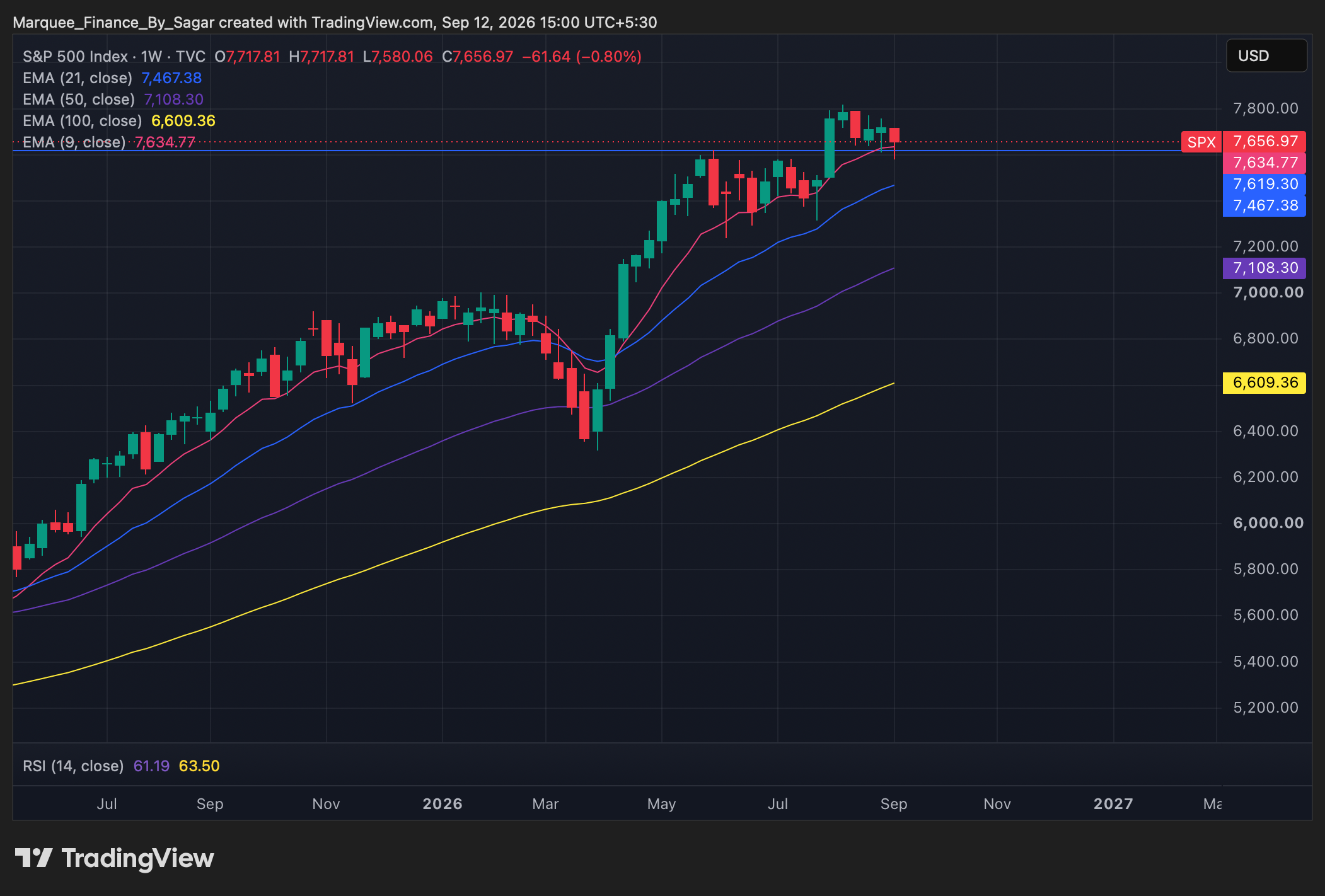
Note that we have always mentioned that