

“We removed a dose of accommodation, so that financial and credit conditions would be more consistent with our ultimate objectives.”-Kevin Warsh.
The Fed under Warsh raised rates by 25 bps, and the bond markets rejoiced for a moment.
Warsh termed the move as removing a “dose of accommodation”, and if the world’s most powerful central banker is to be believed, policy is still accommodative.
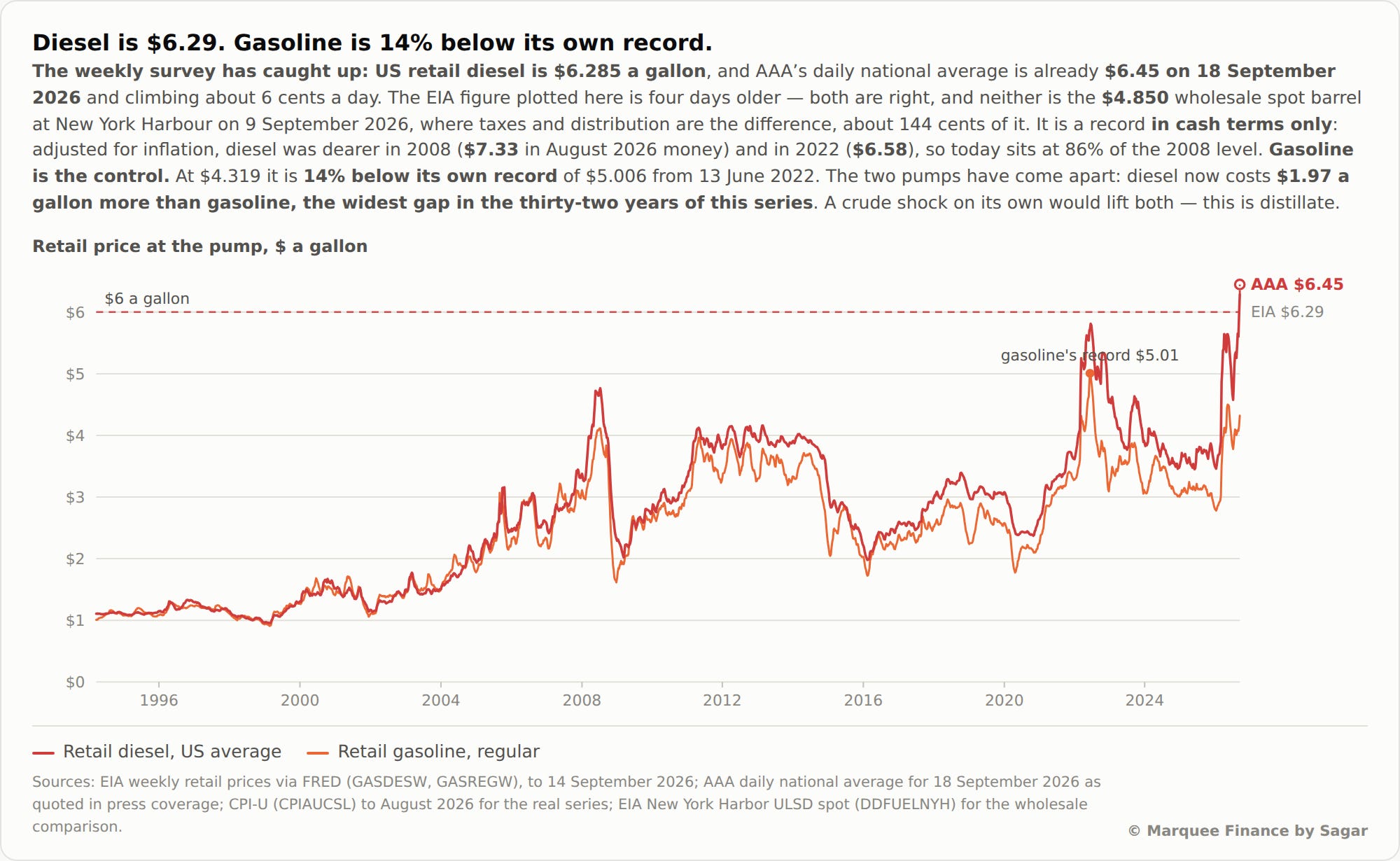
One of the biggest drivers of hawkishness is the worsening energy crisis, which will likely broaden inflationary pressures.
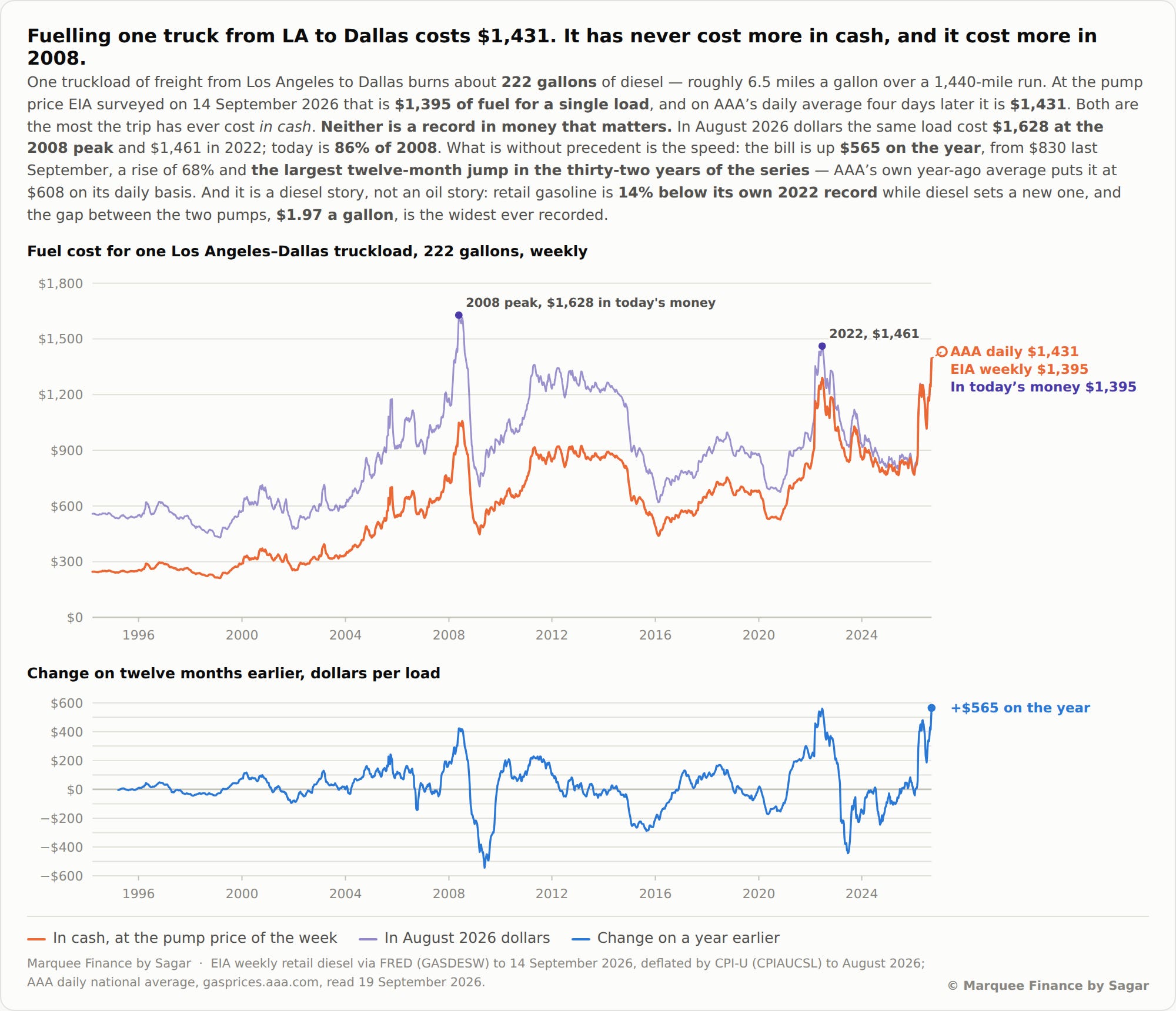
Due to skyrocketing refined product prices, freight costs are through the roof.
We are now approaching the 2008 peak, and if the situation isn’t resolved in “weeks”, we might surpass the 2008 levels.
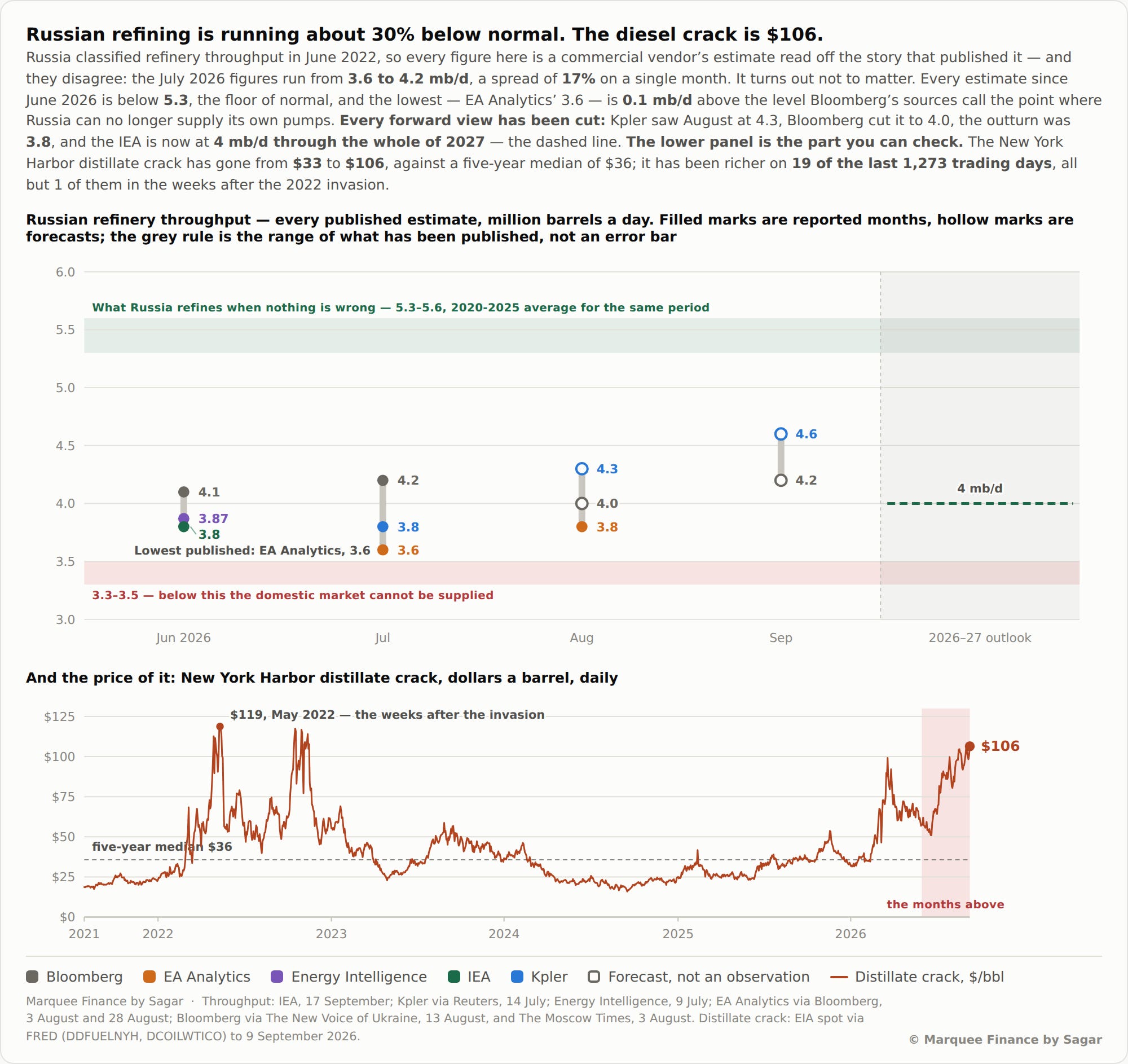
We have been mentioning the global refining crisis for months, and the situation has worsened significantly due to the Russian refining crisis.
Russia has banned diesel and gasoline exports due to the Ukrainian attacks on the refining infrastructure, which has significantly tightened the global market.
Our diversified global PF is down 2% in September, and we are now up 5.12% YTD.

Today we will take a deep dive into the monetary policies of the Fed, BoE and BoJ and comprehend the cross-asset markets.
US/Equities/Bonds/Oil/Gold/Dollar/BTC!
For those who don’t remember the day Warsh was appointed by Trump, the Silver and Gold bubble burst (31st January) as markets viewed Warsh as a hawk (markets feared a balance-sheet contraction due to Warsh’s past views).
We believe Warsh has lived up to his reputation despite some early jitters.
There was unanimous consensus on a rate hike this week, and it was the first time since 2008 that all FOMC members were the most bullish on growth prospects.
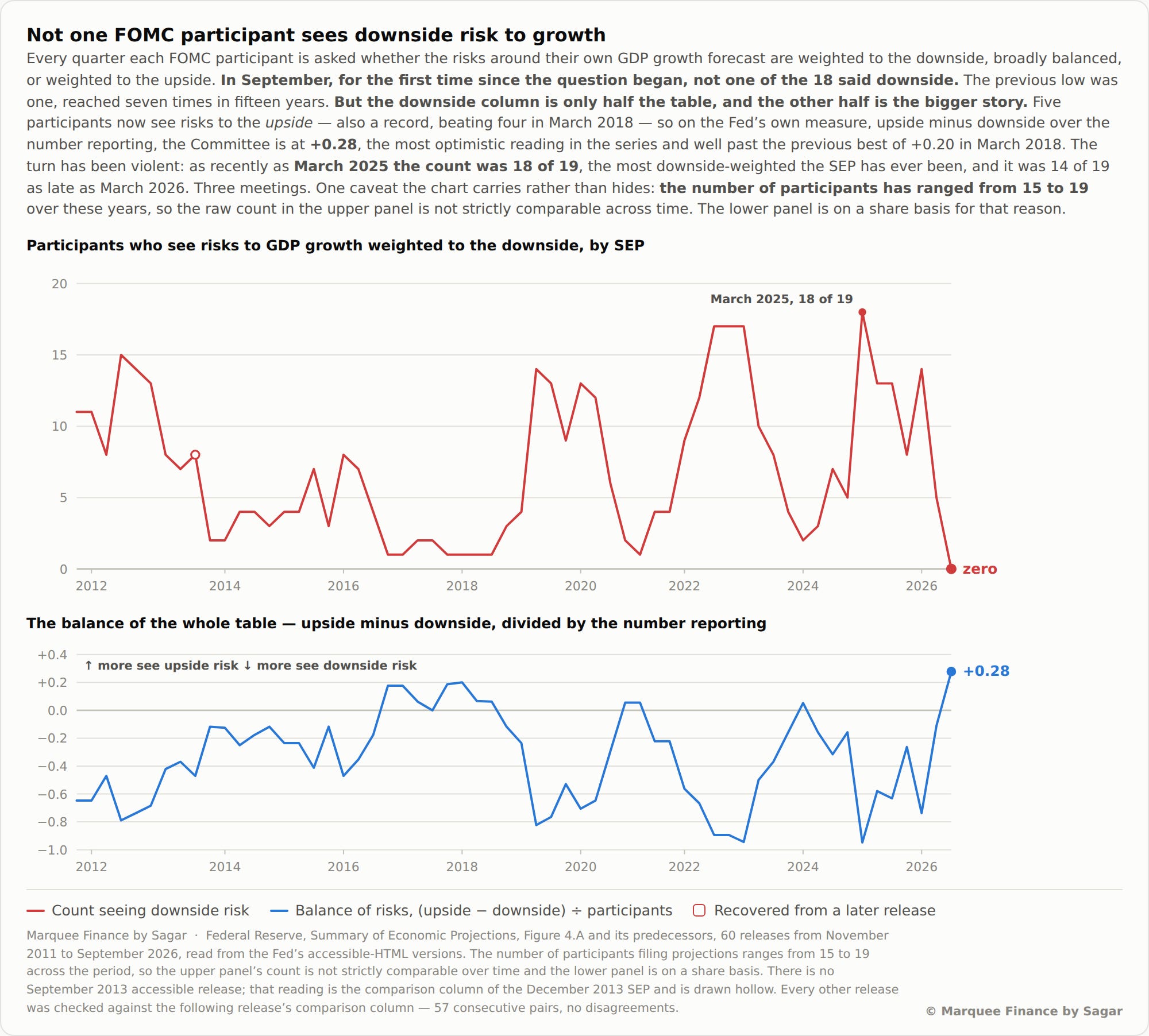
This was also reflected in the SEP projections, as the Fed raised real GDP projections by 10 bps.
Real GDP is expected to rise 2.3% this year and 2.4% next year.
Total PCE inflation is projected to run at 3.7% this year and fall to 2.3% next year.
The unemployment rate holds steady at about 4.1%.
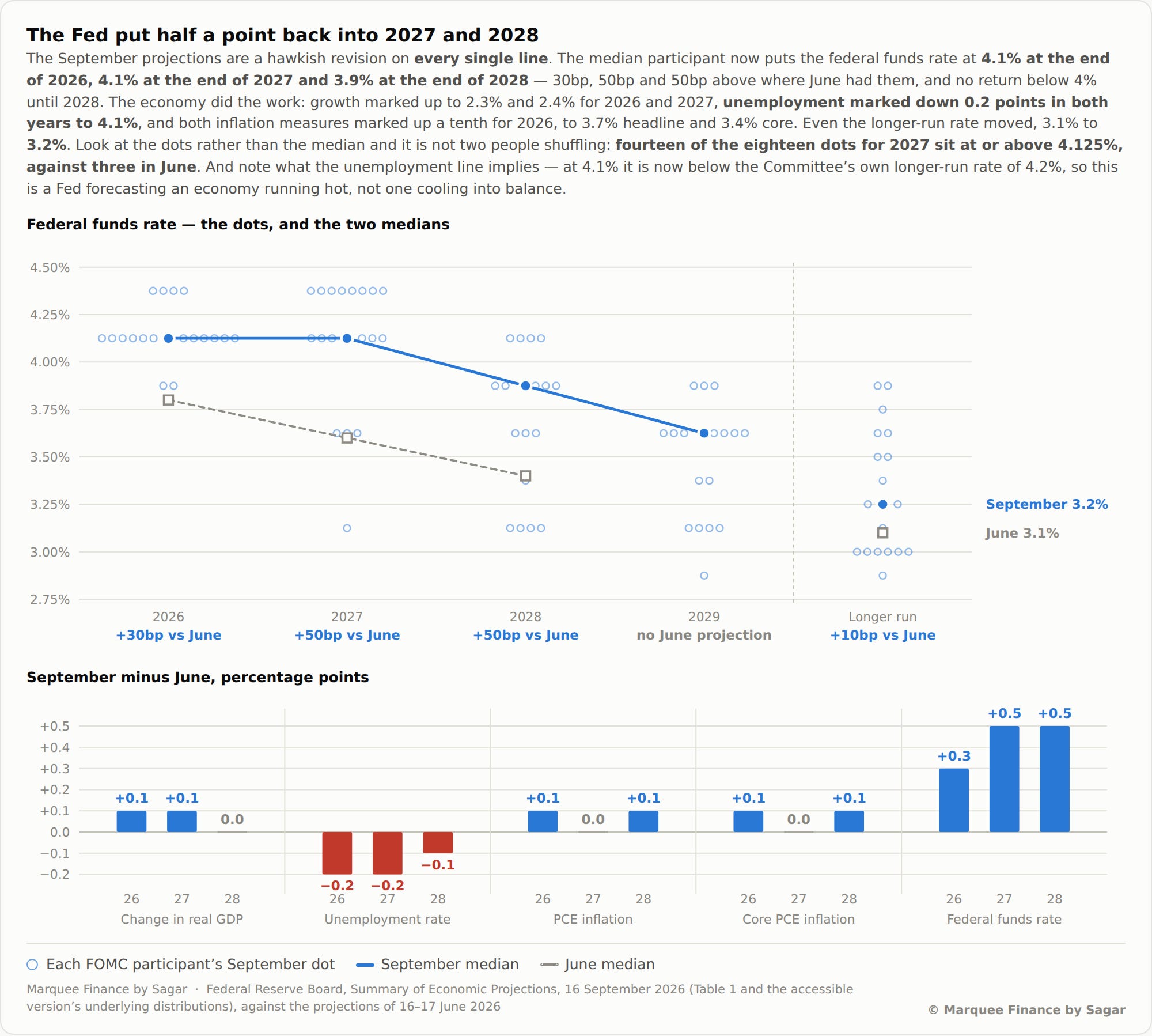
Furthermore, the median dot now indicates 50 bps of more tightening than the last SEP as inflation remains sticky.
We have been closely monitoring the long-run FFR, which was further raised by 10 bps to 3.2%.
This means that, due to structural changes (demographics, geopolitics, fiscal mess, etc.), the Fed expects neutral to be higher than it was a decade ago.
The presser was an eye-opener, as Warsh explicitly raised concerns about inflation.
“Don’t have second and third order effects in the economy.”
“So, our predominant focus is on the price-stability side of our mandate. The plain fact is that inflation is too high and has been for too long.”
“Too many categories are still posting increases above 3 percent, on both a 6- and 12-month basis.”
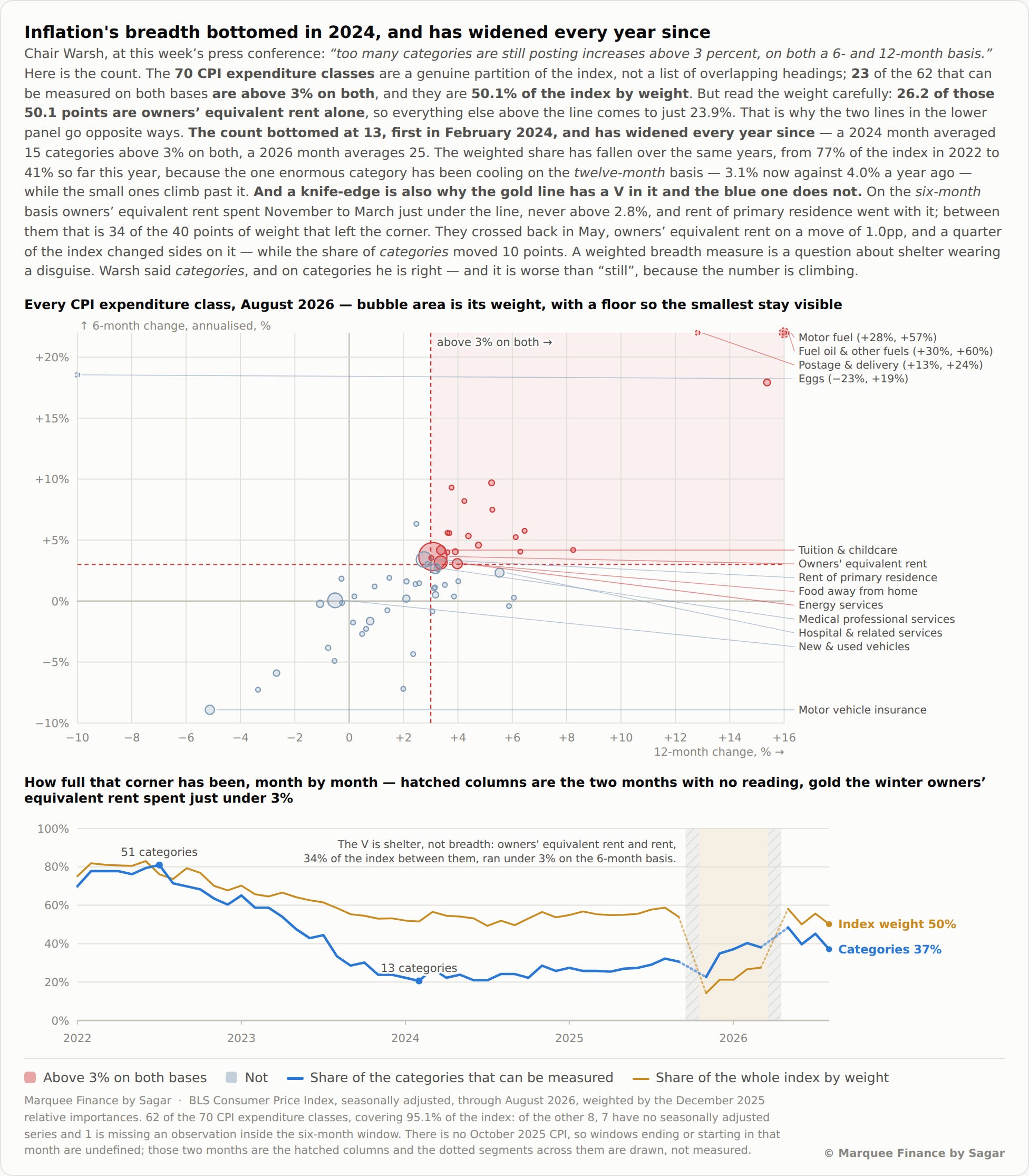
In the last 18 months, we have seen various shocks which have exacerbated the inflation problem.
First, it was the tariff-led shock, and now it’s the war-led supply shock, which has driven diesel prices (and other product prices) to extremely high levels.
If the prices remain at current levels for a few more weeks, we will see higher prices reflected across both goods and services.
Some market participants expected Warsh to announce SEP redundant; however, no decisions have been taken yet, and we were pleasantly surprised that Warsh is a man of principles and hope he will adhere to them.
“I’m not going to pre-judge any future decisions we make. You might have heard me say in Jackson Hole, I committed to a discipline, a set of principles.”
We have always believed that in macro, the trend matters, and one should not extrapolate from a single data point or reading.
“I was not waiting breathlessly on what any particular data was, whether it was retail sales this morning, or a CPI print last week. I’ll just reiterate, trends matter.”
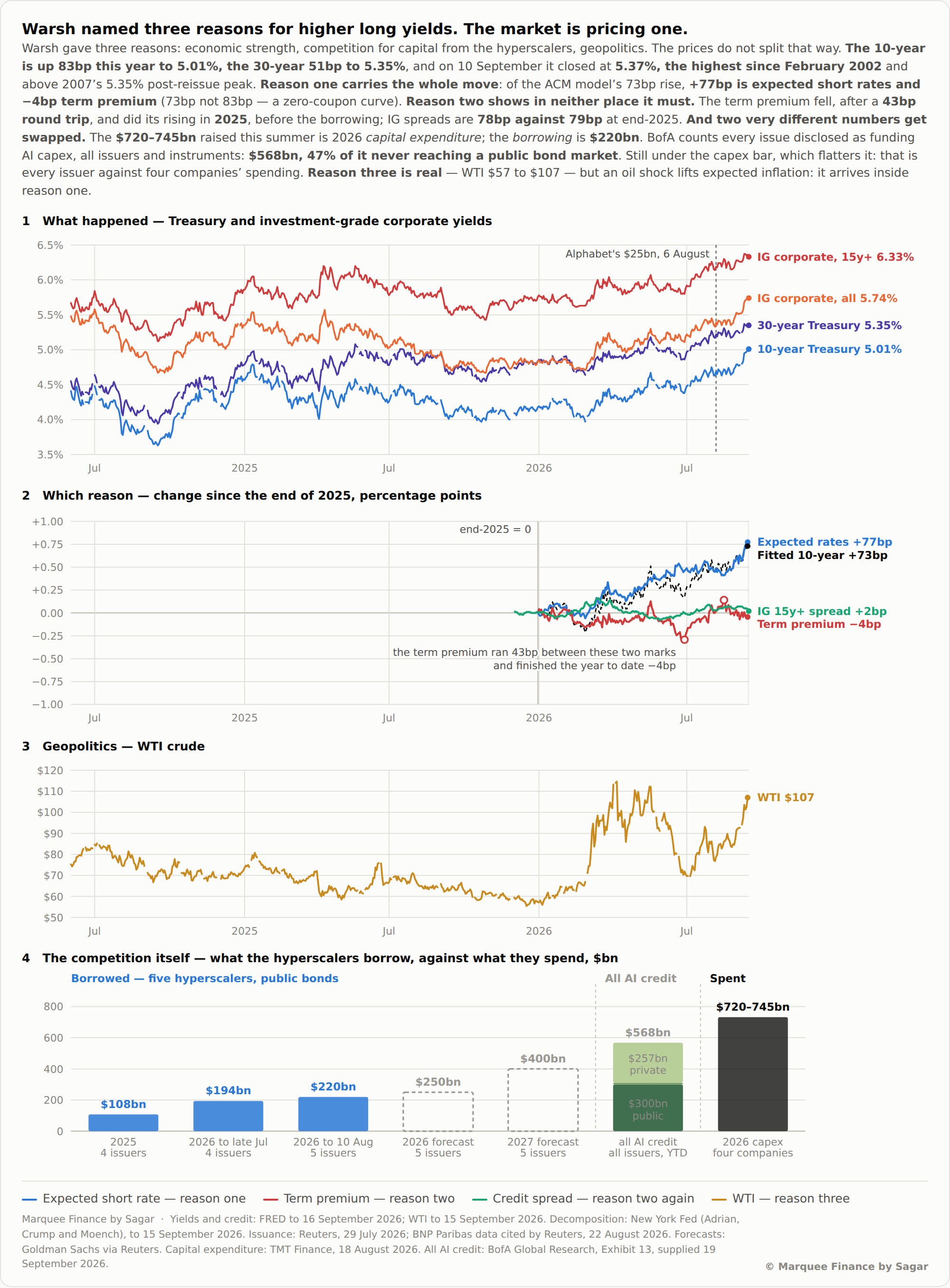
Warsh mentioned three reasons driving yields higher.
I’ll say three things, first is economic strength. Part of the reason why we’ve seen over the course of 2026, long-term yields go up is the economy is strengthened.
Second reason, competition for capital. The surge in capital expenditures, which I referenced in my remarks, is real, and the so-called hyperscalers are out in the market raising funding, and so the competition for capital is real and I think it partly explains the increase in yields.
The third, is geopolitics.
Overall, we believe the Fed did what was appropriate.
If inflation driven by higher fuel prices continues to broaden (second- and third-order effects/deanchoring of inflation expectations), we expect the Fed to hike without hesitation.
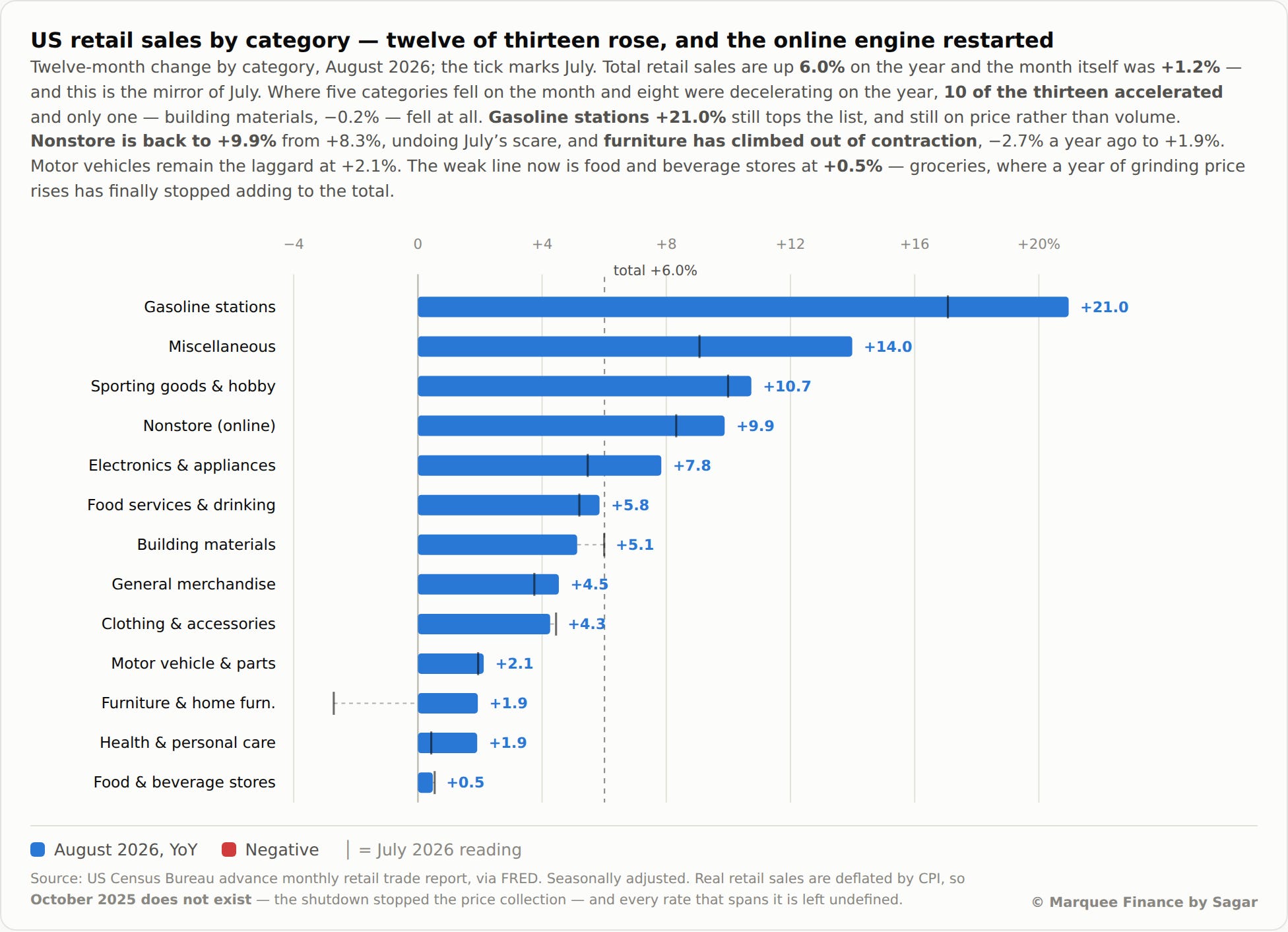
US retail sales came in higher than expectations with a 6% YoY rise (1.2% MoM v/s exp 0.8% MoM).
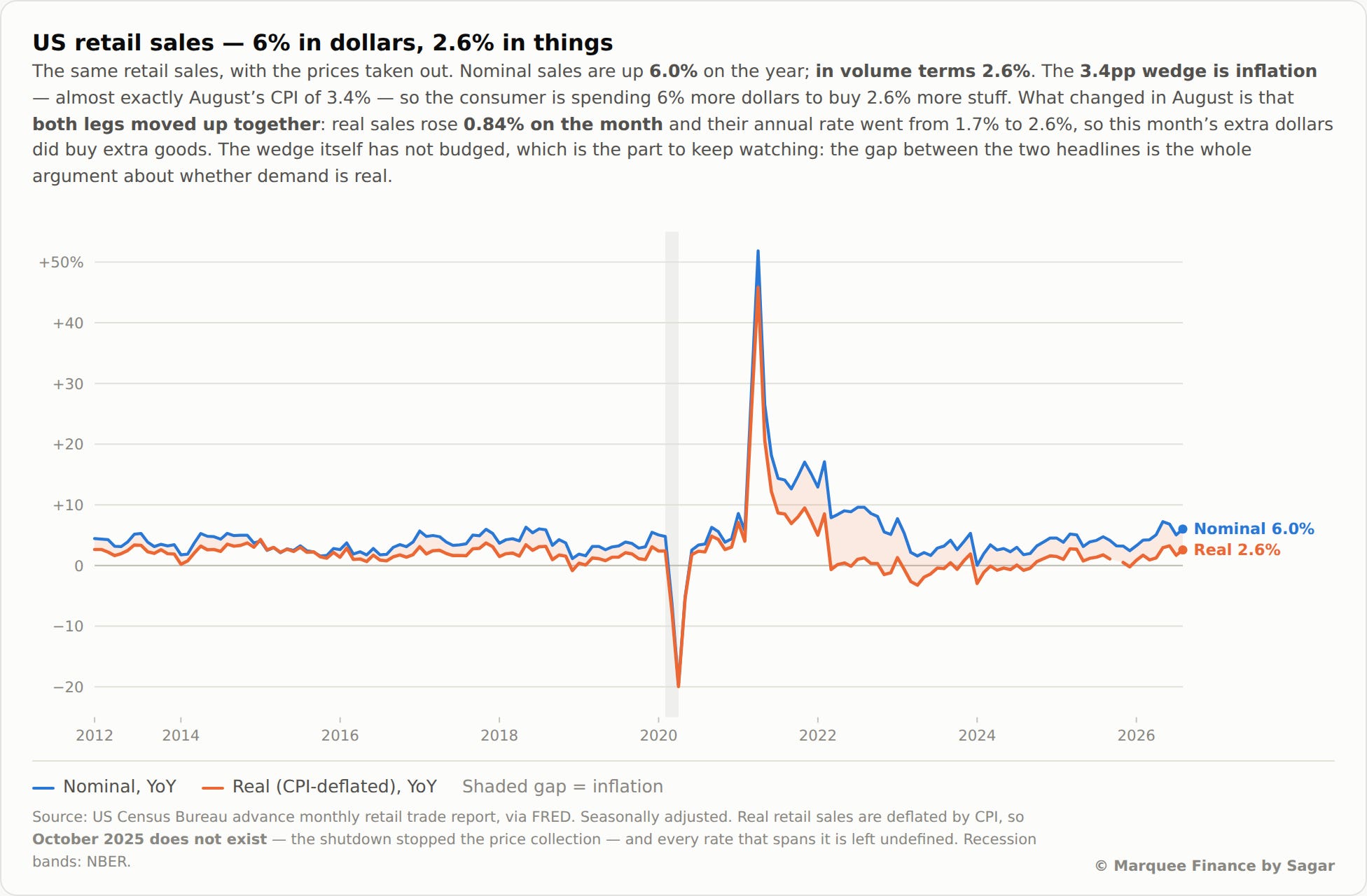
Retail Sales Ex-Auto came in at 1.4% MoM v/s exp 0.6% MoM, and Retail Sales Control Group came in at 1.4% MoM v/s exp 0.5% MoM.
When we dig deeper, gasoline stations led the rise.
The only laggard was building materials (weak housing), which came in at -0.2% MoM.
Equities!
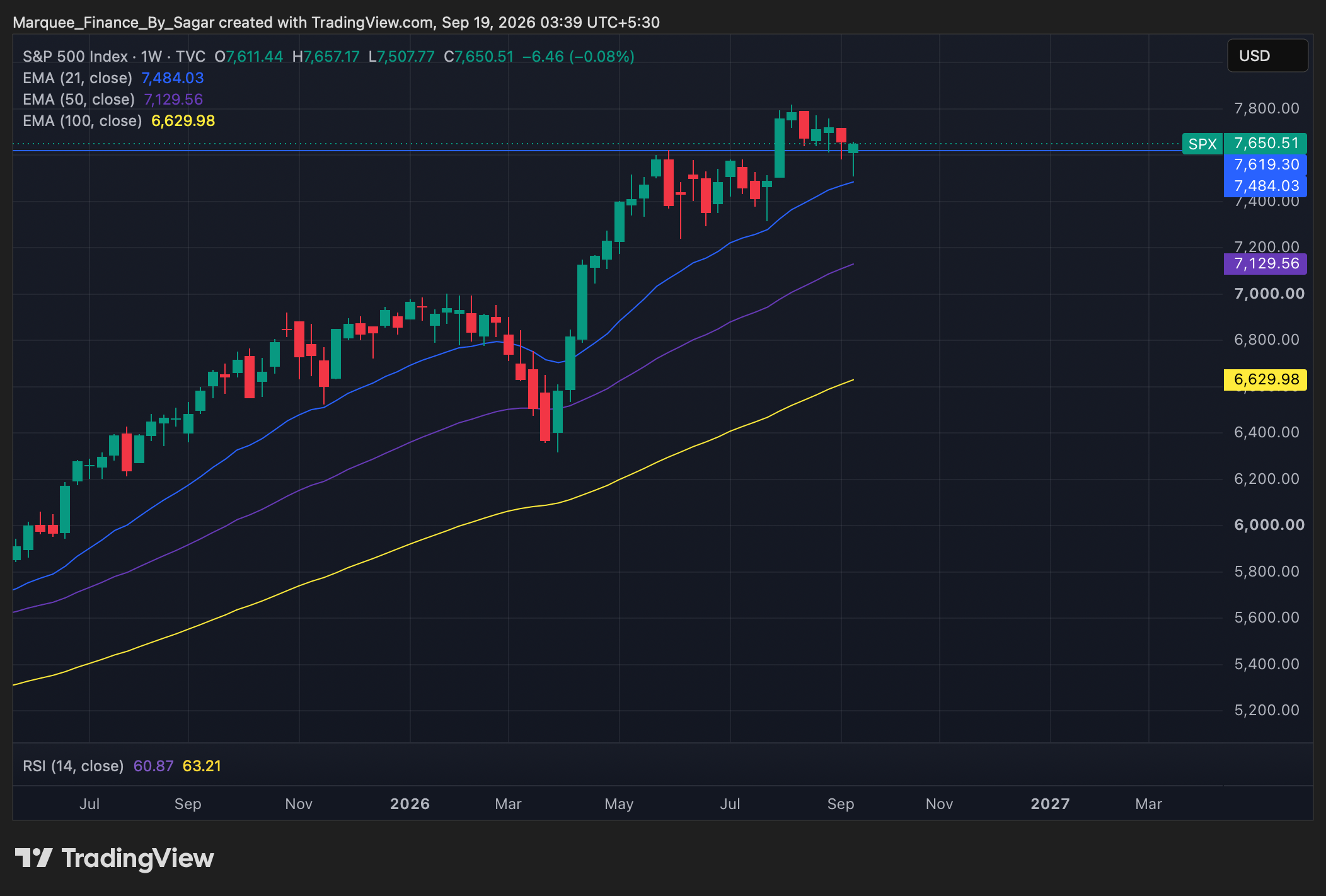
SPX!
SPX rebounded off the strong support at 21 WEMA and closed the week above the key support level of 7620.
Nonetheless, one striking market internal metric is flashing a warning sign.