

“Instead of just repeating or echoing what we’re saying back to us, they’re giving us somewhat, not perfect, their own judgment.”-Kevin Warsh.
It was an unprecedented week marked by chaos on Wall Street and a disaster at the FOMC.
Kevin Warsh, who was supposed to be “hawkish”, is turning out to be an epic failure.
The Fed had been communicating with markets in a subtle way post-GFC, and thus the element of certainty had been baked into markets despite overall uncertainty marked by trade wars, geopolitical tensions, and murky domestic politics.
Warsh has decided to do a complete overhaul, which entails broken communication, fewer Fed meetings, and “letting” the markets judge the Fed’s reaction function based on economic data.
We will discuss Fed policy in detail later.
Wall Street witnessed chaos this week as the 24-year-old Leopold Aschenbrenner’s Hedge Fund, “Situational Awareness”, blew up and all the “leveraged” positions were liquidated in a single block.
We modelled the fall of Situational Awareness. At the end of June, the hedge fund had $40 billion and ran a gross leverage of 400% in its L/S portfolio.
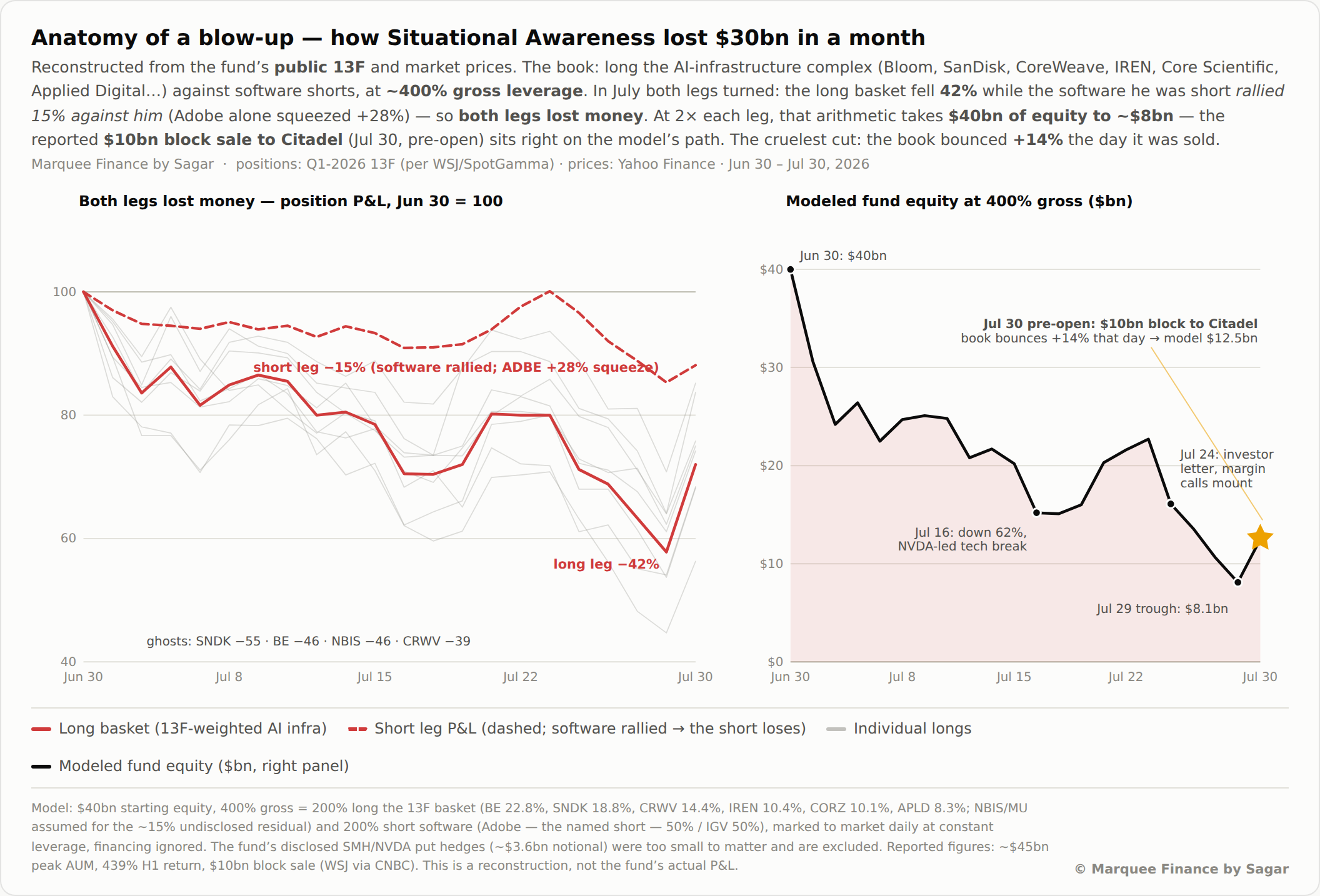
According to our model, on 29th July, the fund had just $8 billion left, wiping out $32 billion, led by losses of 42% in the long leg and 15% in the short leg.
Poor risk management is evident, as the fund didn’t close the positions while down 62% on 16th July, per our model.
Notably, this will be the first time in history that a big HF blew up despite calmer headline indices (SPX down just 2% from the top and VIX below 20). This indicates that the whole AI rally was running on extreme leverage.
We updated the July momentum rout, and the results are astonishing.
Only four months since 2000 were worse: Jan 2001, Nov 2002, Apr 2009, and Jan 2023 for momentum unwind; the momentum crash was the 13th-largest ever (since 1927).
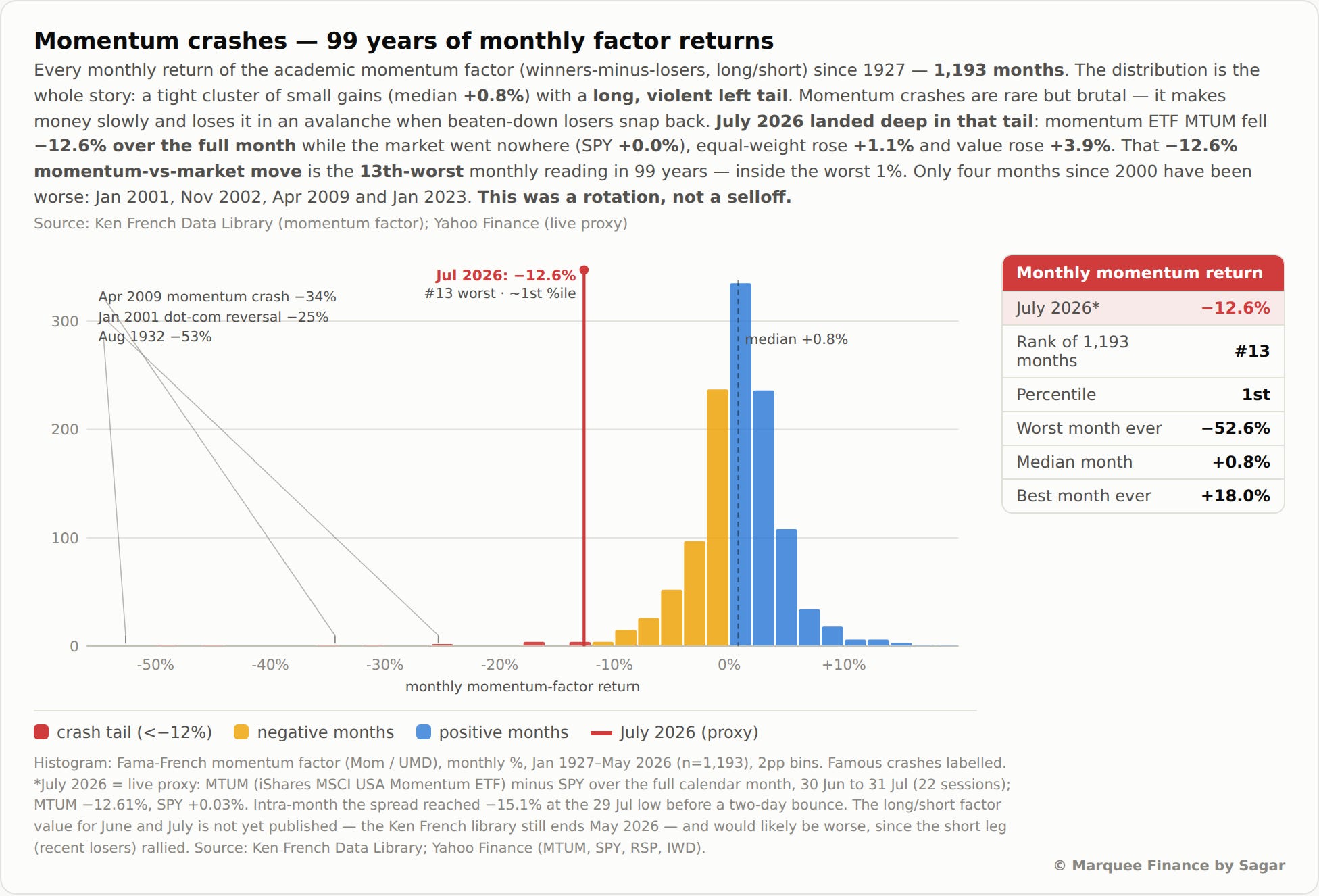
Despite a -12.6% cut in MTUM, RSP was up +1.1%, and value rose 3.9%, indicating a gigantic rotation in the markets.
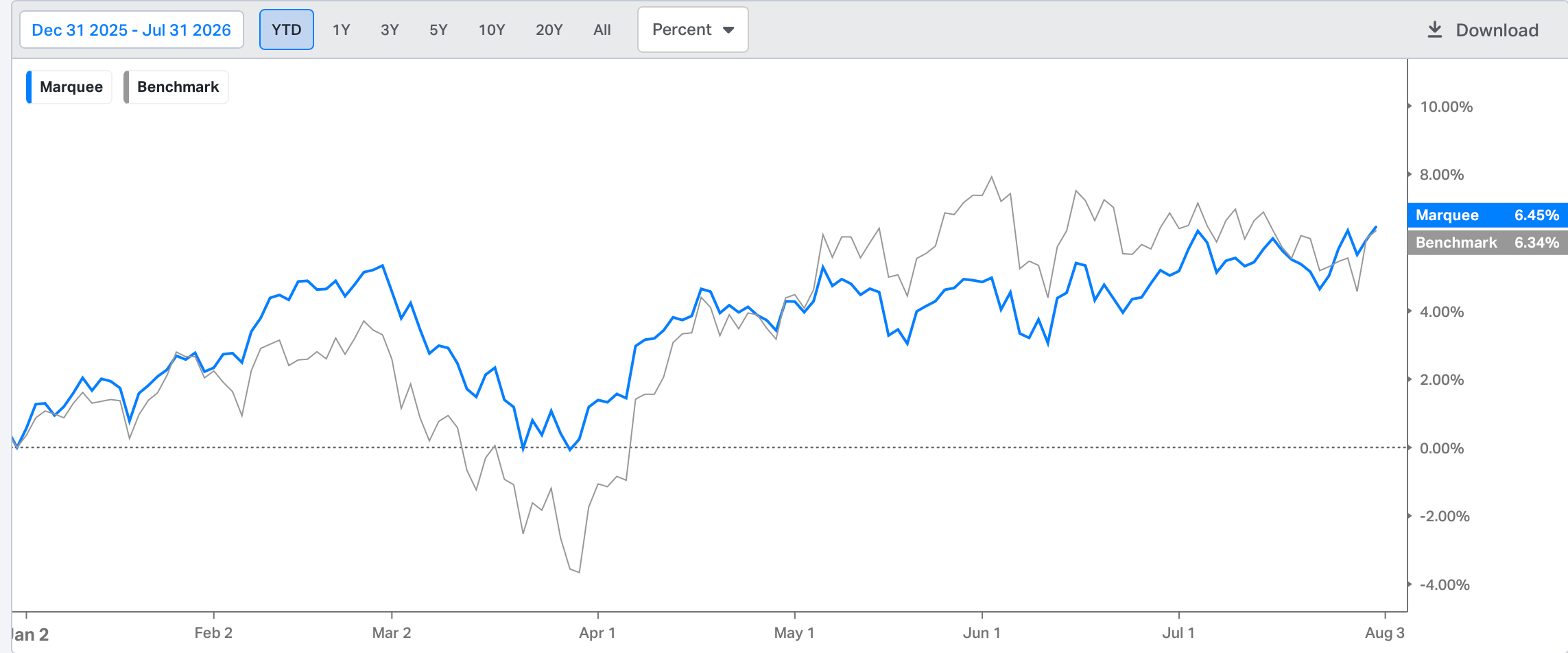
As promised, we are now outperforming the benchmark by 11 bps. In fact, during the semis meltdown this week, we were outperforming the benchmark by 100 bps at one point.
We closed at YTD highs yesterday with a 6.45% return compared to 6.34% for the benchmark.
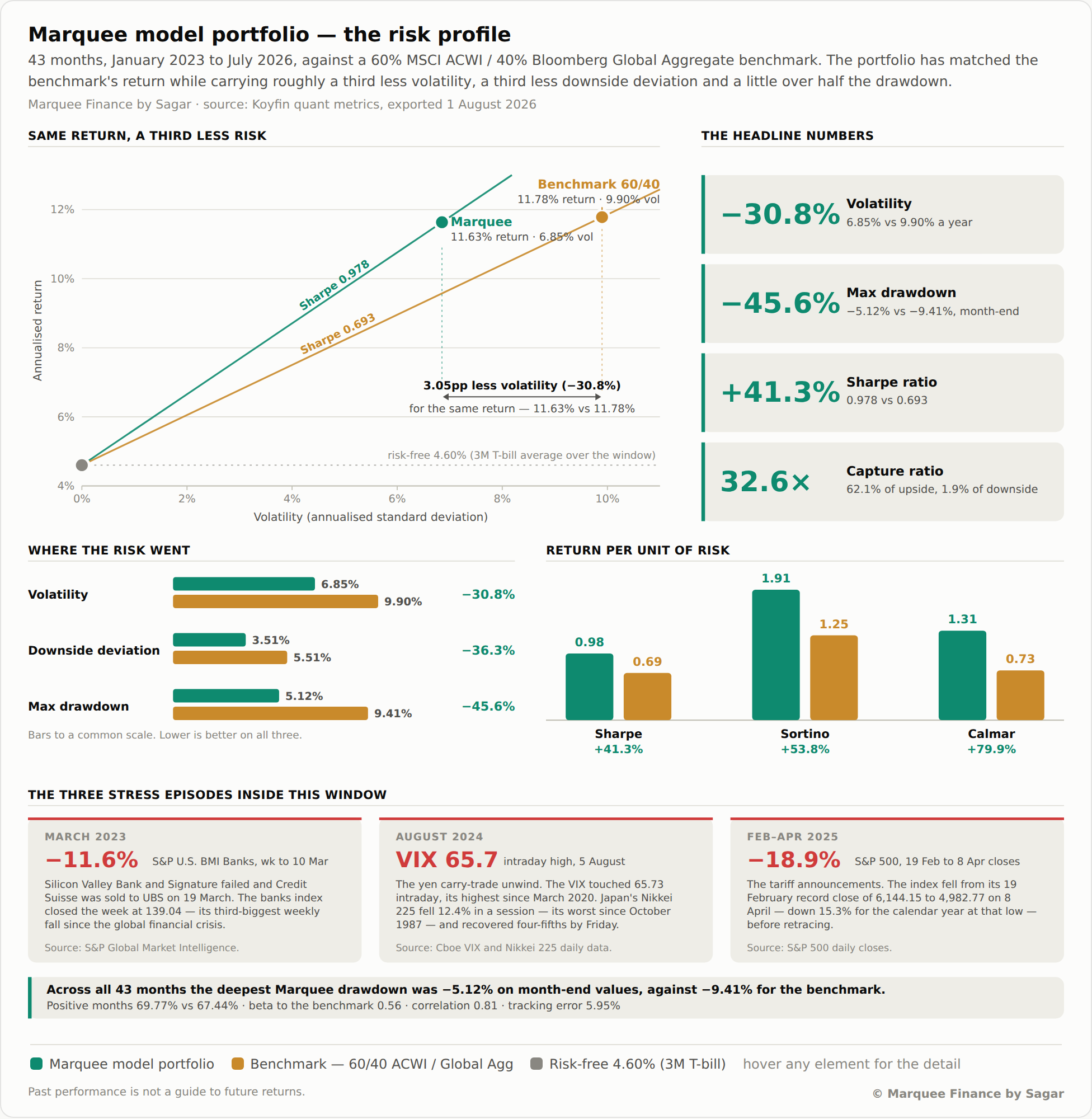
Considering what happened on Wall Street this week, we have always maintained prudent risk management.
As a result, we have avoided major drawdowns in the past 3.5 years (since the inception of the PF) and have a significantly superior risk profile compared to the benchmark.
PS: We are announcing a price increase for our subscription plans, driven by significant new features and upcoming updates. Starting August 15th, the monthly plan will increase from $ 29.99 to $ 39.99, and the annual plan will increase from $ 299.99 to $ 399.
Existing subscribers will “NOT” see any changes and will remain on their current plans.
US/Equities/Bonds/Oil/Dollar/Gold!
The Fed’s preferred inflation gauge has been the PCE (which will likely change as per Warsh).
For the first time since June 2020, headline PCE deflated MoM in June. It came in at -0.1% MoM, meeting expectations, and the core PCE came in at +0.1% MoM, missing expectations by 10 bps.
Lower gasoline prices MoM were the reason for the fall.
Nonetheless, the YoY numbers were hot, with Core PCE remaining elevated at 3.29% YoY.
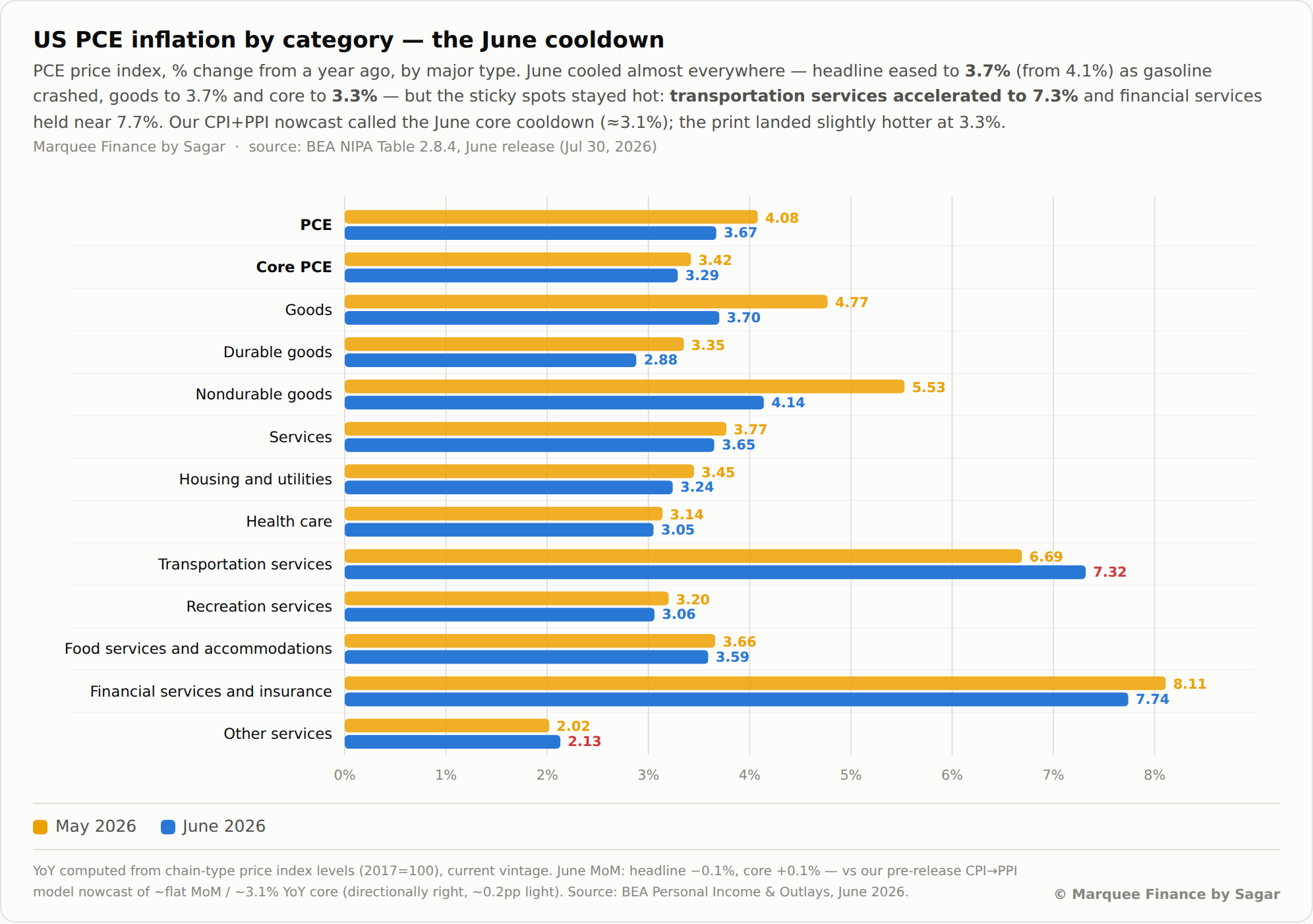
When we break down the PCE into components, we understand the reasons for the three dissents at this week’s FOMC.
The acyclical PCE has zoomed past the cyclical PCE to 3.45%, a rare event.
This also indicates the supply-side pressures we have been witnessing since Trump’s inauguration (tariffs, geopolitical tensions, etc.).
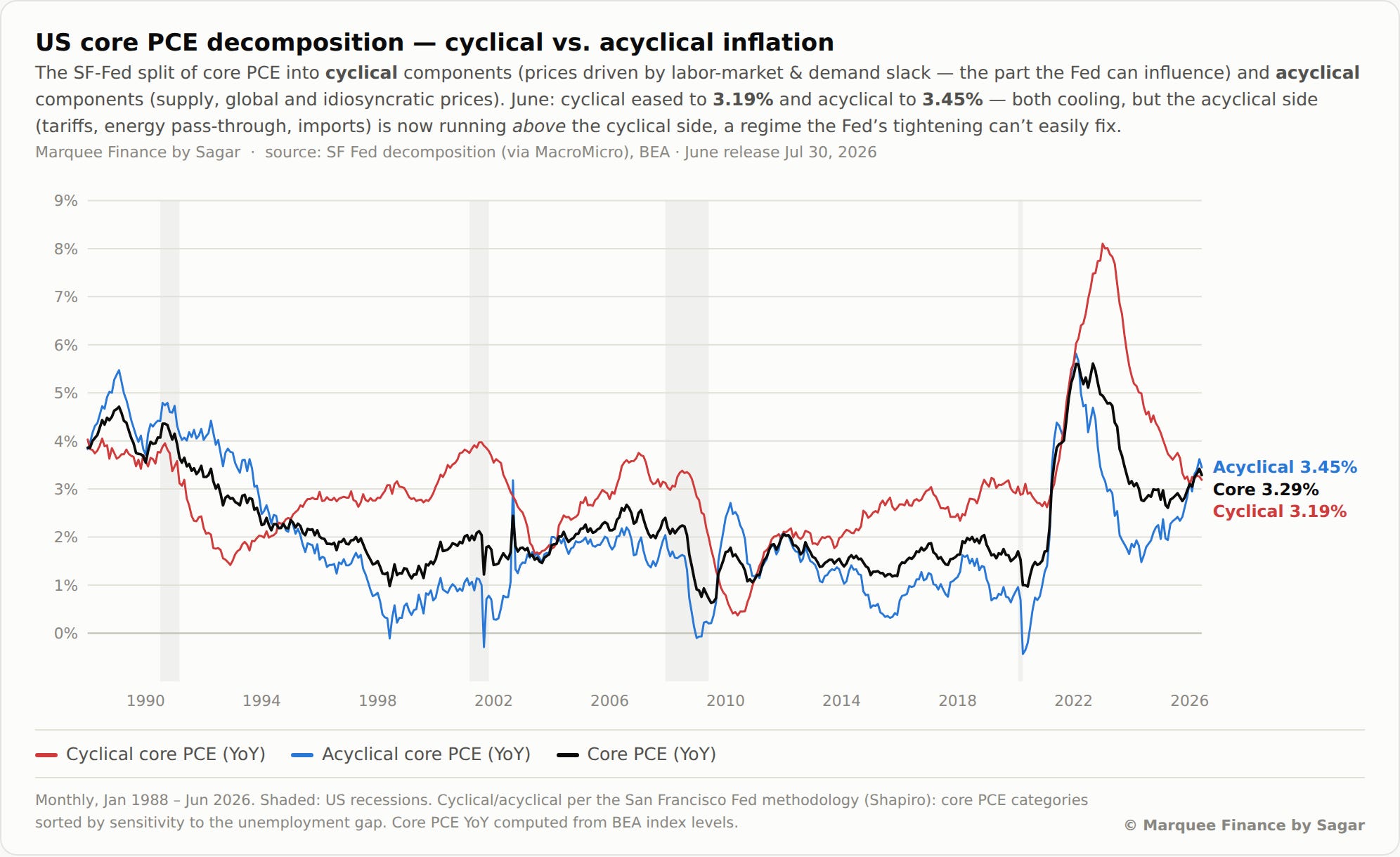
Furthermore, the core PCE is proving sticky.
US Q2 GDP came in at 1.5% and below expectations of 2%.
The silver lining in the print was the AI capex, which kept the GDP afloat.
On the contrary, the irregular/volatile components of the GDP (Trade, government and inventories) dragged down the print.
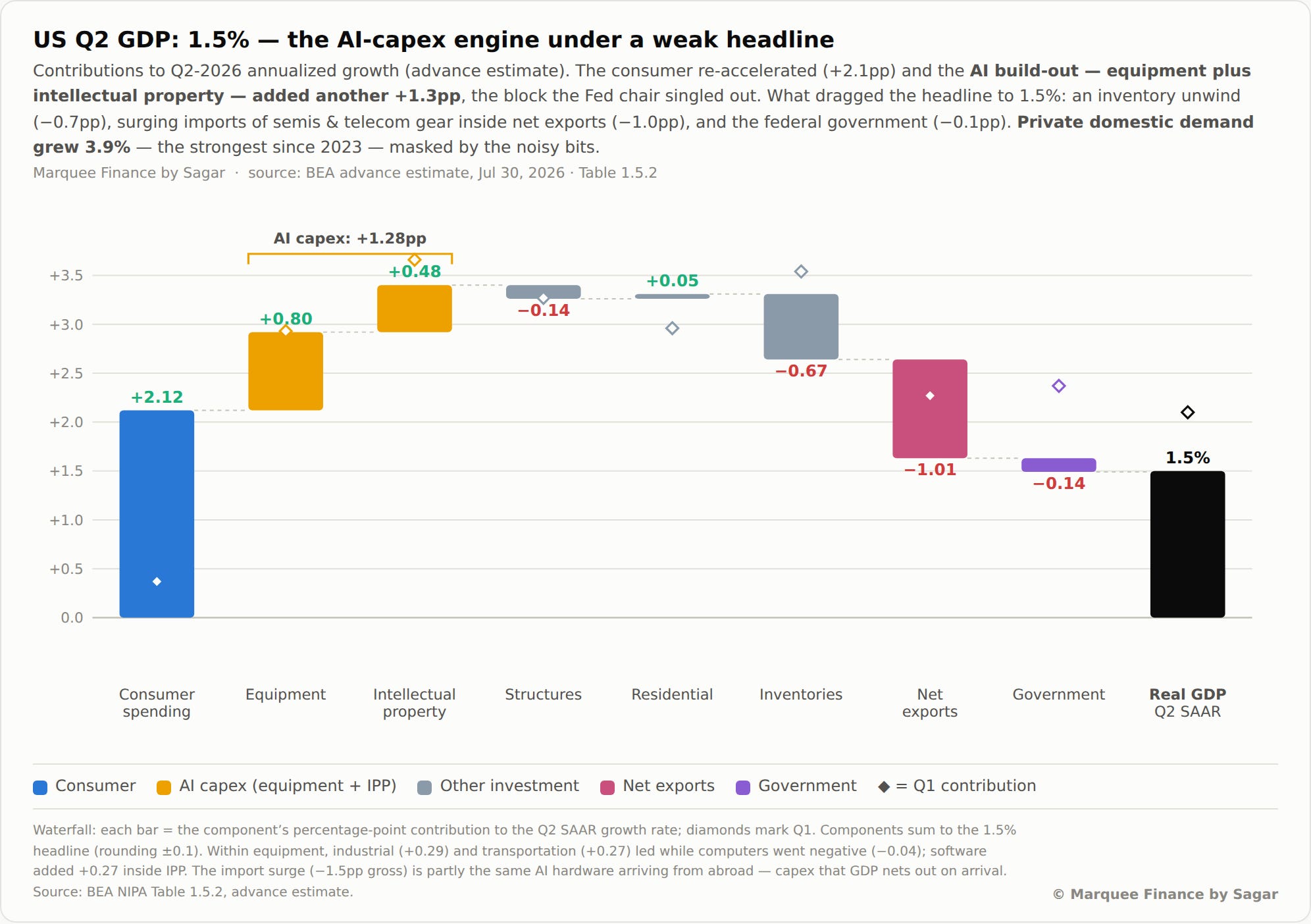
Furthermore, private domestic demand came in at 3.9%, the strongest since 2023.
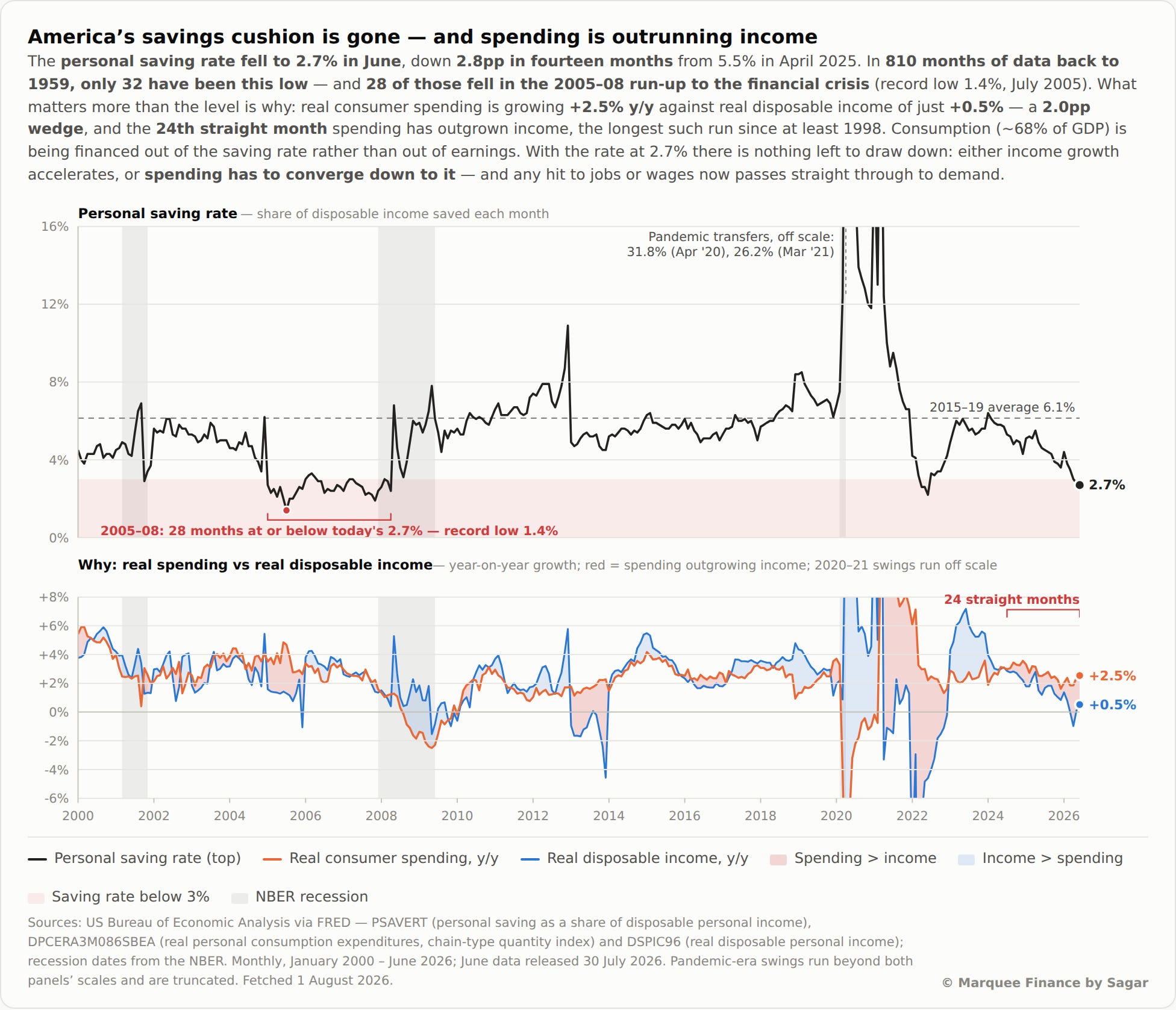
Nevertheless, the most worrying data point was the savings rate, which plunged to 2.7%. Notably, the savings rate has been this low for only 32 of the 810 months since 1959.
Since real incomes (adjusted for inflation) haven’t been growing, consumer spending is being funded by the savings.
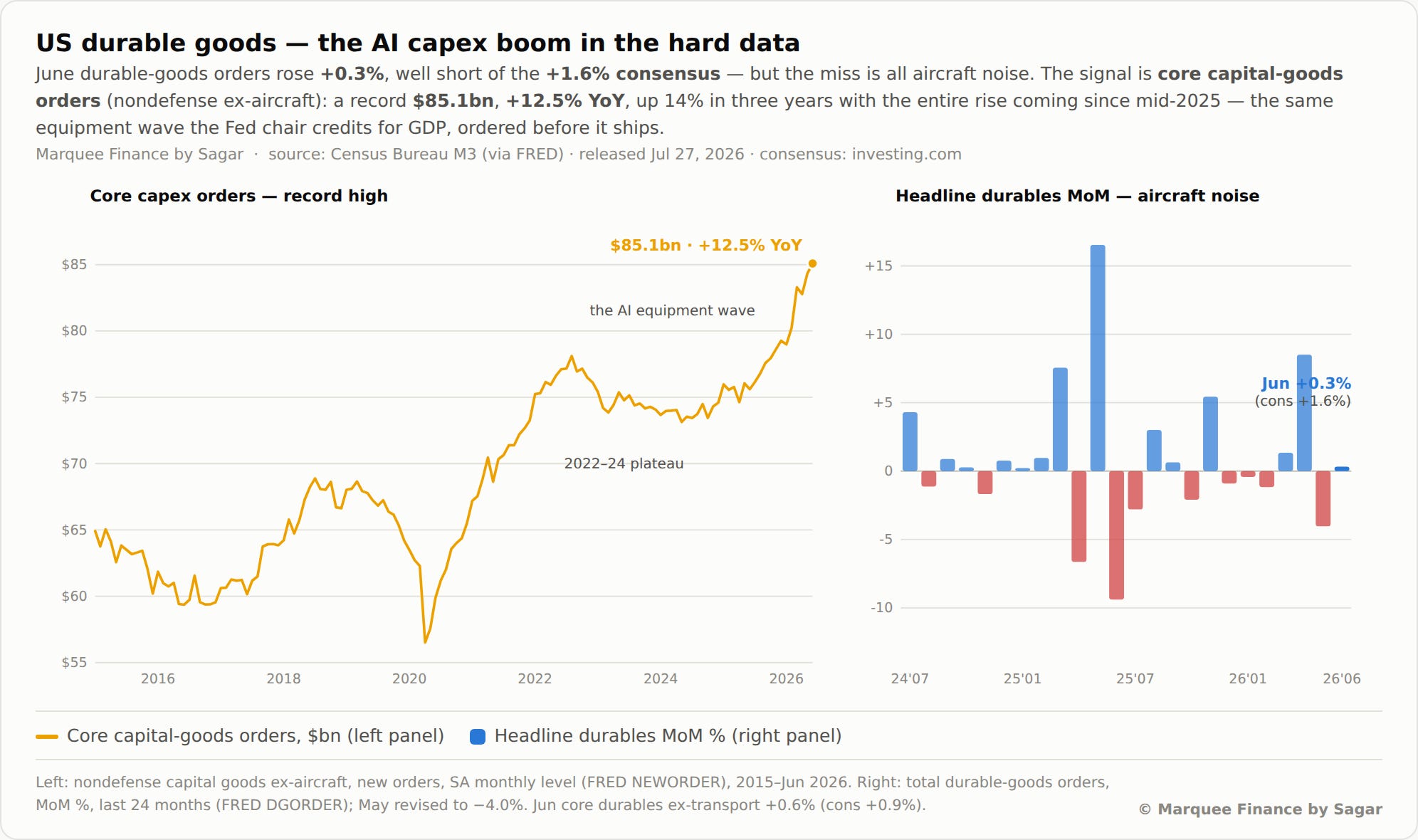
While the headline durable goods missed expectations (0.3% v/s expected 1.6%), the core capital goods orders surged 12.5% YoY to $85.1 billion, led as expected by the AI capex boom.
Now let us discuss the Fed policy.
FED!
Going into the policy, the market was highly uncertain, with the probability of a rate hike at 34% just one day before the FOMC decision.
Last month, we wrote that with the end of forward guidance, volatility would rise sharply in the bond markets, ultimately leading to higher cross-asset vol.
The bond markets were calm before the presser, but the presser woke up the bond vigilantes, as Warsh's whole presser was about the bond markets doing the tightening job instead of the Fed.
As per Warsh:
“The first is a very notable change since our last meeting 42 days ago: nominal and real yields are materially higher across the Treasury curve. In fact, some of the increases in market interest rates between FOMC meetings are among the most significant in the last two decades, ranking around the top decile or so.”
We verified Warsh’s claim, and the readings are for you to look at:
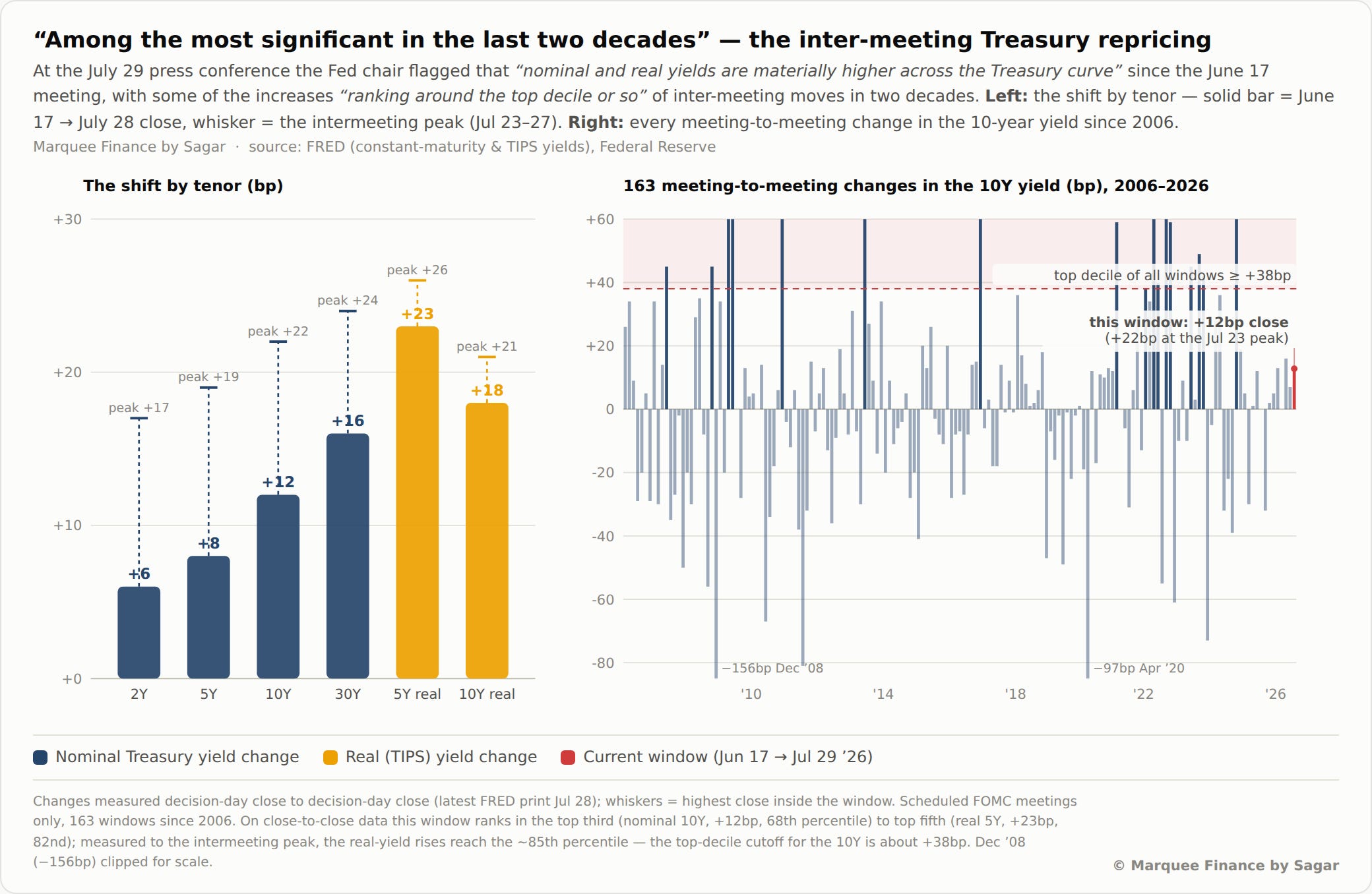
This window ranks in the top third for nominals (10Y at the 68th percentile) and in the top fifth for reals (5Y at the 82nd percentile) — measured to the intermeeting peak, real-yield rises reach the ~85th percentile.
Thus, in fact, it was not the top decile, but only close for the real yields.
The biggest bomb that Warsh released and which, according to us, spooked the bond markets was the following:
I’m looking at a broader set of inflation data than PCE. So, without sort of fully revealing my cards, I’m trying to understand like my colleagues, what’s the underlying generalized change in prices that are happening in the economy.
If inflation measures change and the Fed's measures align with their 2% inflation target rather than PCE (which is running significantly higher at 3%+), that would entirely change the game for the bond market.
In other words, the Fed loses the credibility it has long built.
Warsh, in strong words, emphasised that there will be no forward guidance, and thus we believe the Fed’s communication is completely broken now.
Trying to provide a lot of assurance, trying to tell people exactly what we’re going to do, offering forward guidance with clarity, as if we’re tying our own hands behind our back. Well, in crisis mode, that strikes me as a very prudent policy. But in more benign conditions, it strikes me as worth revisiting.
Market participants are learning to play the ball, not the referee—and market prices will continue to respond in the direction and magnitude they see fit.
Well, if there is nobody to assure markets and if markets react in real time, Houston, we have a problem.
“Markets are reacting in real time. In the period ahead, we’ve got important decisions to make about the policy rate. Markets in the intervening period, I think, have quite a bit of decisions to make.”
So, we’re not going to be constrained by market prices. We’re not going to be constrained or take verbatim from what the market’s doing.
While Warsh stated market prices won't limit them, we think the bond markets will penalise the Fed for this lax approach.
Equities!
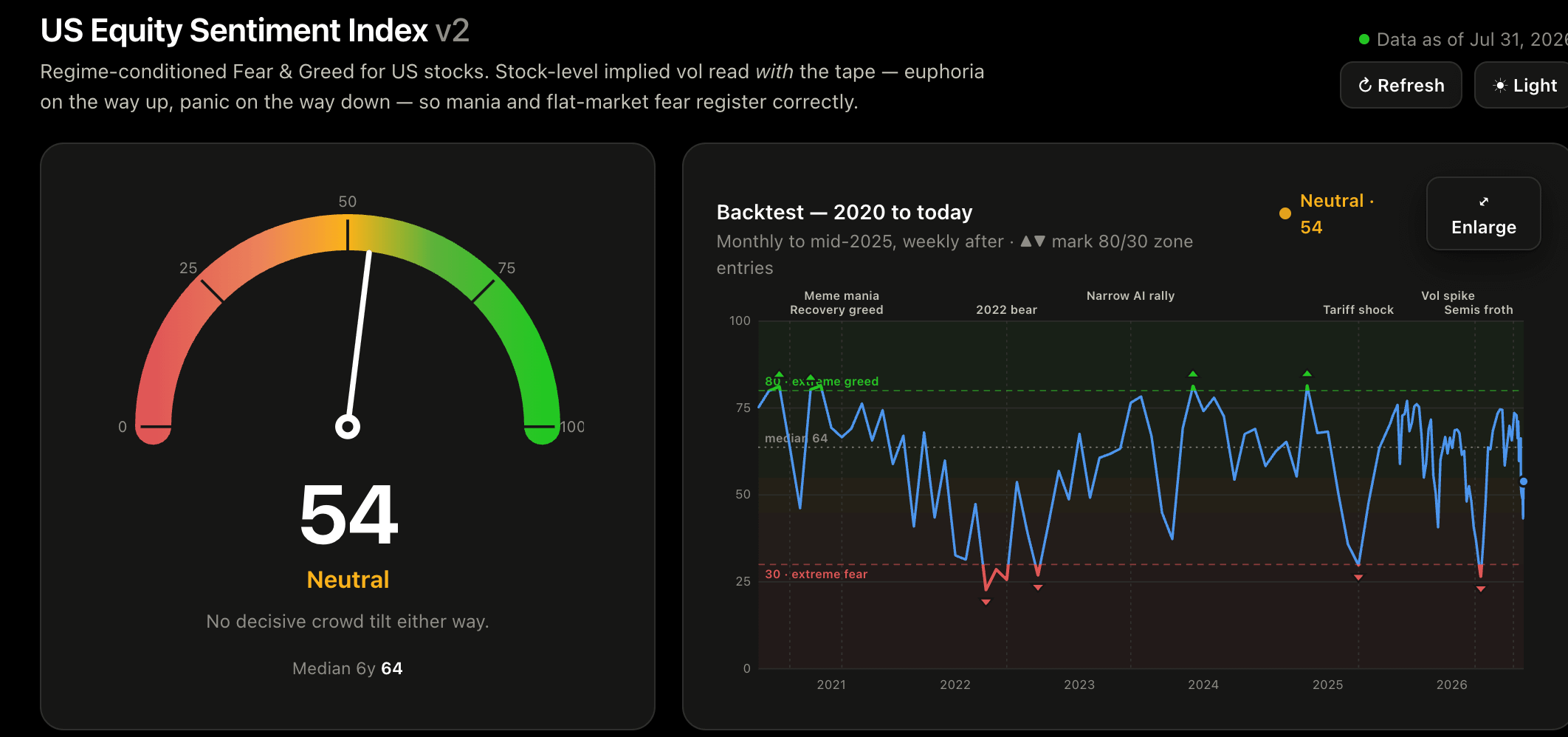
Our custom greed-and-fear index dropped to 43.2 on the 29th, solidly in Fear and then rebounded sharply to 54.
If you believe our index, then it’s easy to conclude that: