

Since early October, we have warned in a series of posts about the unravelling of AI trade and its cross-asset implications.
Some parallels to the dot-com bubble exist; however, as always, we believe equities remain one of the best ways to generate generational wealth.
The one sure-shot way to make money in financial markets is to master human psychology and, in turn, the greed-and-fear cycles.
Looking back at the dot-com bubble, we’re amazed that anyone would have thought buying at the peak was sensible.
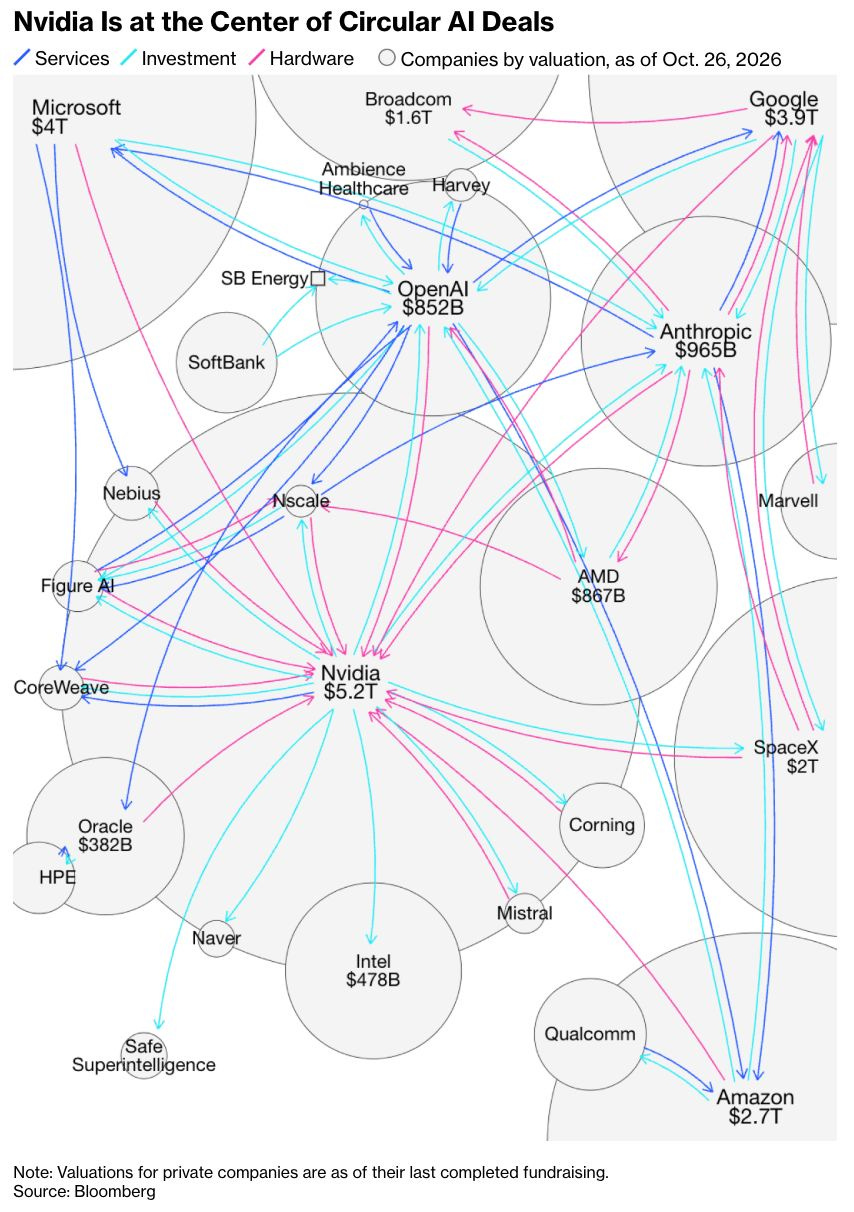
Nonetheless, this time is no different, and we’re dead sure that ten years from now, people will be awestruck by the chart of Circular AI deals and wonder why investors, in their right minds, were buying the dip.
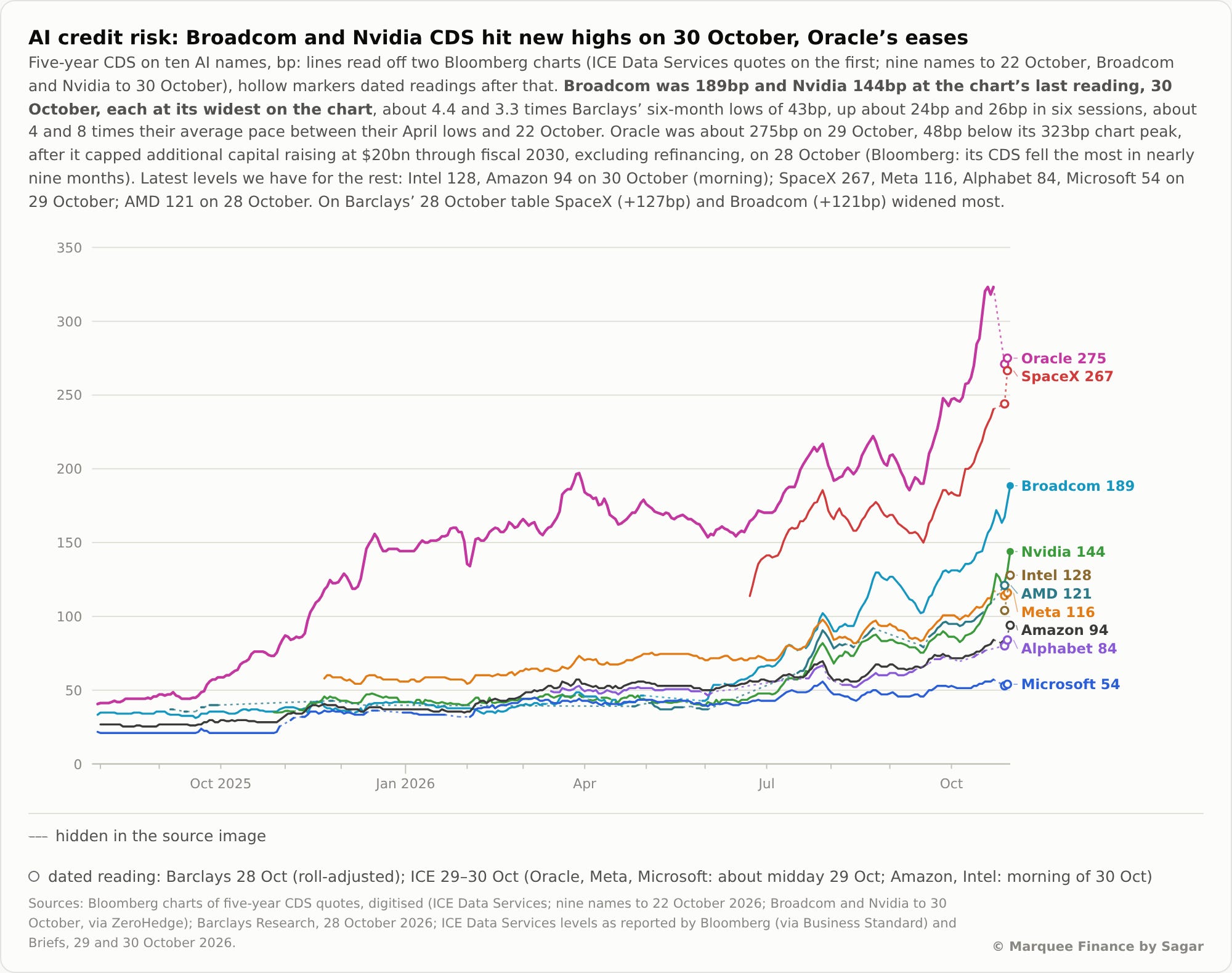
Credit investors seem to be the smartest of the lot, and they have been bidding CDS prices as if it’s the end of the world.
The rush to hedge is unprecedented, especially in chip stocks like Broadcom and NVDA.
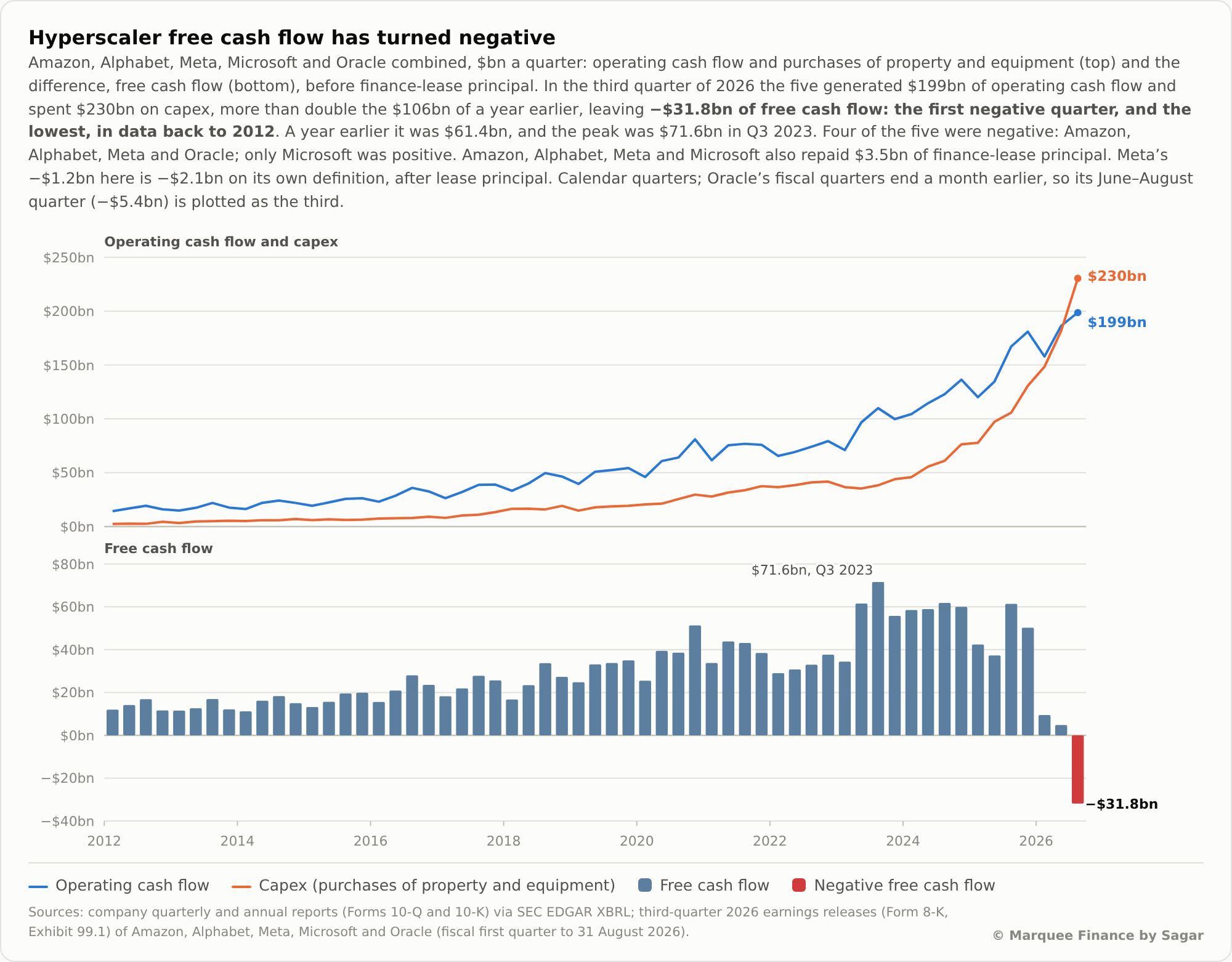
Since 2008, when the mega bull market in tech stocks began, the universal foundation was trillions of dollars in buybacks these companies resorted to, along with the enormous rise of passive funds.
The situation has now reversed, and these megacaps (ex-AAPL) have turned FCF negative for the first time since the GFC.
AMZN, GOOG, META, MSFT and ORCL combined reported -$32 billion of FCF, with AMZN leading the charge as these hyperscalers invest trillions of dollars in the AI rollout.
We will discuss later where tech stocks will bottom, our next 3-year outlook, and our preferred pick in the tech universe (paid subscribers can jump directly to the equities section).
Thanks to our Anti-AI portfolio, we closed at a month high yesterday and recouped 70% of our September losses.
Furthermore, we are now outperforming the benchmark by 42 bps.
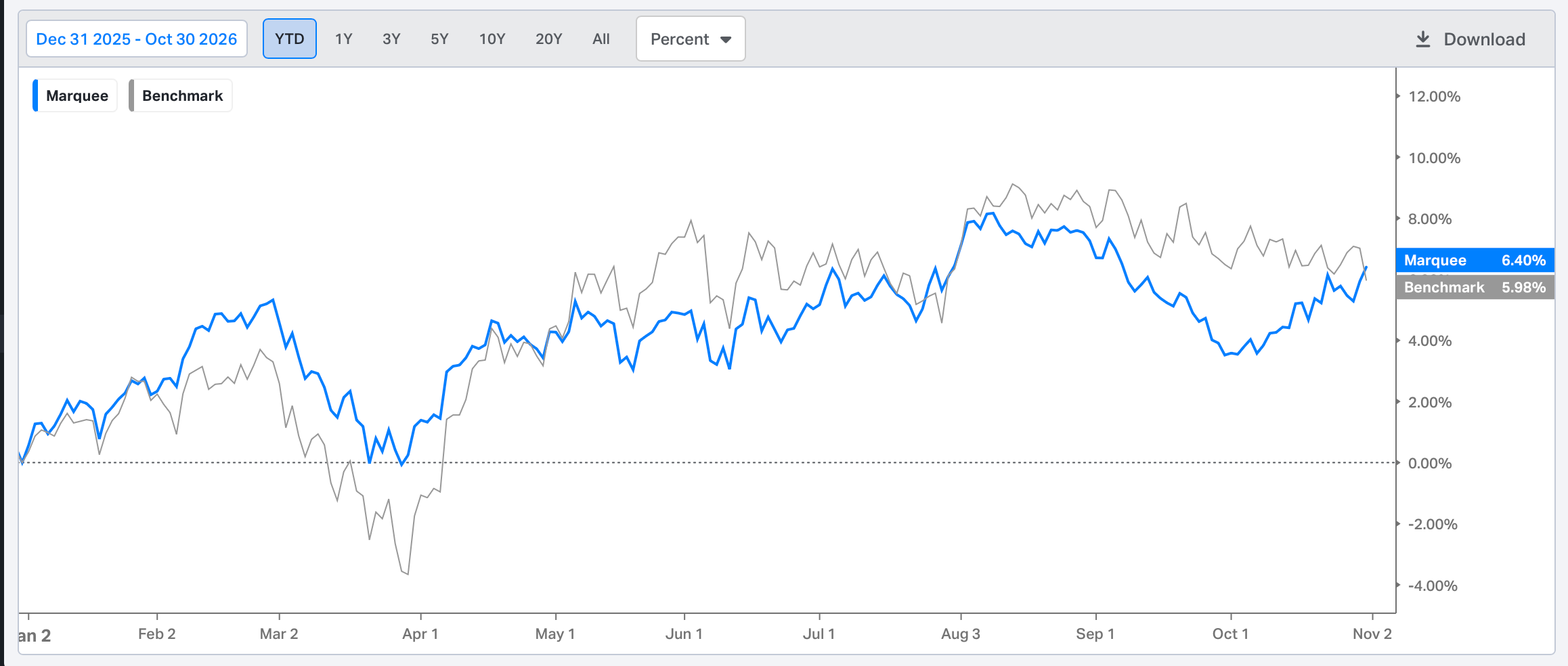
Our target remains a double-digit return this year while outperforming the benchmark on all the risk metrics.
Let us take a deep dive into the macro universe and comprehend the cross-asset price action.
US/Equities/Bonds/Oil/Gold!
FOMC maintained the status quo as expected.
“The Committee believes that the accumulation of more information will help it determine the policy stance appropriate to ensure a timely return of inflation to the 2% goal.”
We had a big announcement regarding the number of meetings. Before we do a detailed analysis of the Warsh’s presser, Warsh made an interesting statement:
“There’s a target of price stability, and it’s 2% as measured by PCE.”
While PCE has always been the Fed’s preferred inflation measure, this is the first time the new Fed Chair has acknowledged it.
If you remember, Warsh, in his first meeting, claimed inflation measures are outdated, said he was committed to better assessing inflation in the economy, and thus formed the committee.
Headline PCE came in at 3.6% YoY, in line with expectations, while the Core PCE (ex-food and energy) came in at 3.1% YoY.
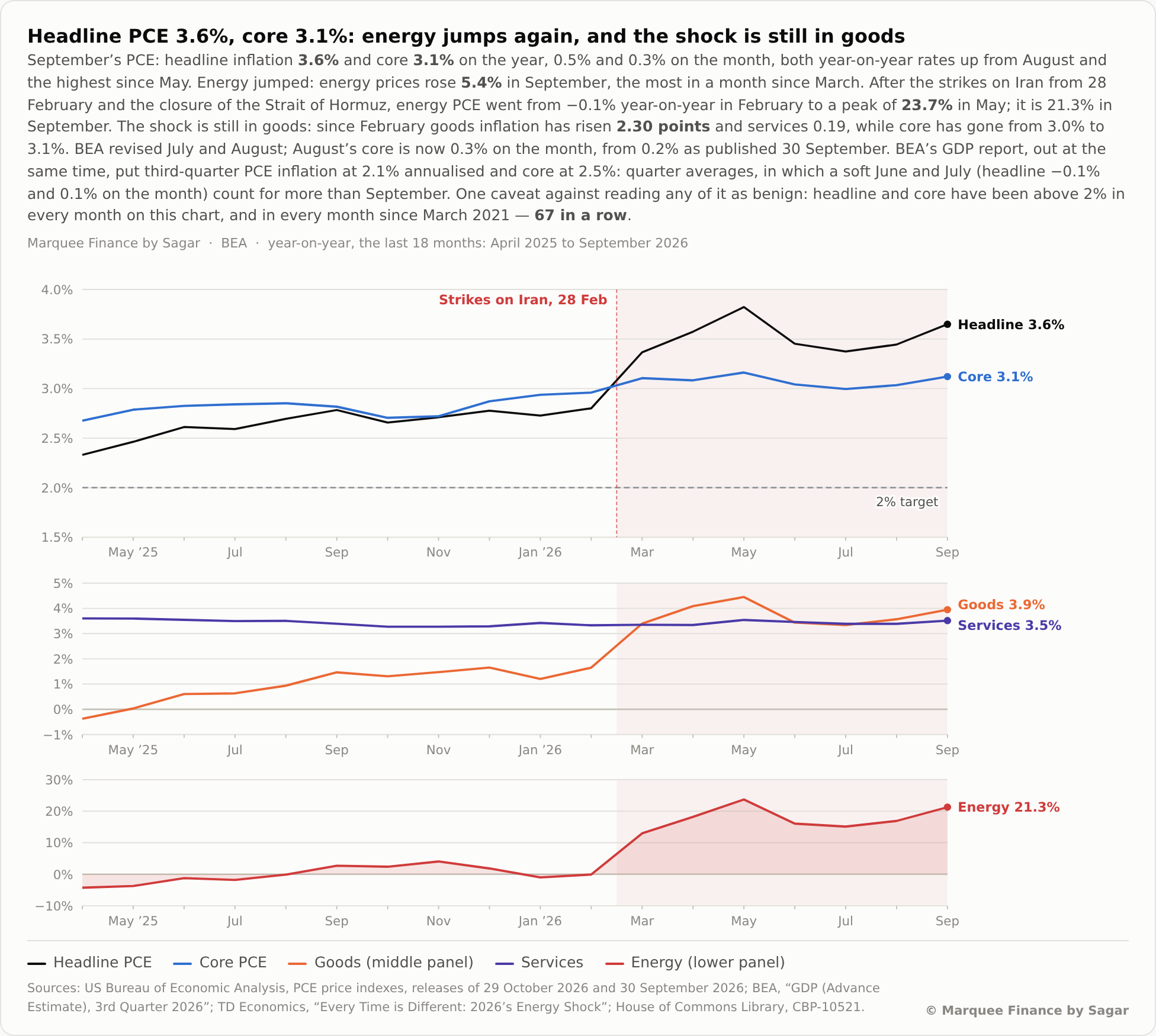
Goods PCE has soared to 3.9% YoY as higher energy prices gradually seep into the economy and broaden inflationary pressures.
Notably, energy is still running at 21.3% YoY due to high product prices.
Portfolio Management, which was up 8.2% YoY in September, should be a drag next month, as it depends on the equity market’s performance.
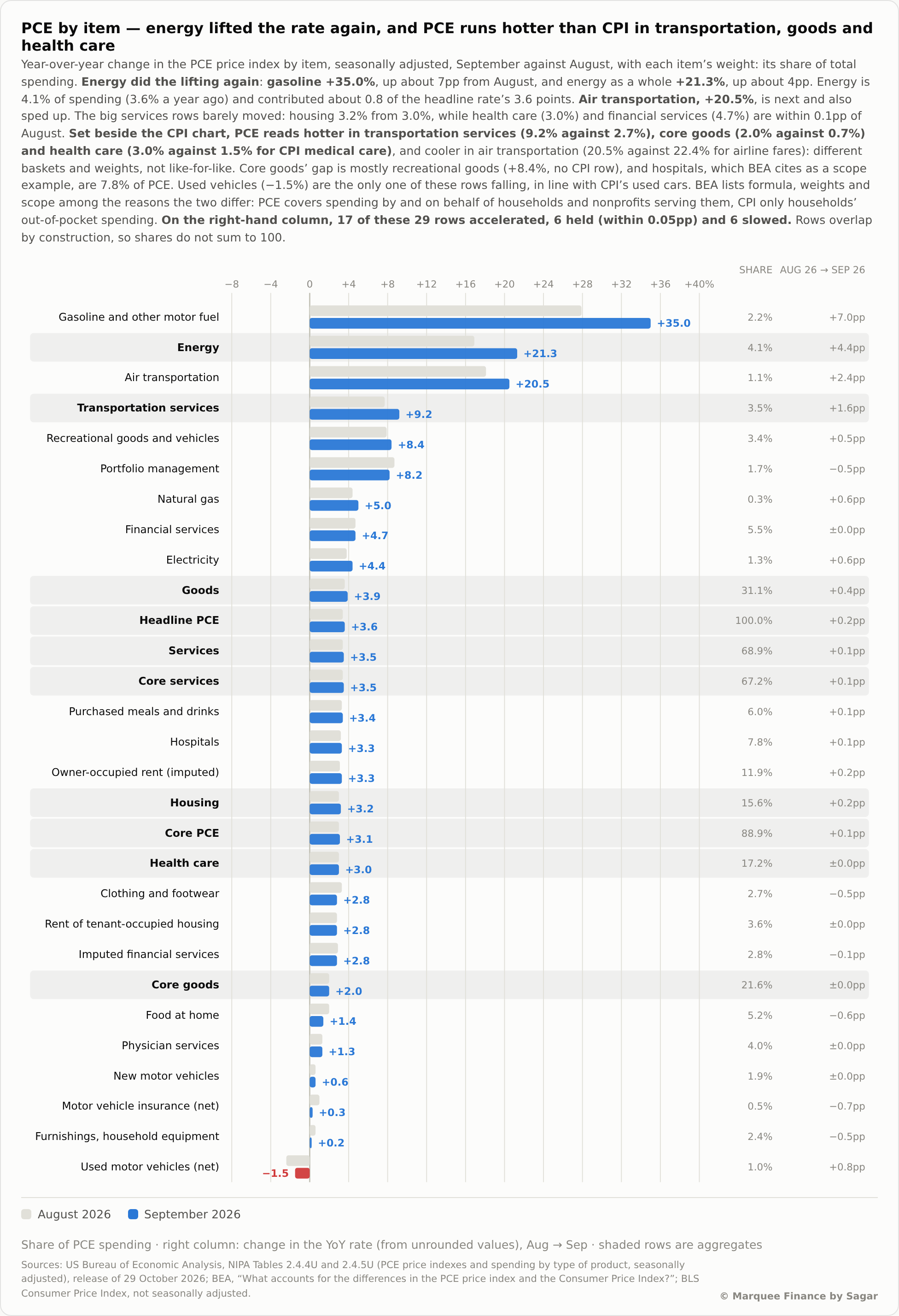
Only used motor vehicles continue to trend disinflationary.
Services have been stubborn, and we expect them to rise if broad inflationary pressures continue to build in the economy.
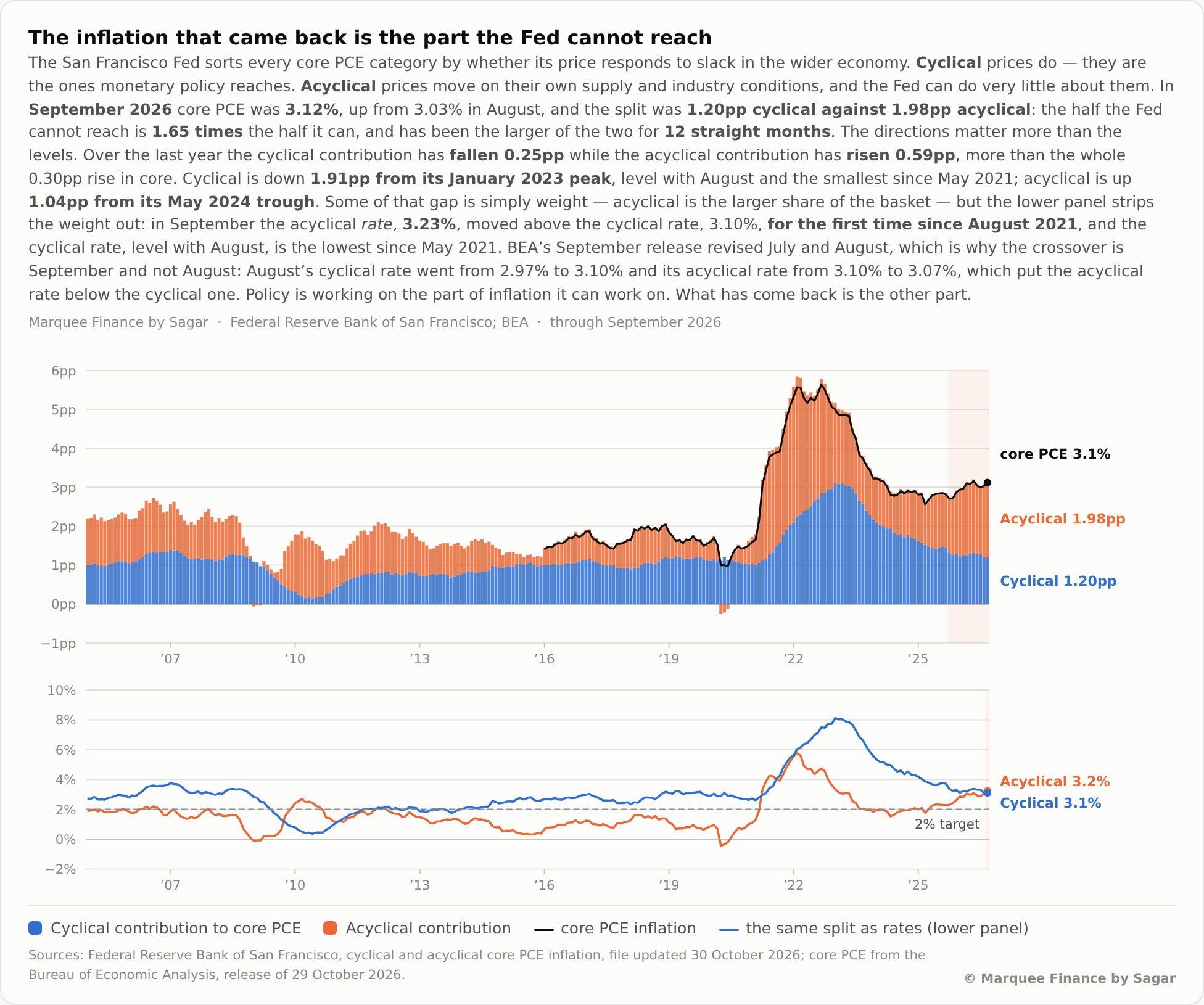
The SF Fed’s Acyclical/Cyclical breakdown indicates that the acyclical part of inflation continues to move higher, which could be an alarming signal for the Fed.
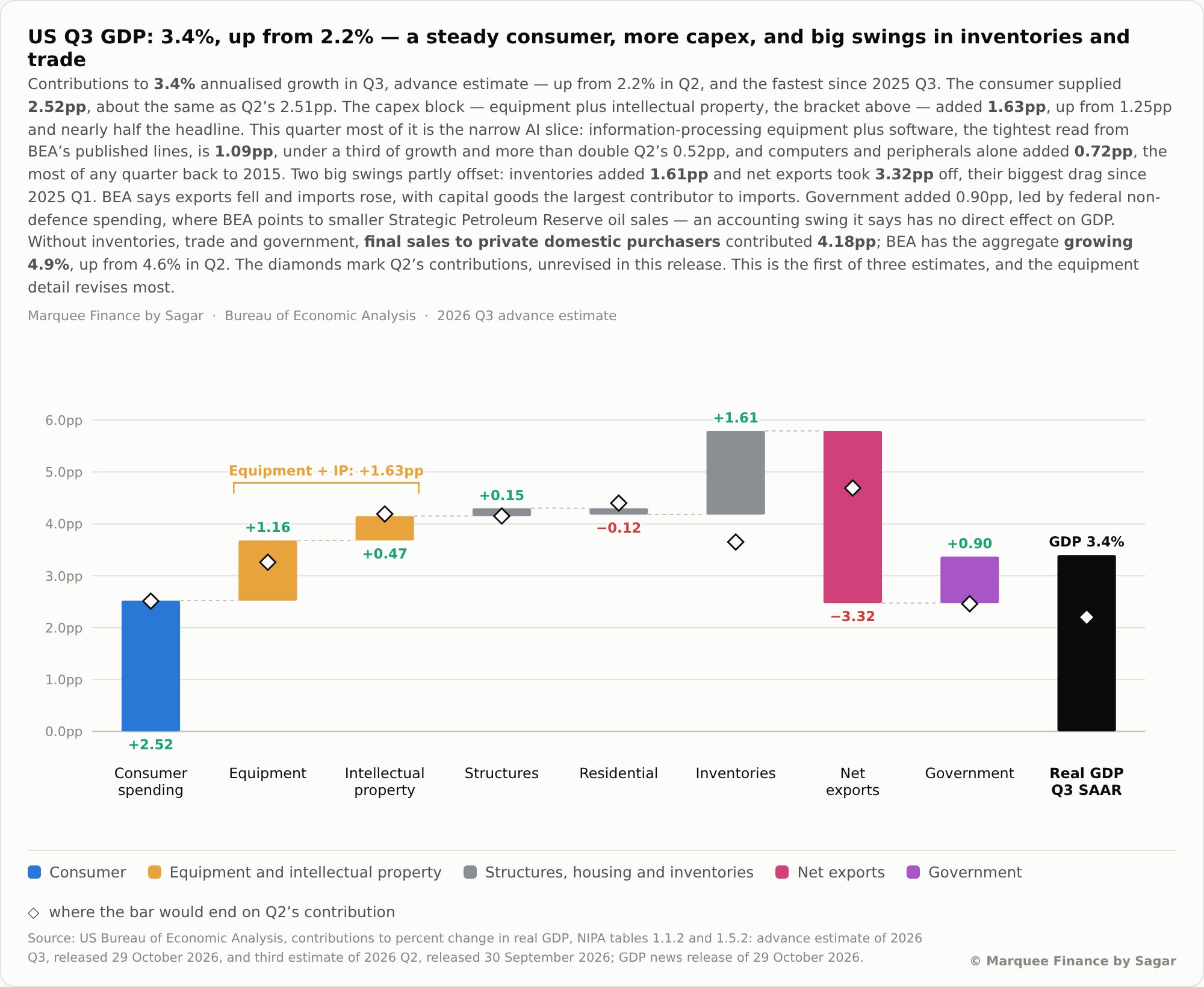
US GDP came in at 3.4% v/s estimates of 3.2% and 100 bps higher than Q2 GDP of 2.2% YoY.
The AI rollout remains an enormous tailwind for higher GDP, with Equipment and IP contributing 1.63% to GDP.
Warsh also acknowledged the AI rollout's contribution in his statement.
Capital expenditures are at a historically high share of GDP. High-tech investment is leading the acceleration. But there’s also been a broadening in other categories. And these trends bear watching.
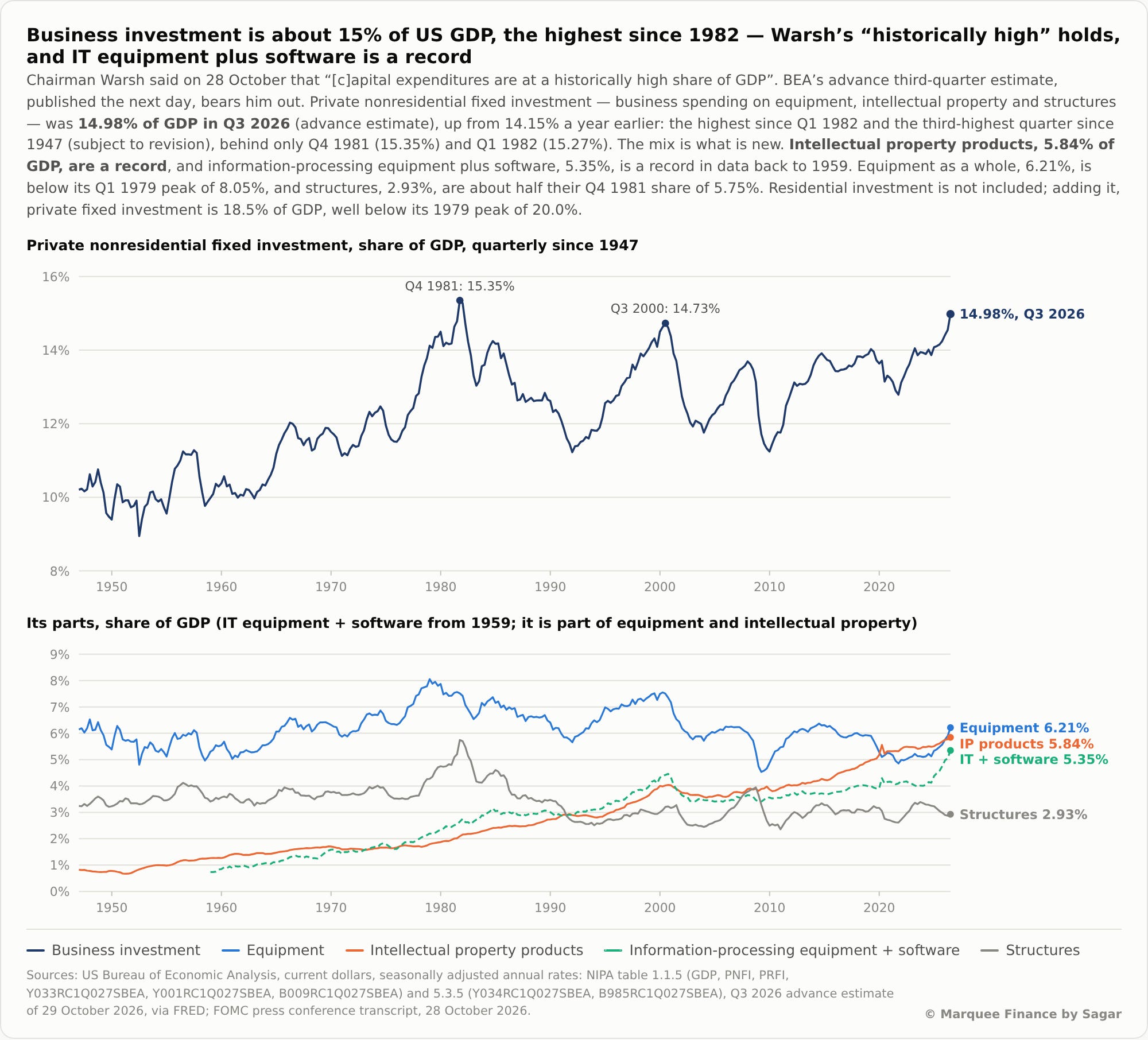
Warsh mentioned:
The jobless rate is lower than a year ago, and payroll growth is noticeably above last year’s pace. The four-week moving average of unemployment insurance claims continues to run at the lowest level in generations.
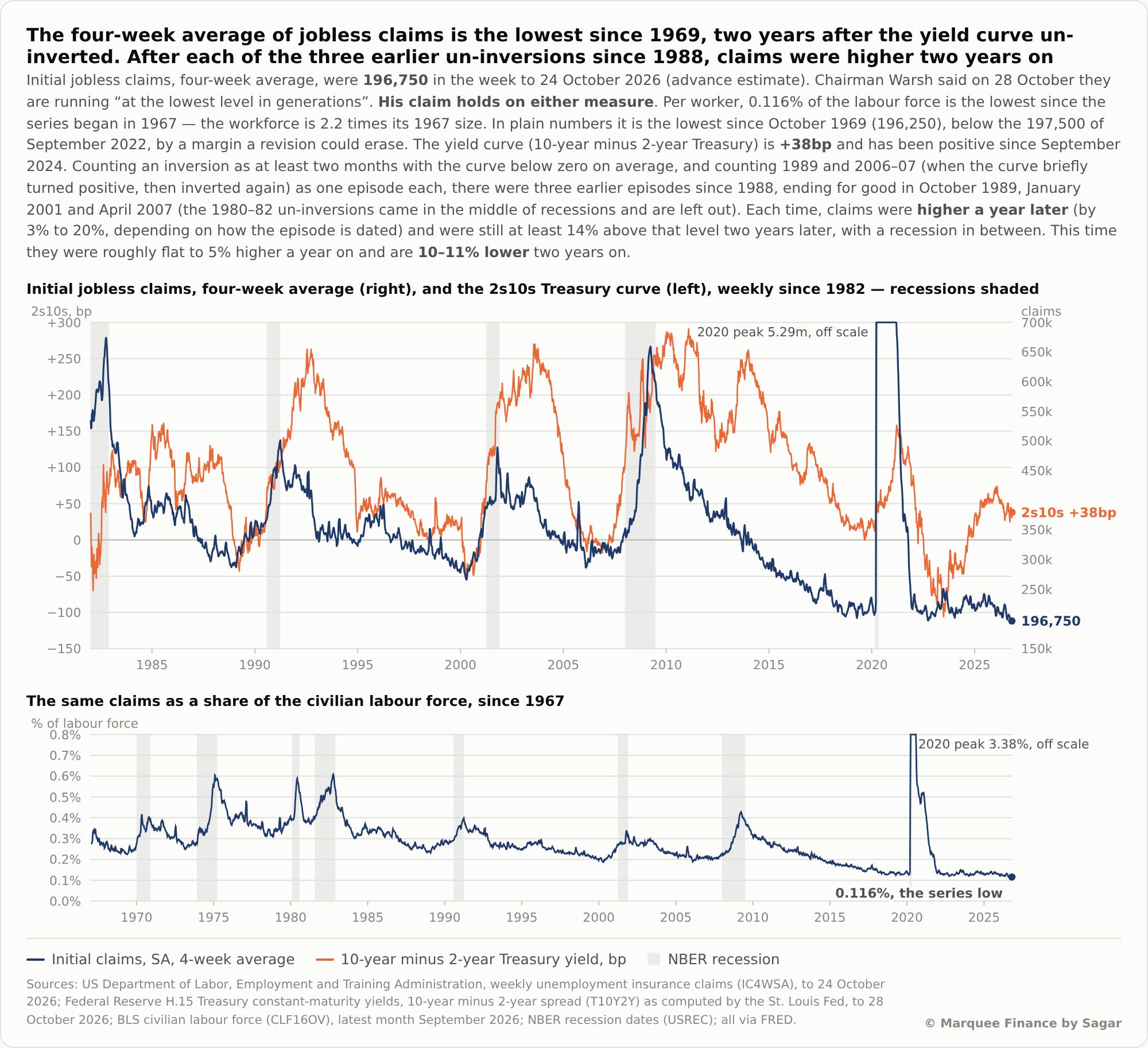
As we can see, the 4-week average of initial claims is now below 200k, and Warsh was right when he said it was the lowest in generations.
This metric makes the Fed comfortable about the employment part of its dual mandate.
Warsh also mentioned:
“And while overall financial conditions are tighter, I’m unwilling and unable to call them tight.”
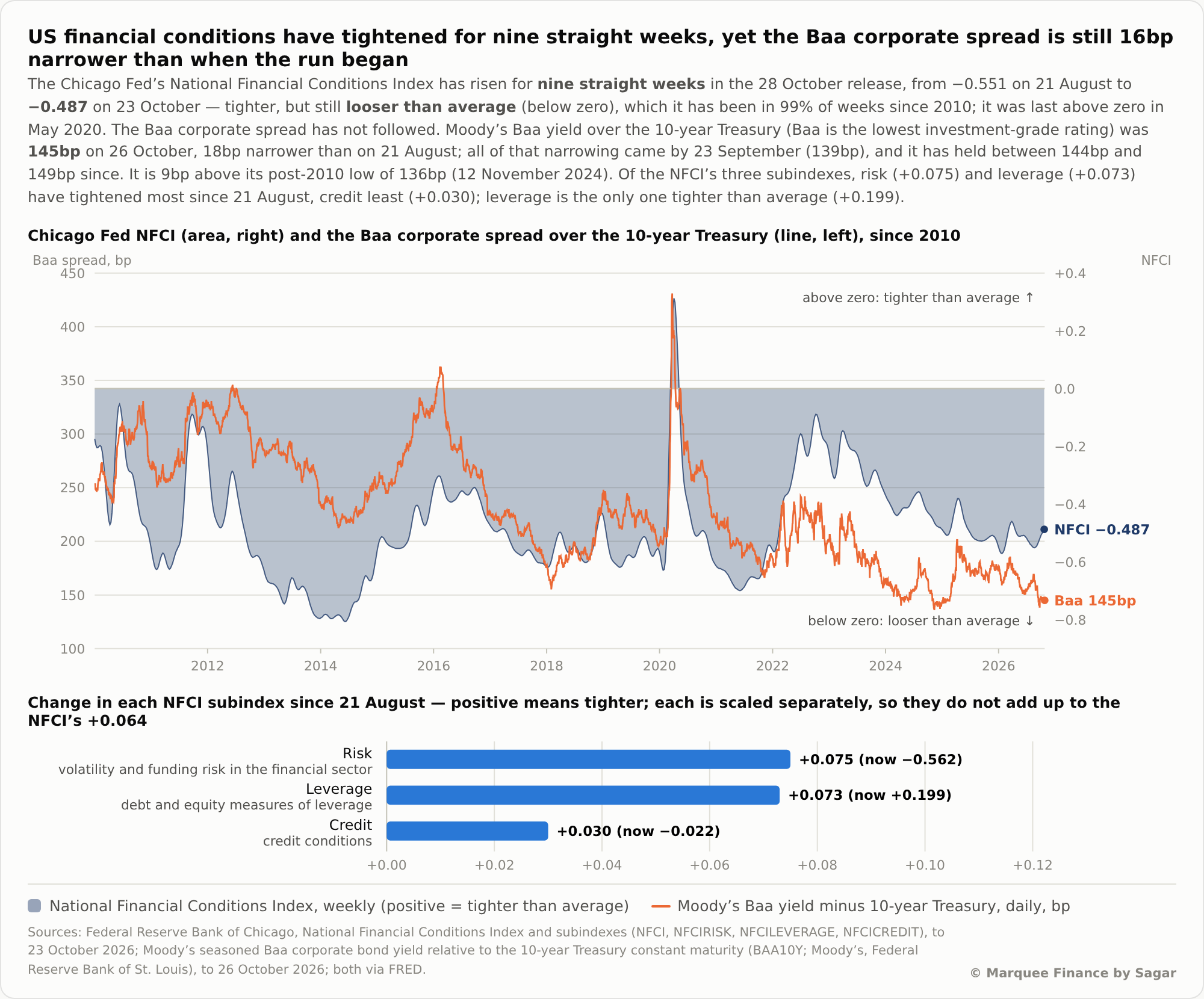
When we look at historical periods of tightness, we are nowhere near, so Warsh is right to say financial conditions are still loose.
Nonetheless, we disagree with one statement Warsh made about inflation swaps.
Inflation compensation as measured by swaps prices, many other measures, inflation compensation is going in the right way.
The data don’t support that the swaps are heading in the right direction.
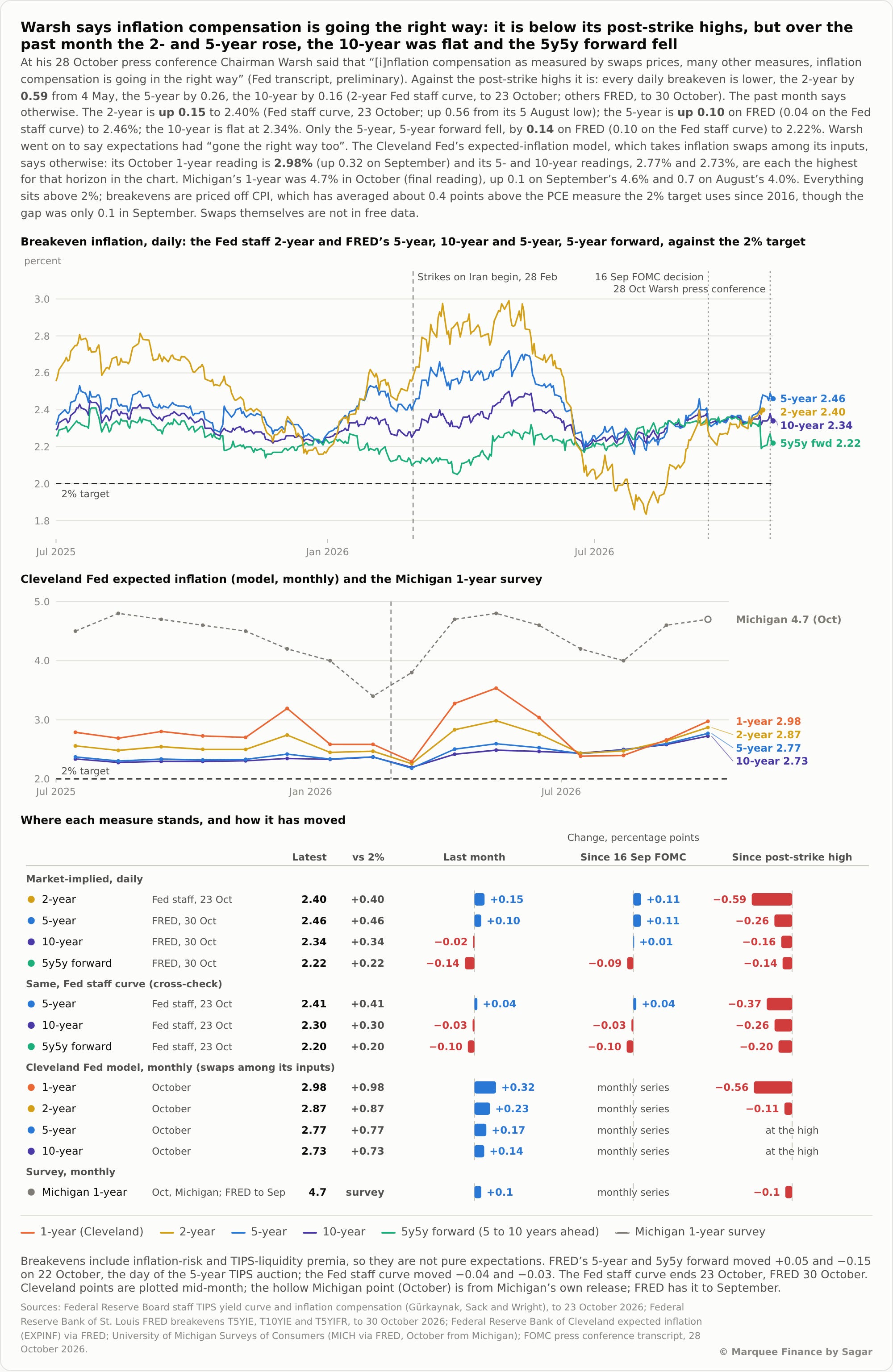
Furthermore, with sticky oil prices, the risk remains that they are headed higher.
The one shocker that nobody anticipated was:
But in 2027, one meeting will focus exclusively on broad monetary policy strategy, with neither a vote on the federal funds rate nor a policy statement anticipated. The rest will be regular FOMC policy-setting meetings. And I expect that in 2028, we’ll have two meetings dedicated to discussions of strategy, and six for setting policy.
Since the 2008 GFC, central banks globally have acted in a synchronised way; if the Fed adopts a policy at only 7 meetings to set rates, other global central banks will likely follow.
Equities!
Before we head to charts, we have three charts to present on market breadth.
As market players exited the year's most crowded trade, we witnessed a unique phenomenon in the US equity markets.
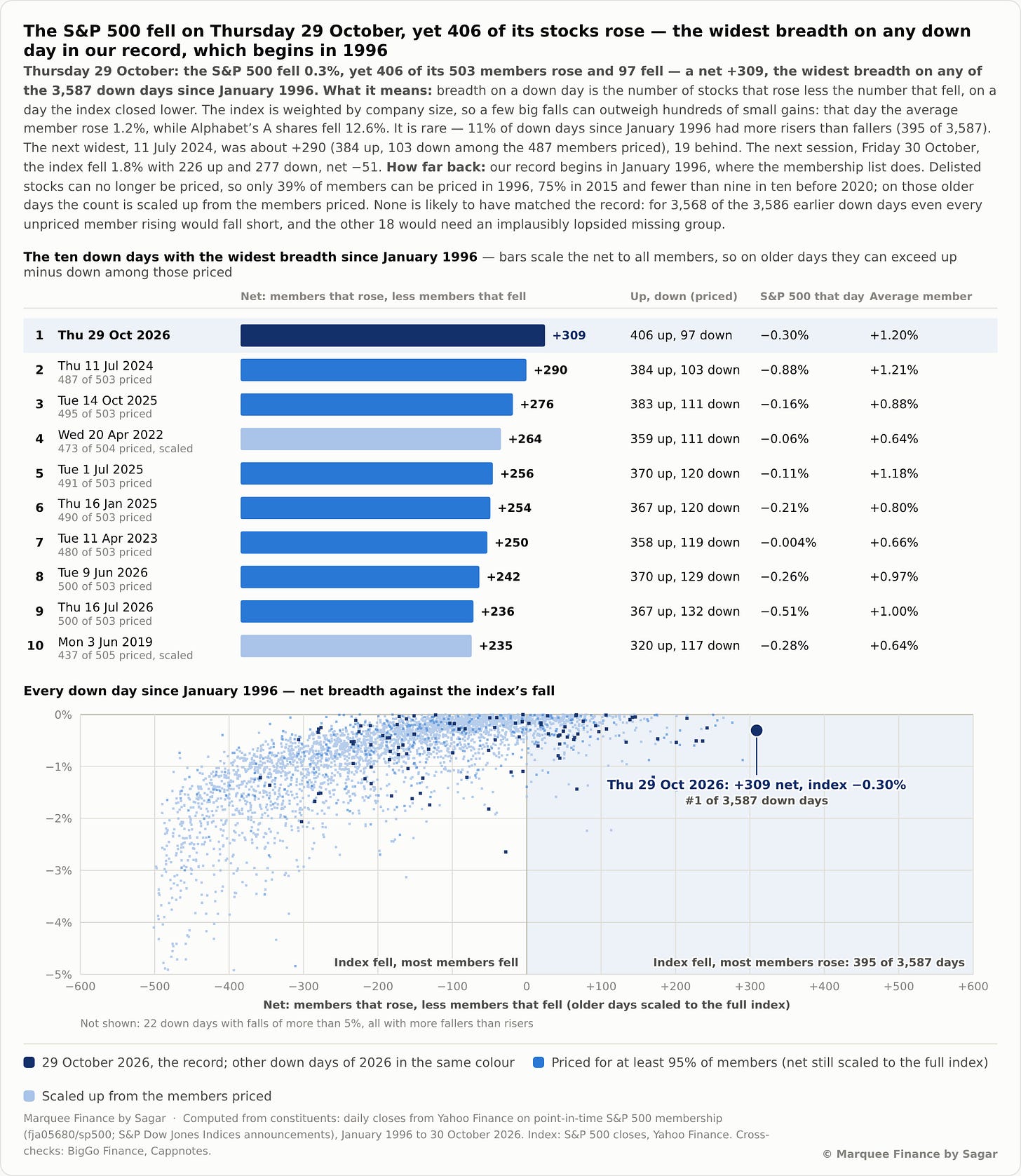
On Thursday, we saw the widest breadth on record on a down day since 1996. 406 stocks were up on Thursday, with an average gain of 1.2%, while the S&P 500 fell by 30 bps.
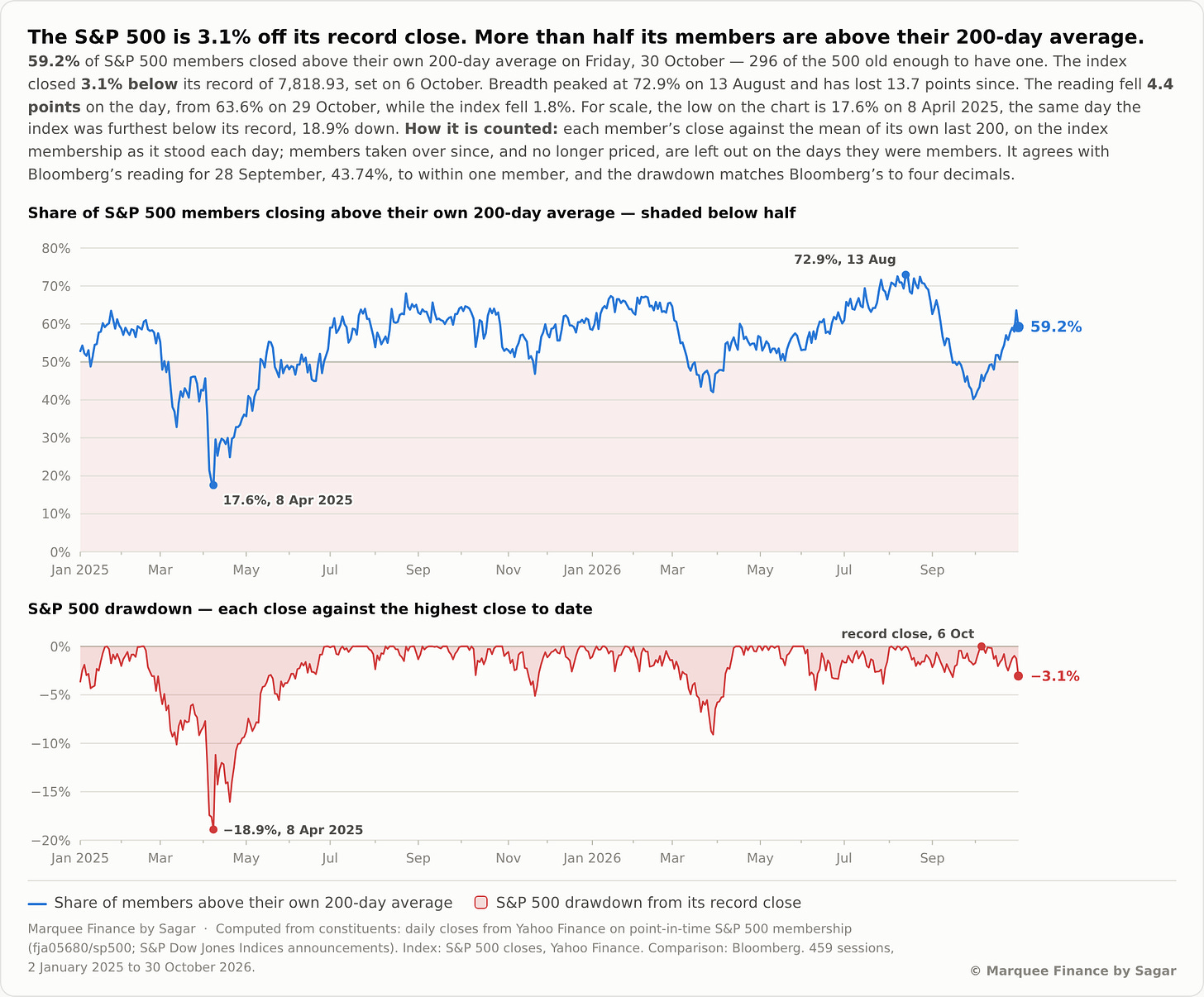
While SPX is down 3.1% from its highs, half of its components are above their 200 DEMA, a mind-blowing recovery from last month.
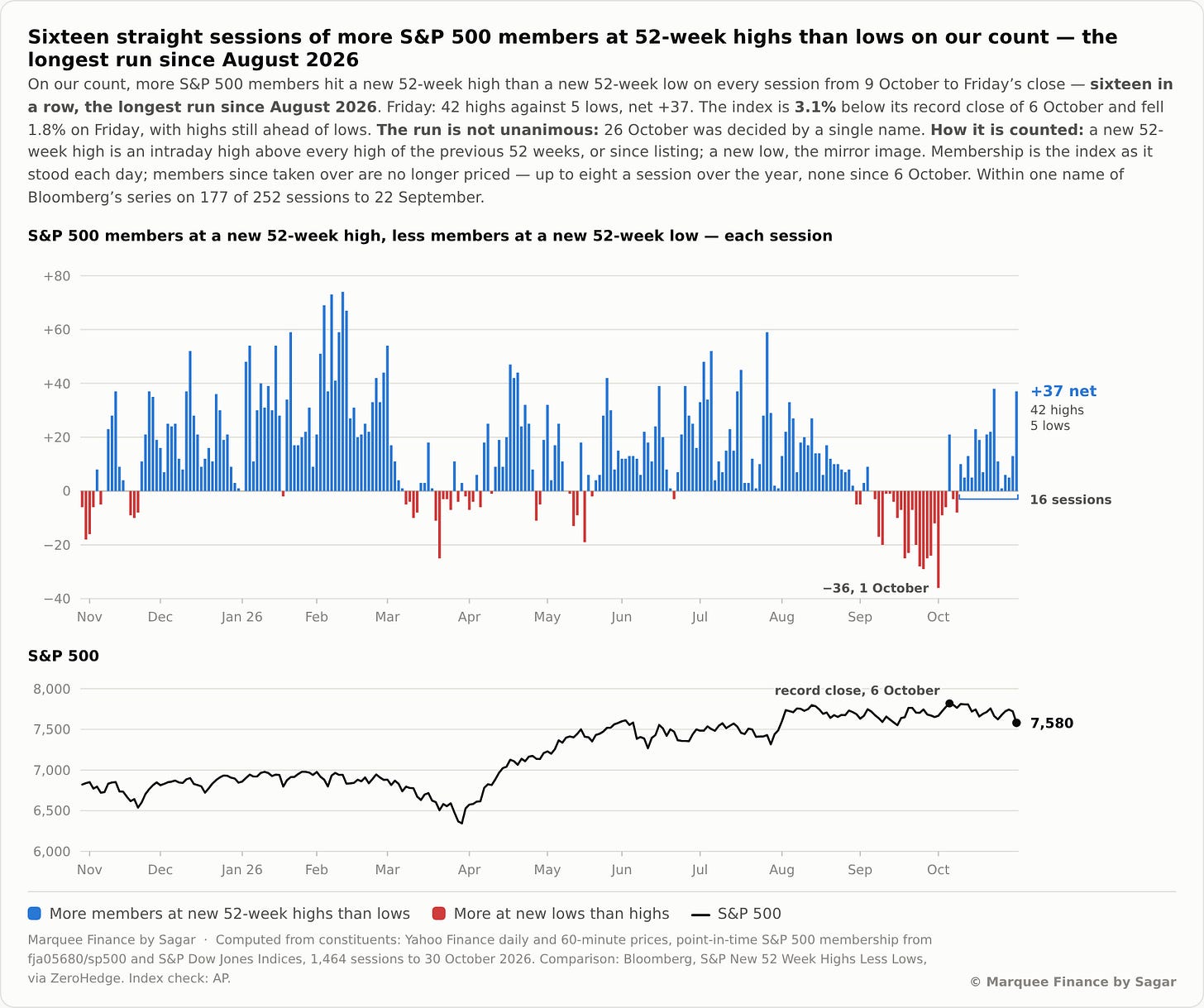
Tech carnage gripped the street this week as market fears grew that AI is disrupting the business models of various established companies. Despite that, we got a 16-day consecutive streak of 52 Week highs than lows.
We hope that you have been checking the Equity Sentiment Index on the Global Macro Musings terminal.
Note that it gets updated after the market closes.
As we can see, we are still not at the levels