Once again, we witnessed an epic squeeze across cross-asset markets.
It began with US Treasury and BOJ interventions in the FX markets, which led to a dramatic fall in USDJPY. As the extent of the intervention was revealed, the FX pair fell further on Monday.
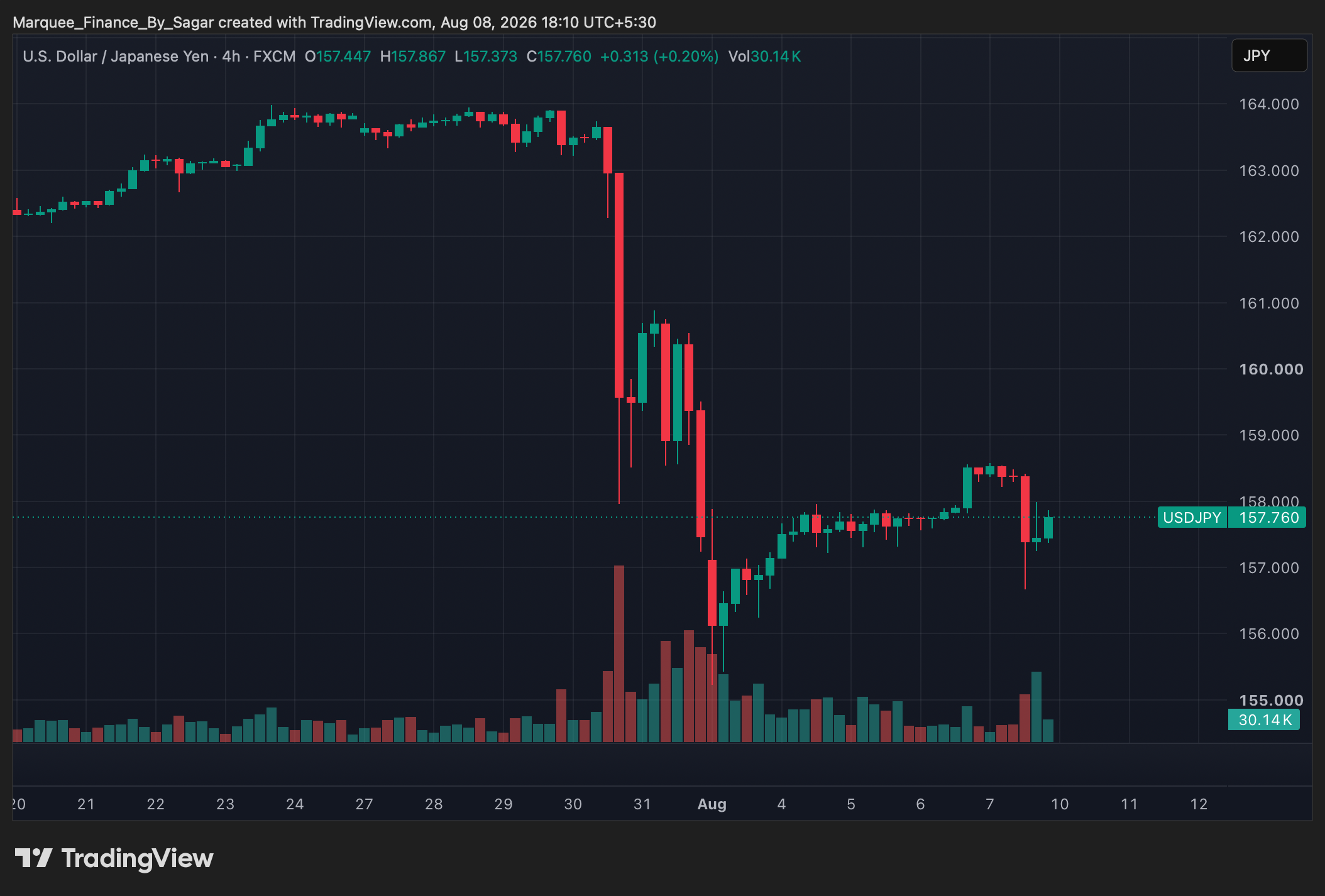
As of 4th August 2026, the squeeze transpired in FX and Rates markets.
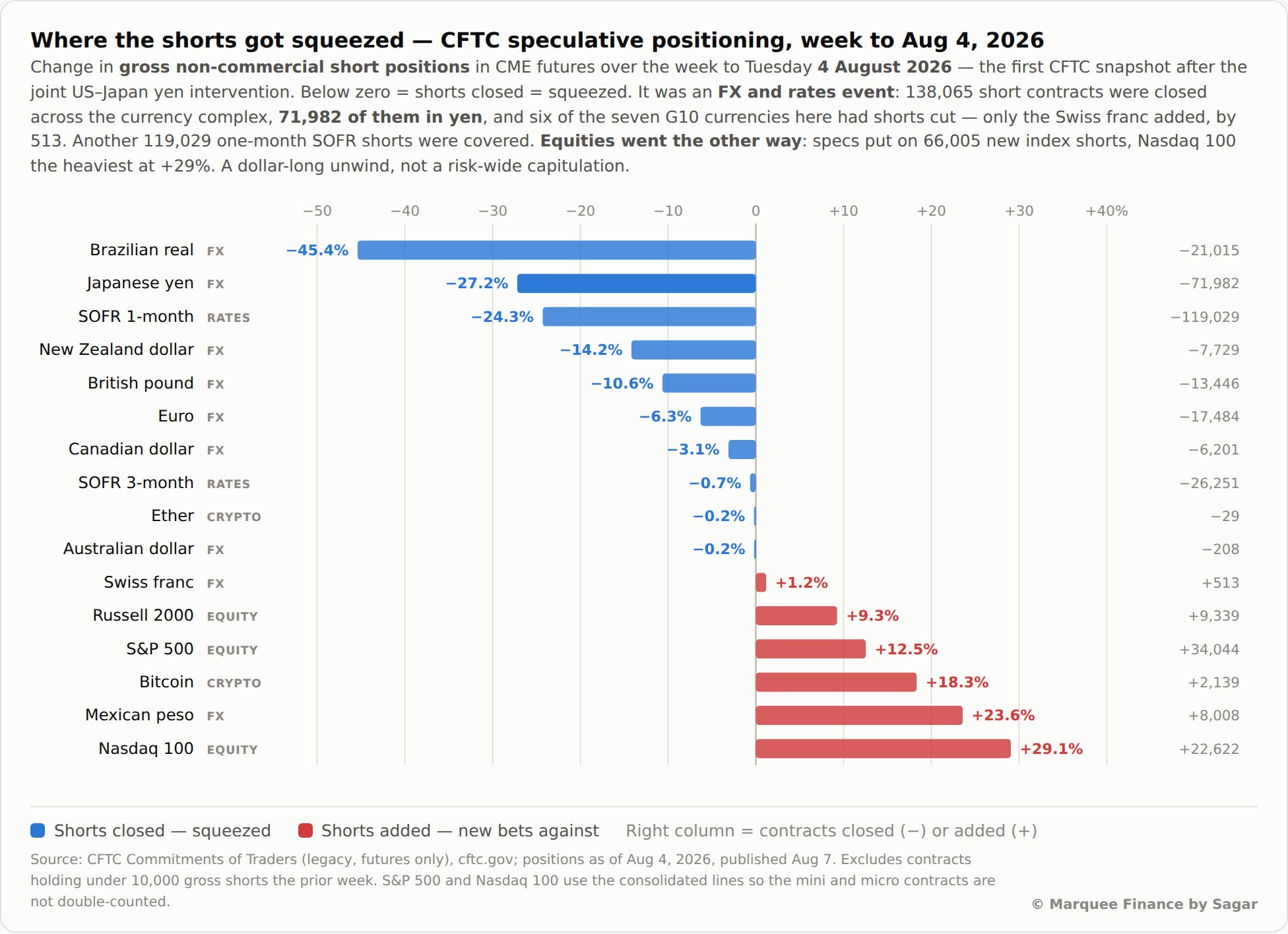
Then, as news of the imminent opening of the Strait of Hormuz began to circulate, sentiment turned, and we witnessed a massive short squeeze in US equity markets.
It accelerated, and we got a complete cross-asset melt-up and a massive risk-on rally that included commodities and precious metals.
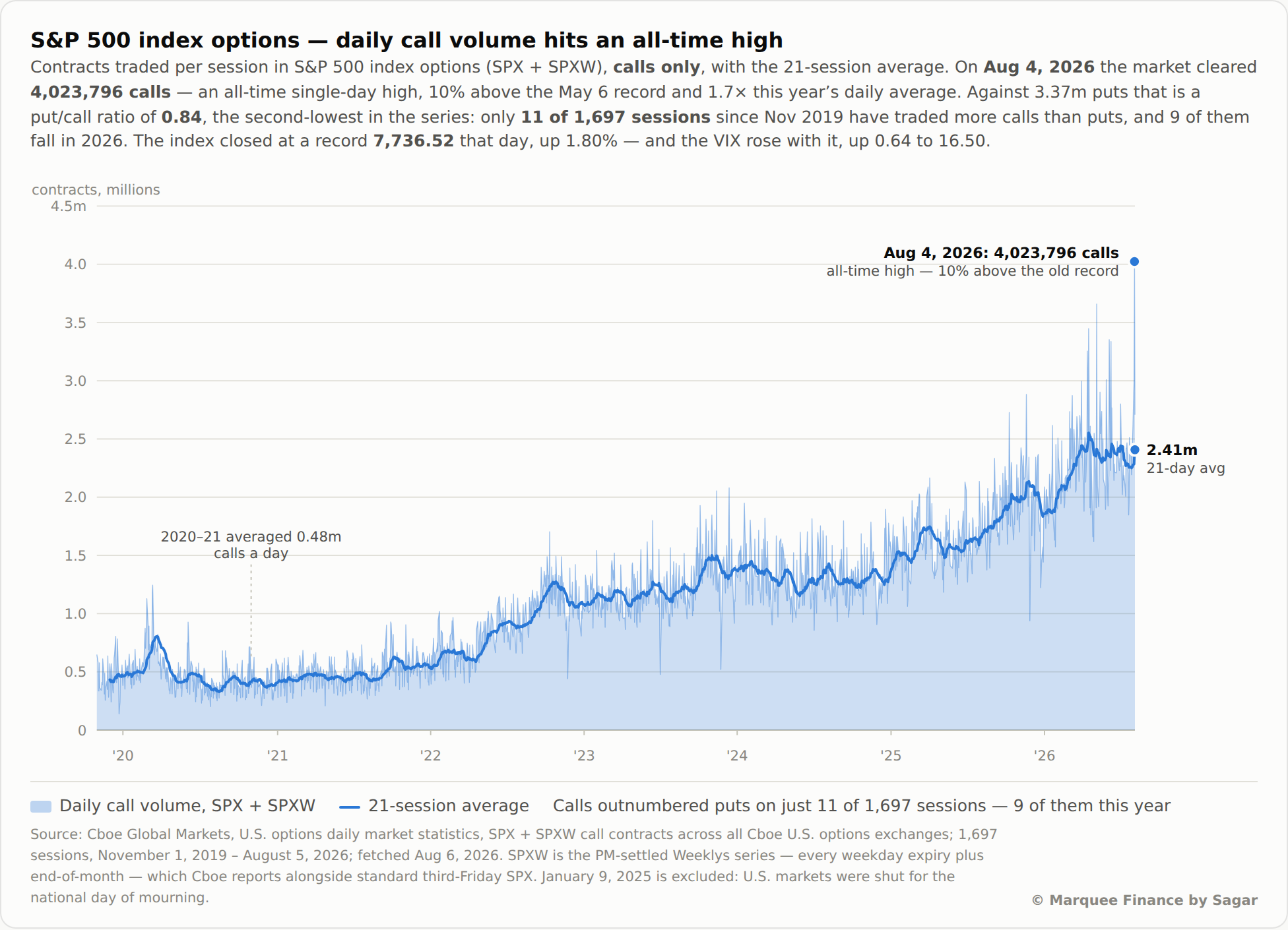
Speculative activity, along with “upside” hedging demand, led to an all-time high in S&P 500 call volume.
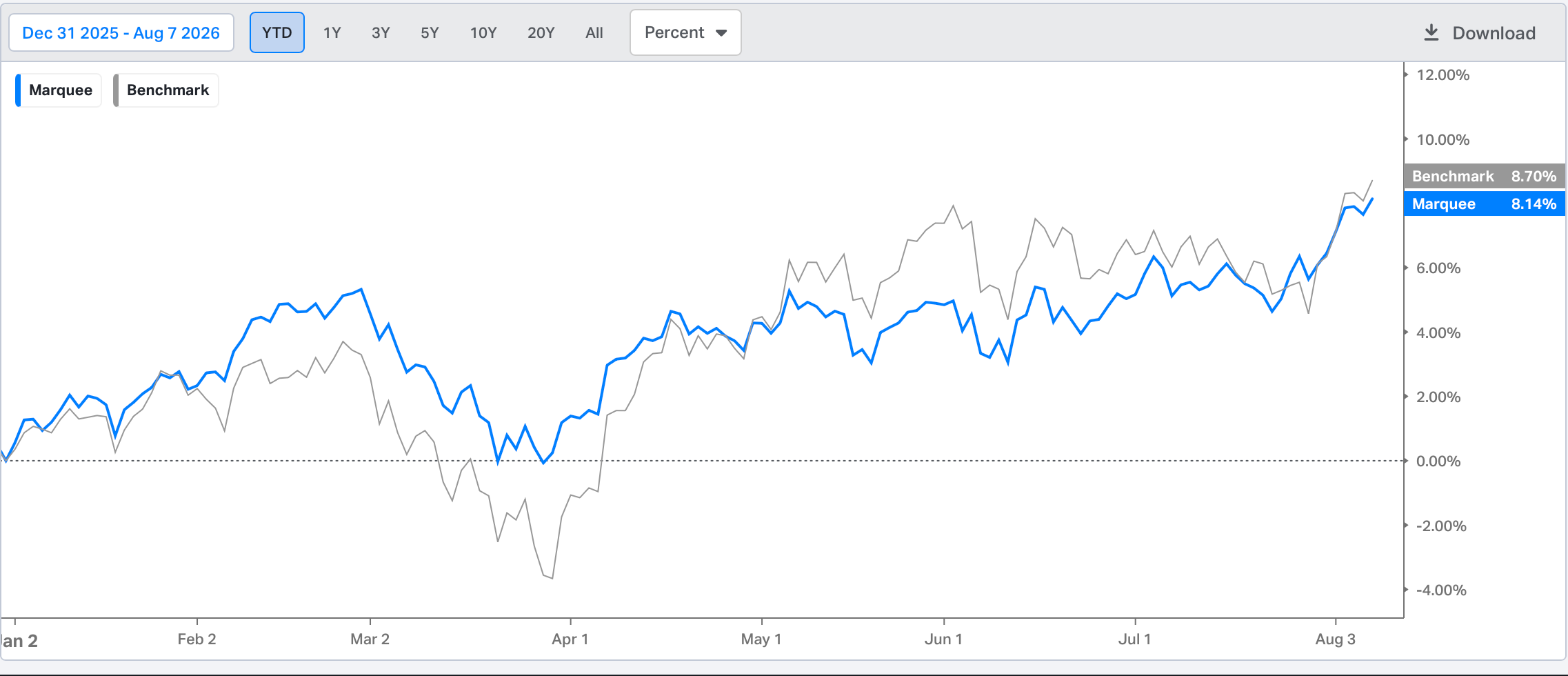
We were on the right side of the trade; however, our high cash allocation (12.5%) is responsible for the very slight underperformance against the benchmark.
PS: We are announcing a price increase for our subscription plans, driven by significant new features and upcoming updates. Starting August 15th, the monthly plan will increase from $ 29.99 to $ 39.99, and the annual plan will increase from $ 299.99 to $ 399.
Existing subscribers will “NOT” see any changes and will remain on their current plans.
Let’s take a deep dive into the macro universe and analyse the cross-asset price action!
US/Equities/Bonds/Gold/Oil/Dollar!
It was a data-heavy week in the US.
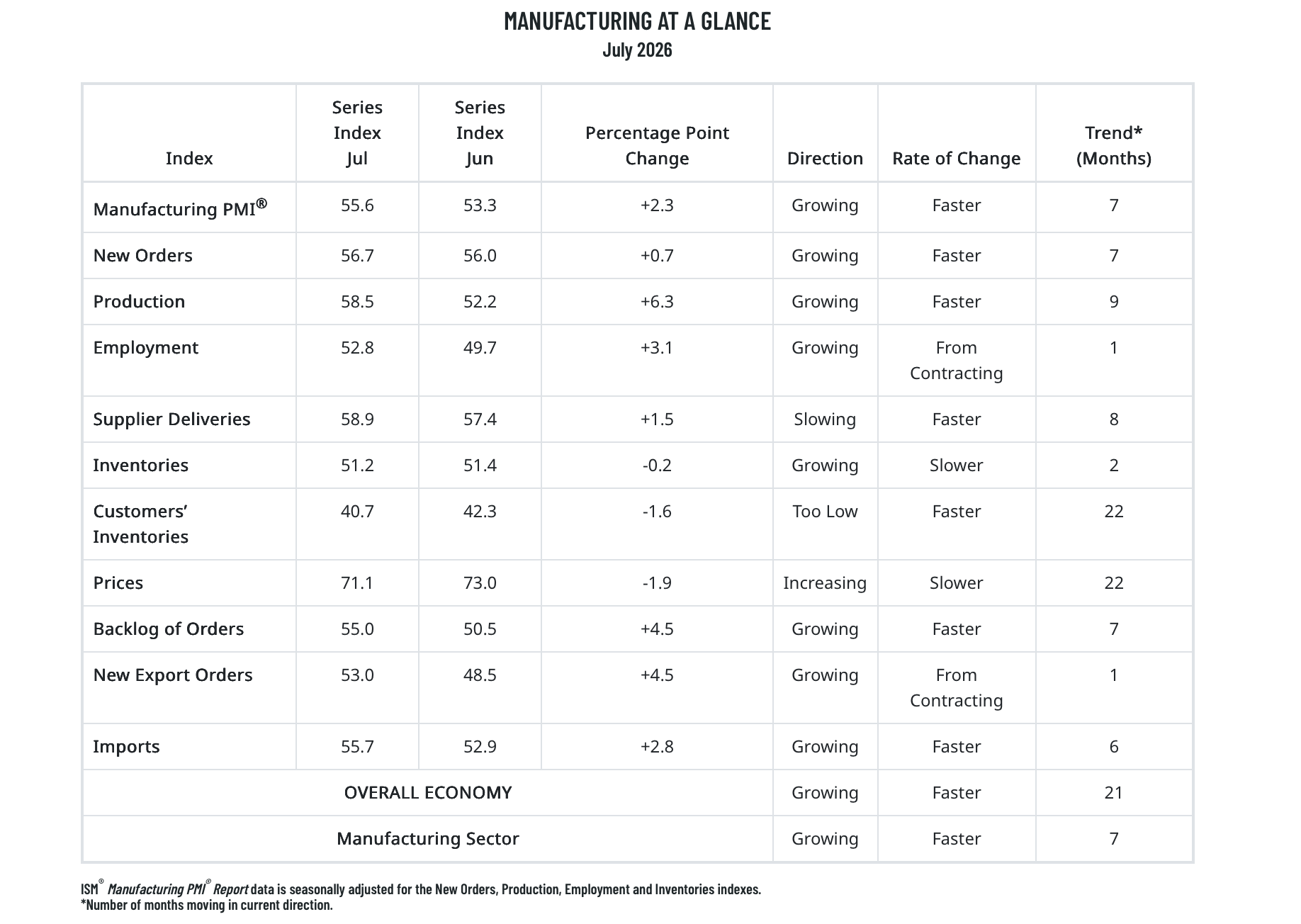
Our favourite cyclical indicator was released early this week. ISM Manufacturing was a massive beat, as the headline indicator came in at 55.6 vs the expected 53.9.
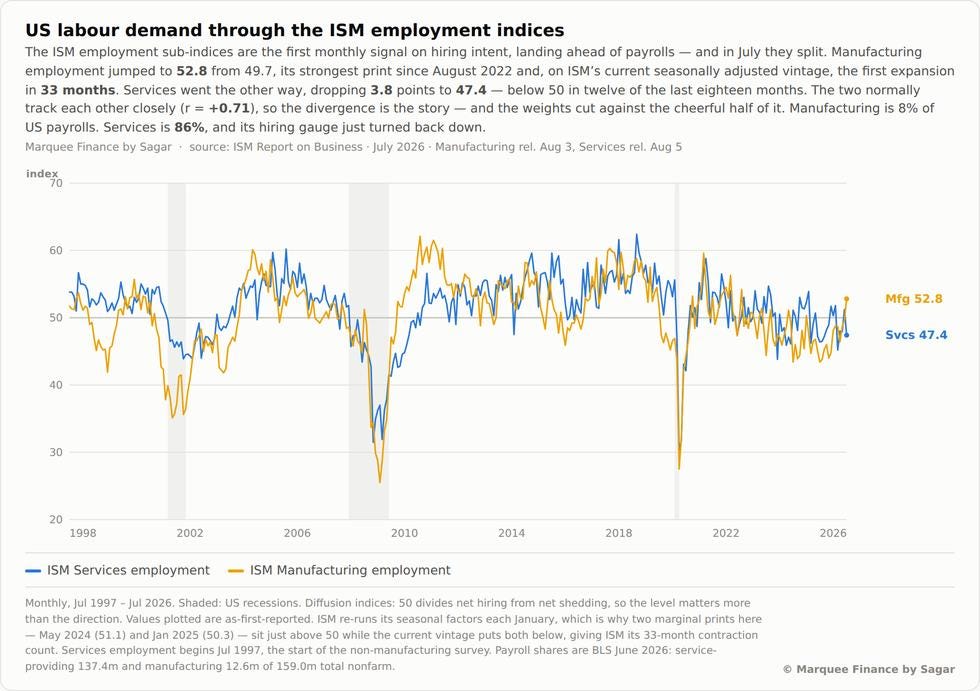
While it was a broad-based rise across components, the most encouraging print was the Employment component.
Notably, Employment PMI was the highest since August 2022 (a 4-year high).
Long-term readers are aware that New Orders Less Inventories is the gauge we track most closely, as it leads the headline index by a few months.
Over the last few months, we have been confident in a cyclical acceleration as the spread had risen.
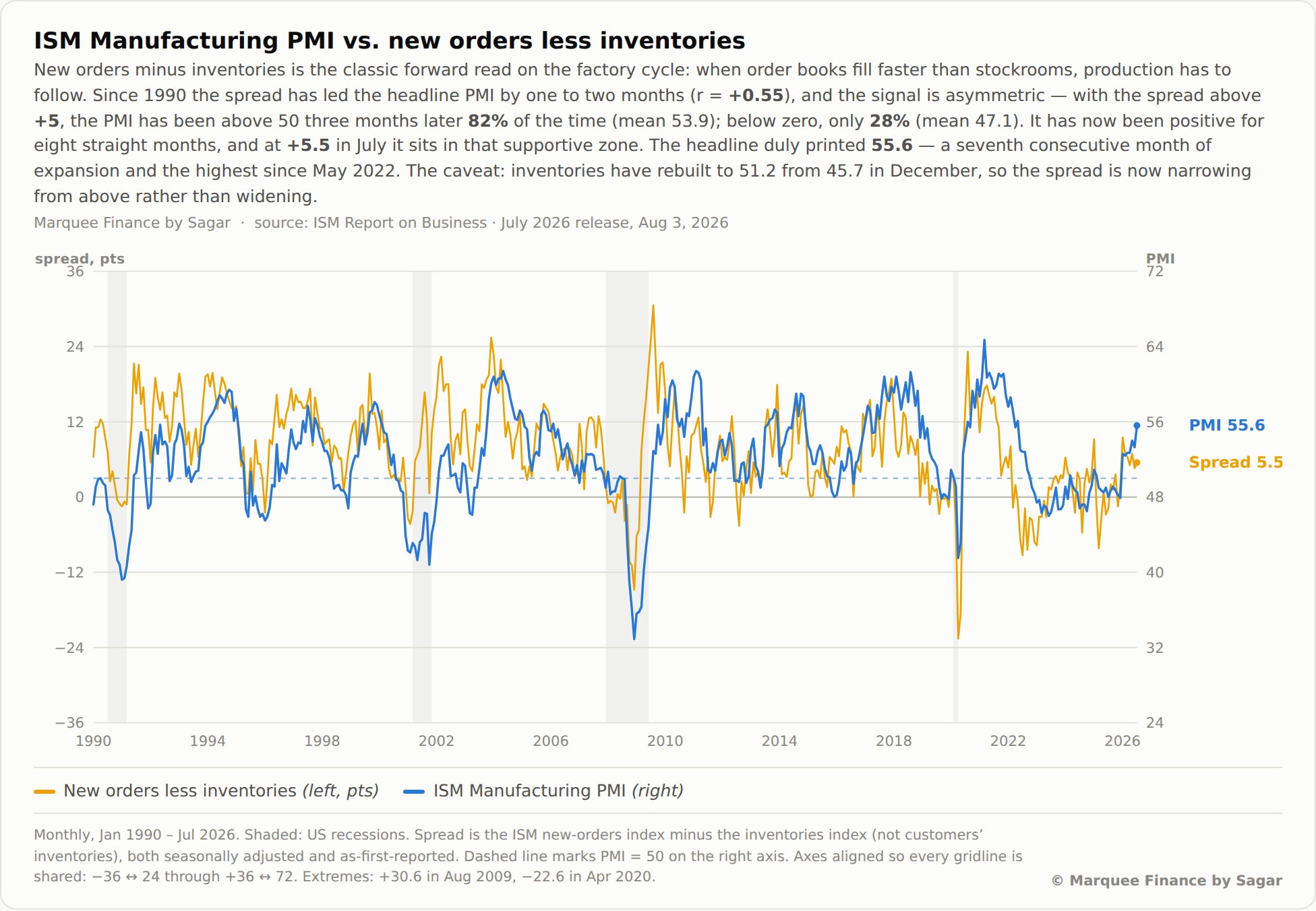
However, it seems the spread has now stalled, which can lead to a likely topping out of the headline ISM index.
ISM Services came in at 54.1 v/s expected 54.5.
The employment component came in softer than expected (in contraction zone), likely due to the end of the FIFA World Cup.
Furthermore, the prices paid rose again, which isn’t good news for the CPI.
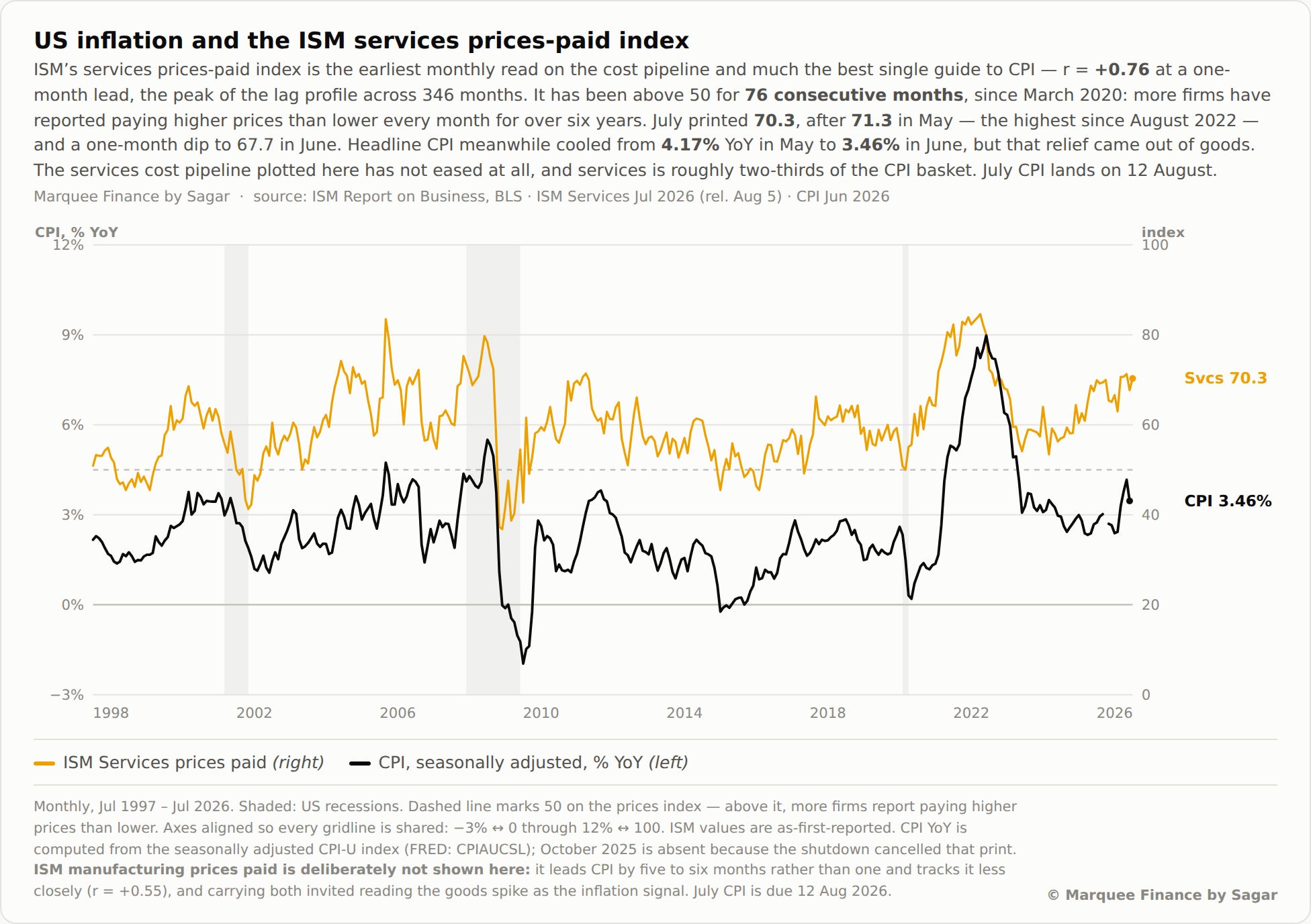
The CPI is highly correlated with the ISM Prices Paid, and the trend is once again upward, suggesting CPI might rebound (with a lag).
Labor Market!
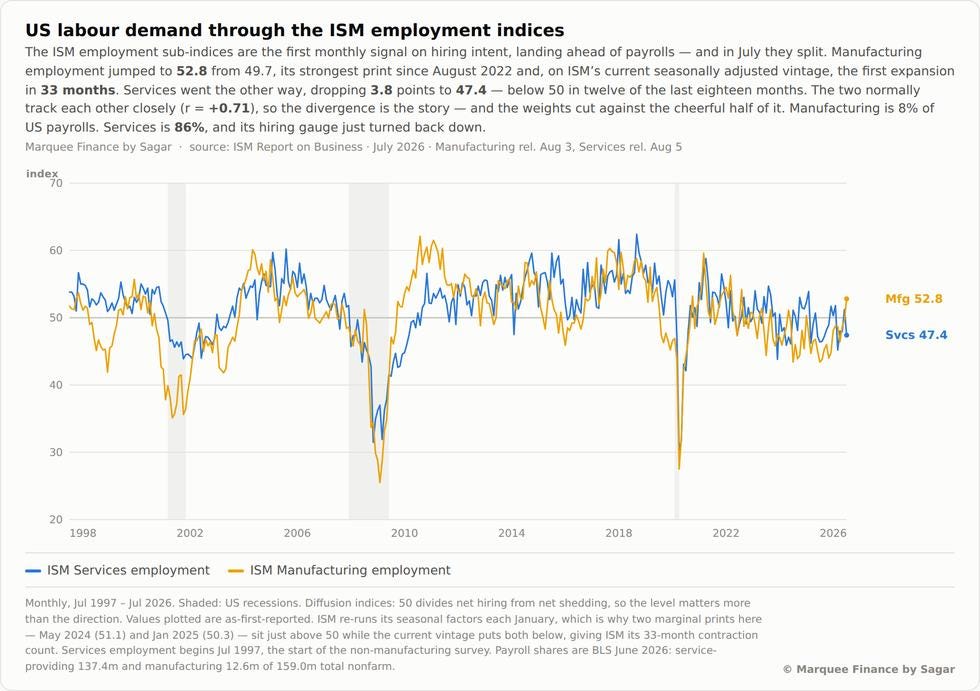
ISM Employment Indices: Undoubtedly, led by AI Capex, the Manufacturing job market is witnessing a renaissance, and thus ISM Manufacturing Employment has been surging lately. On the contrary, the Services Employment PMI has been struggling, and we will have a clear trend as the FIFA World Cup dominated the last few months.
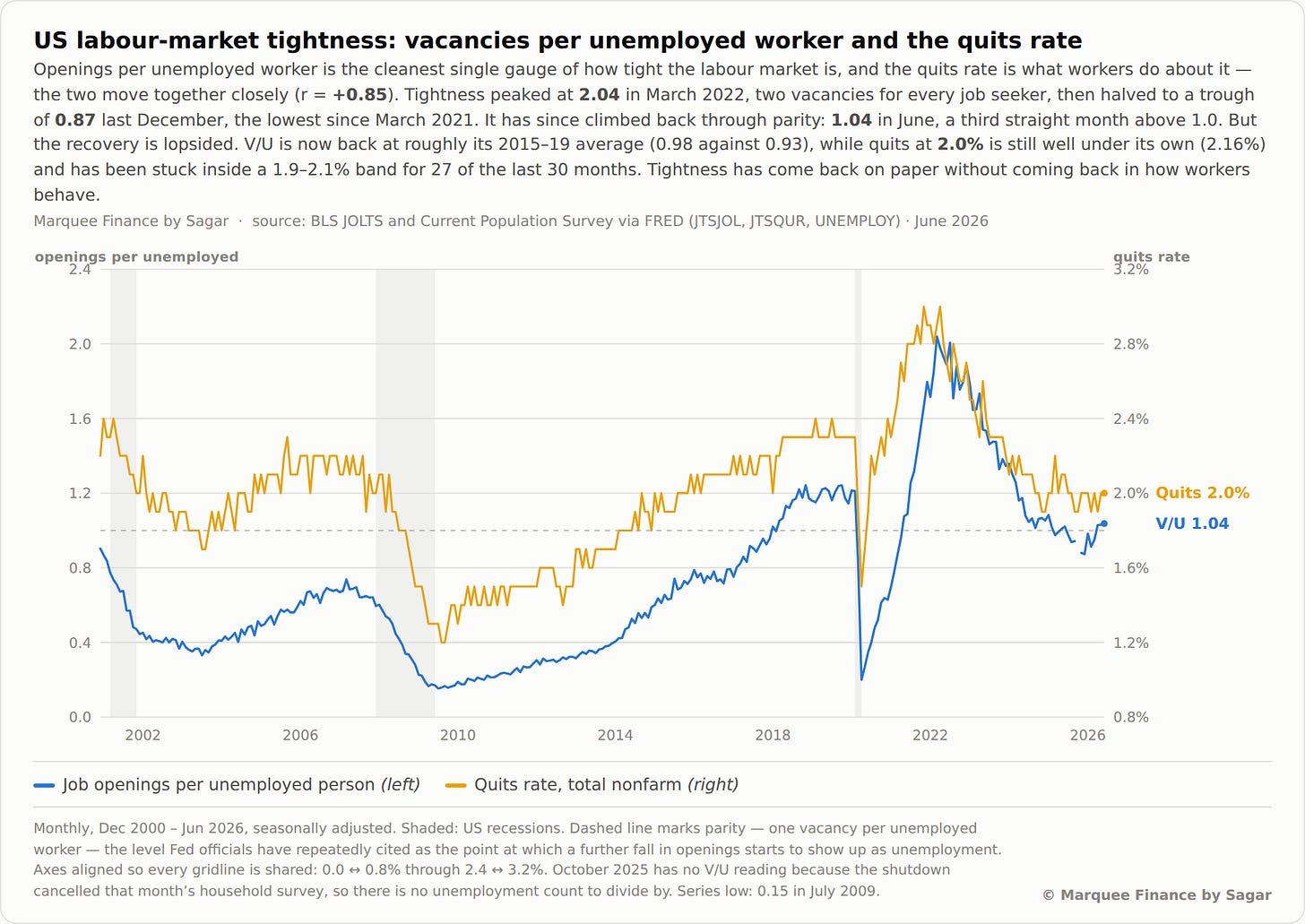
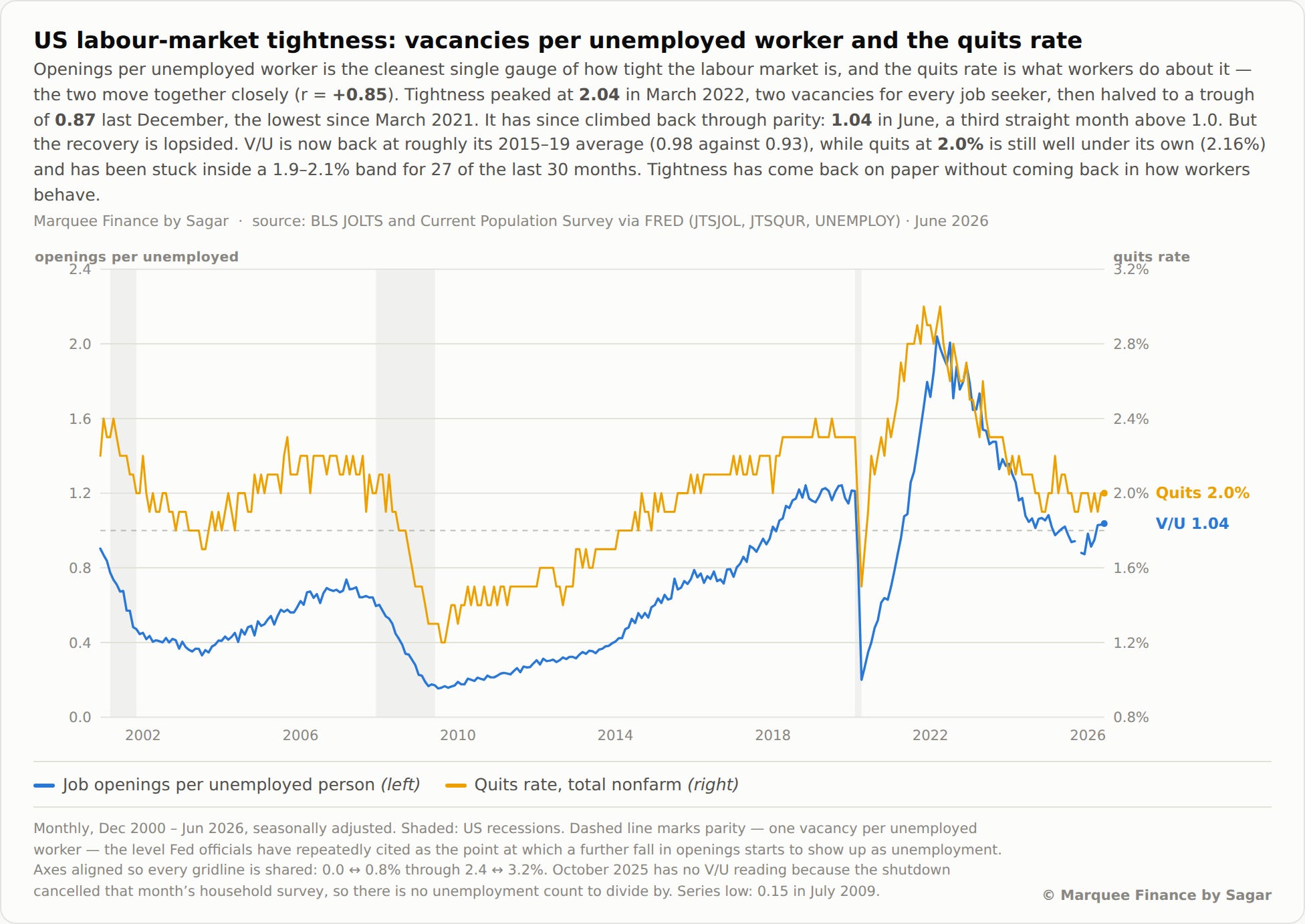
JOLTS-1: Under JayPo, the Fed’s favourite labour market indicator was Vacancies/Unemployed. The indicator bottomed out in December last year, which was also when we predicted a cyclical recovery. The labour market has since recovered, with the V/U ratio climbing back to 1.04. The Quits Rate is stable at 2%.
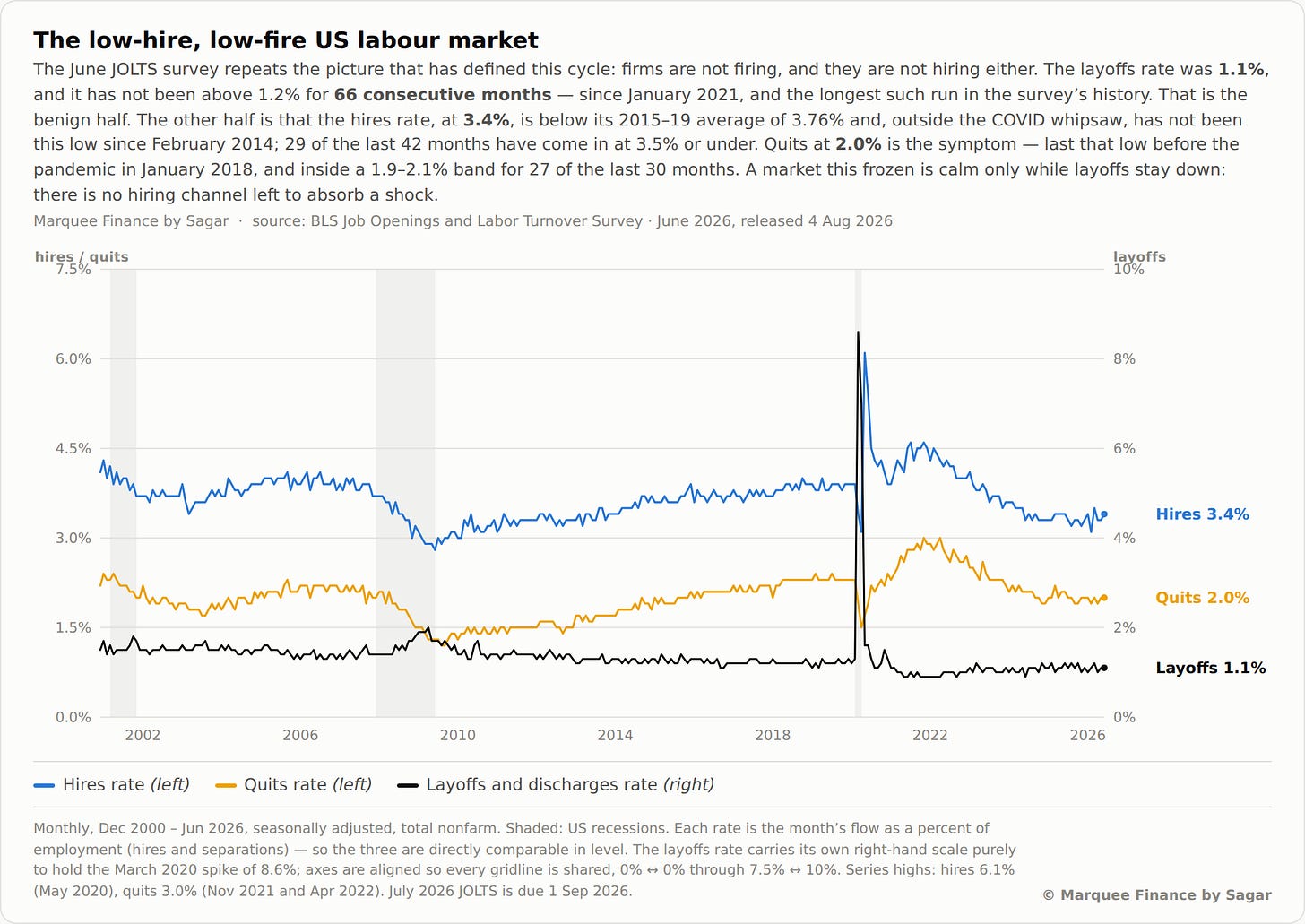
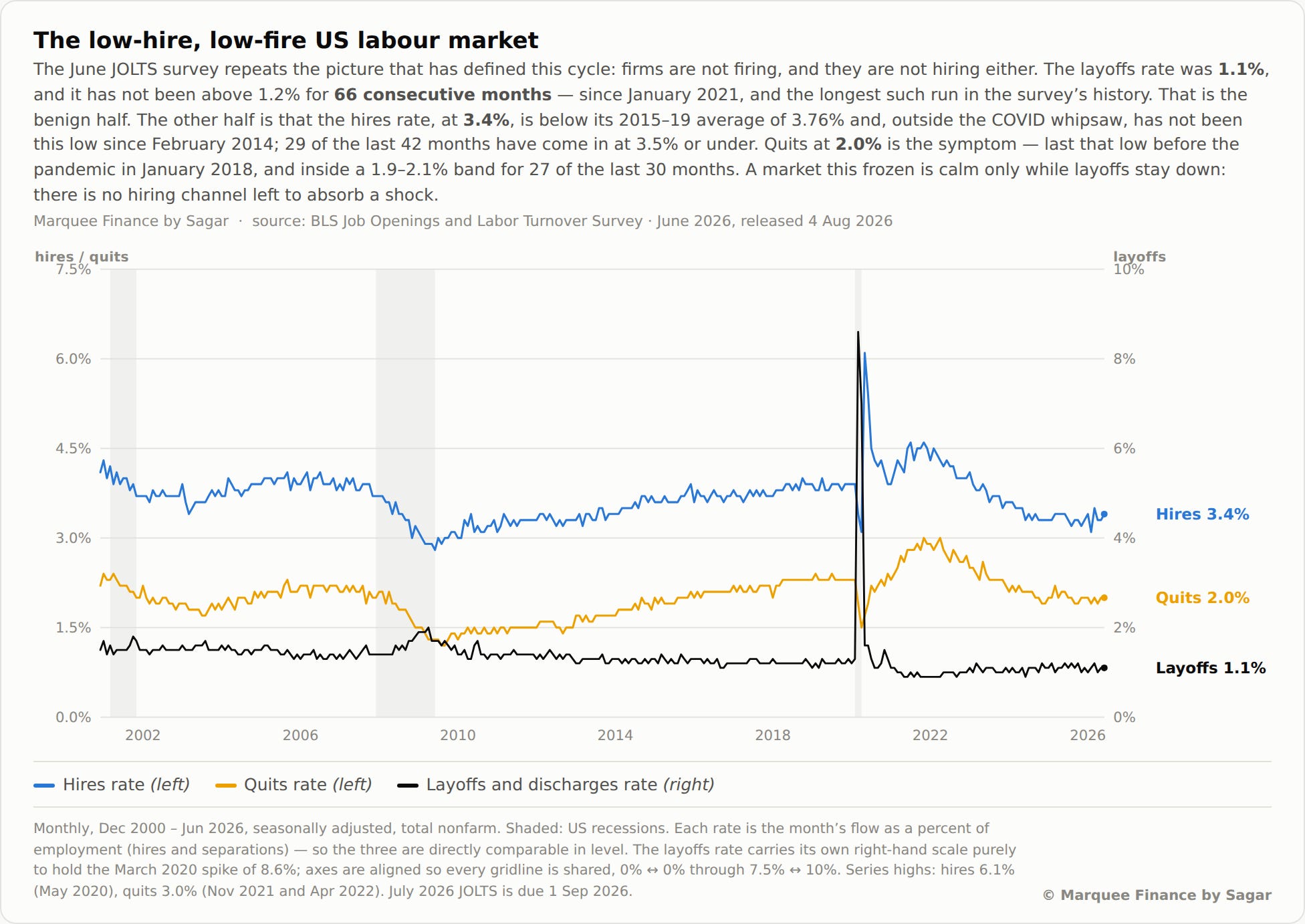
JOLTS-2: Labour market remains in the low-hire, low-fire mode with the layoffs rate at an abnormally low level of 1.1% and the hires rate at 3.4%. Both the hires and layoffs rates remain trendless despite the narrative of AI-led productivity gains.
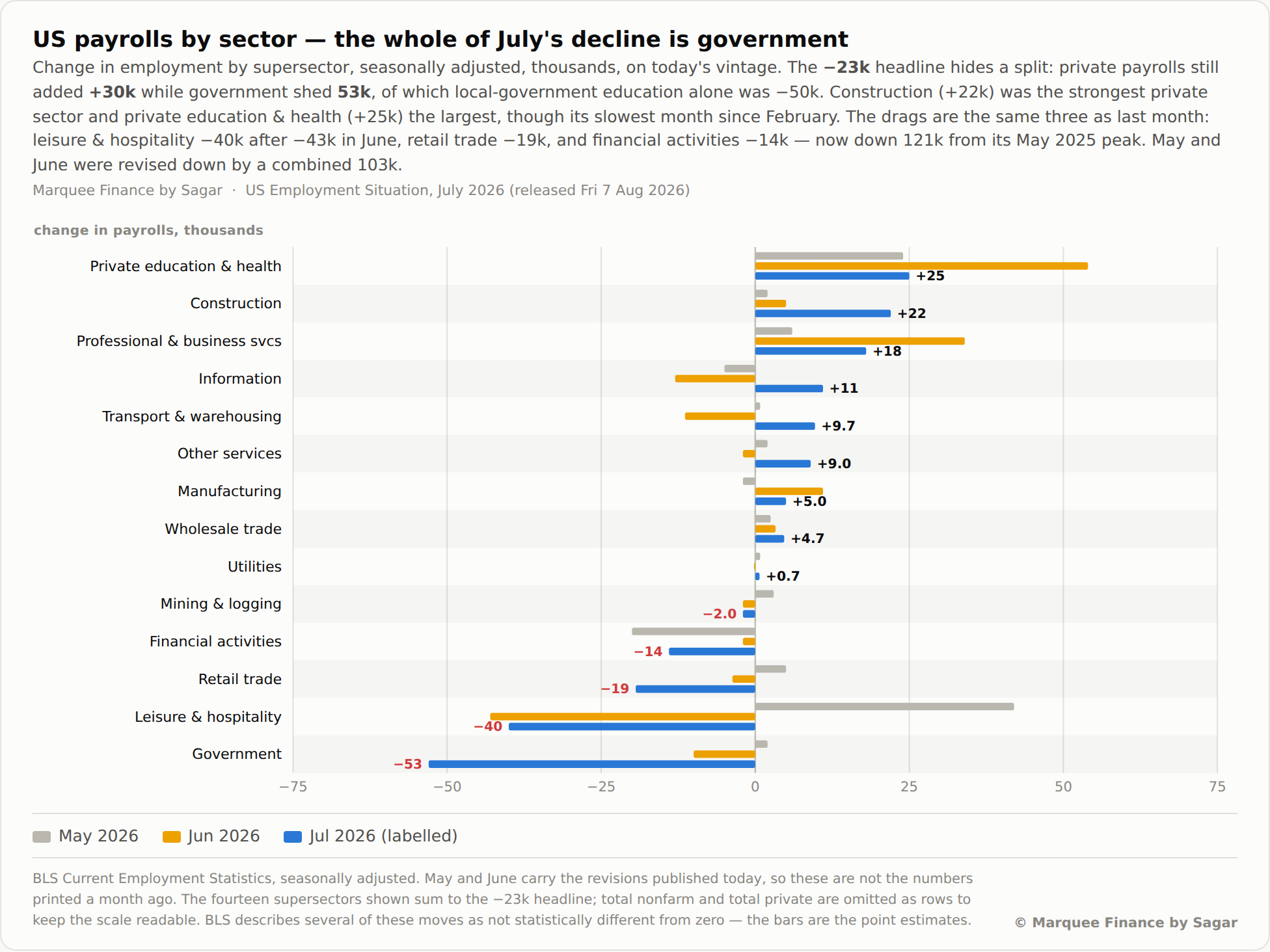
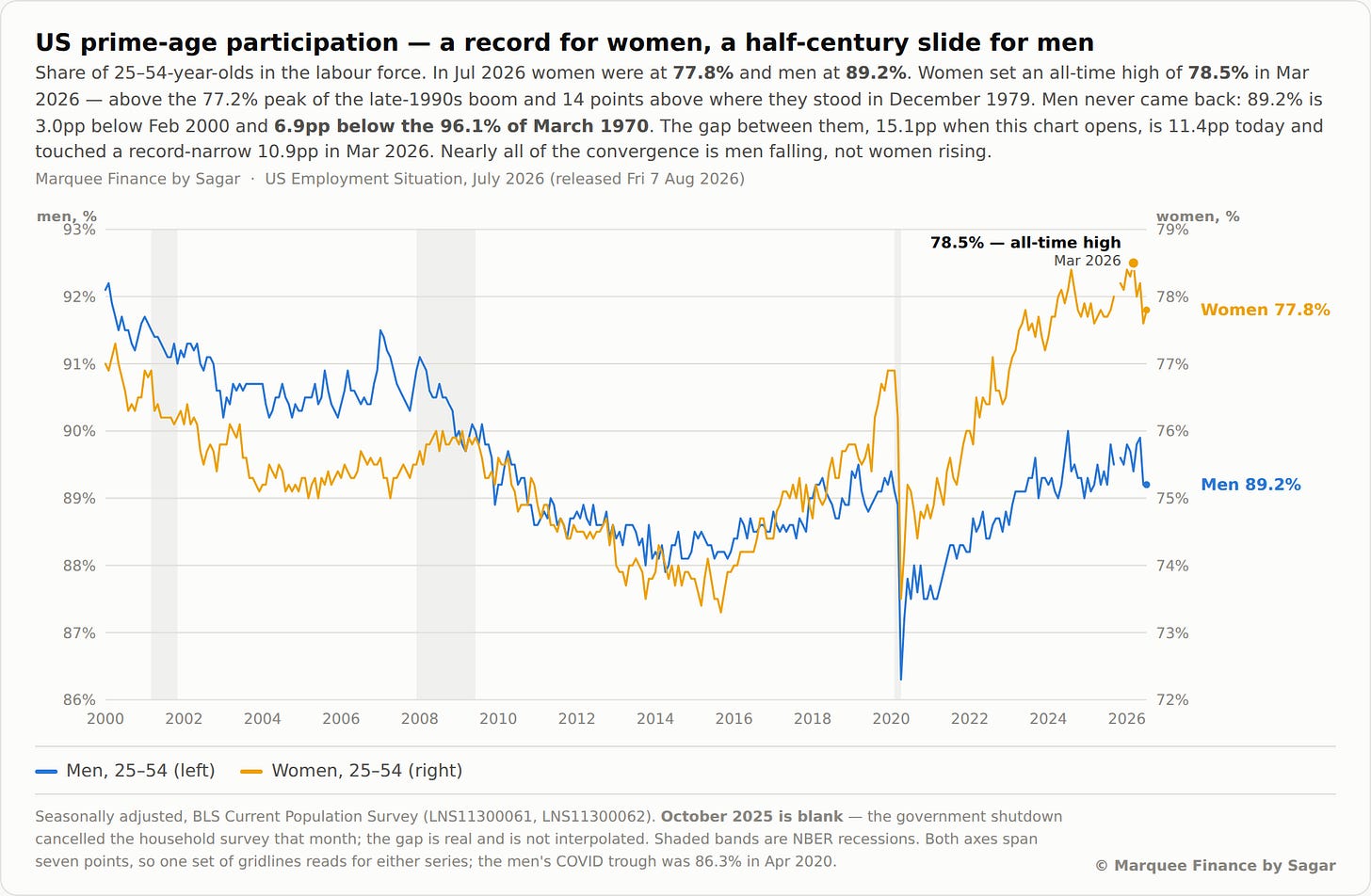
NFP-1: July’s payroll came in as a shocker with a negative 23k print. However, the Unemployment Rate fell to 4.1% despite a negative print and stark revisions. The reason was the Labour Force Participation Rate (LFPR), which fell to 61.9%. Digging further, prime-age participation fell for both men and women.
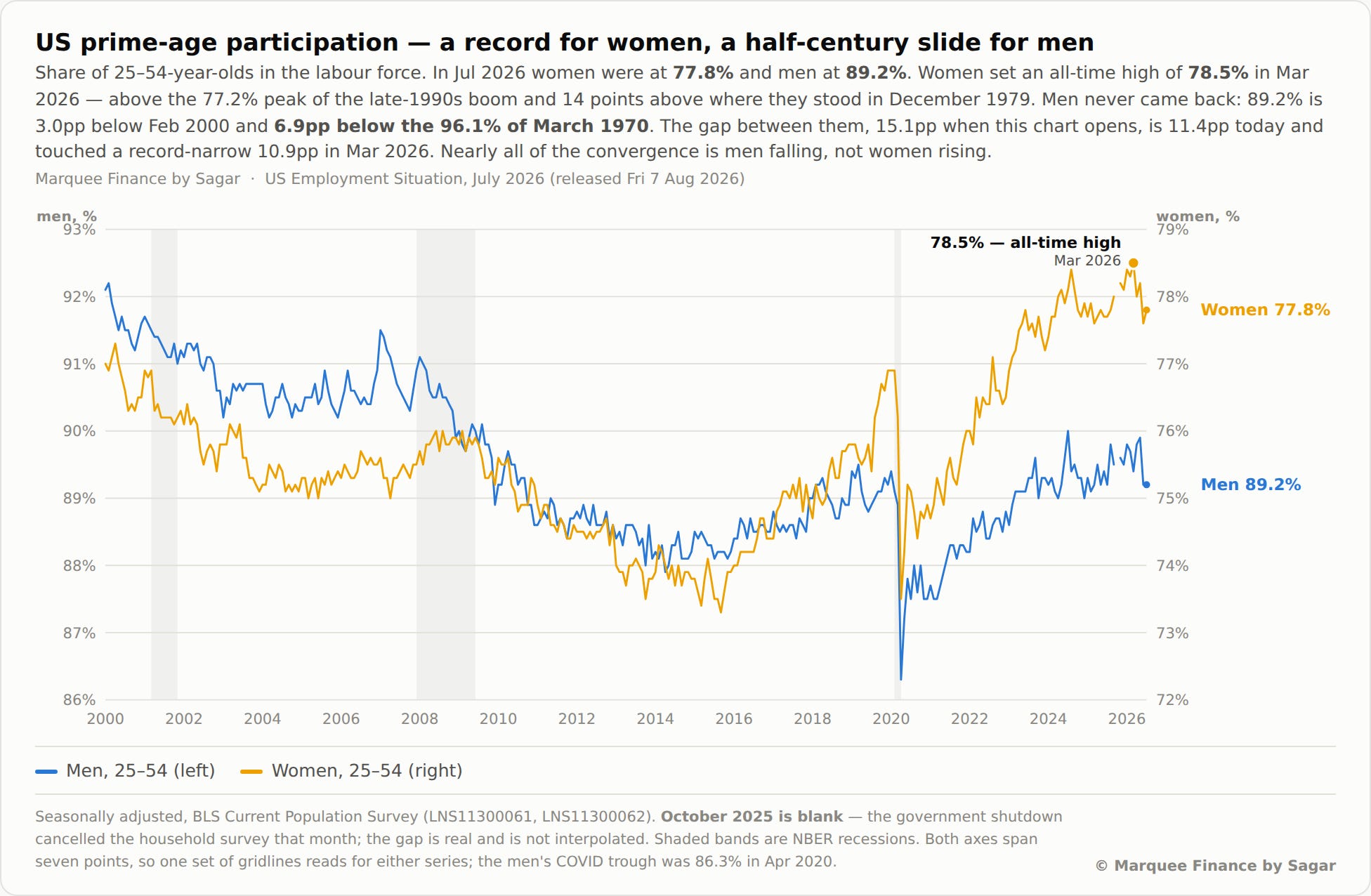
NFP-2: When we look at the sectoral contribution, the end of the FIFA World Cup and local government education were the two biggest reasons which led to job losses across the Leisure & Hospitality and Education sectors, respectively. Construction and manufacturing continue to report job gains despite a sluggish overall job market, suggesting a cyclical acceleration.
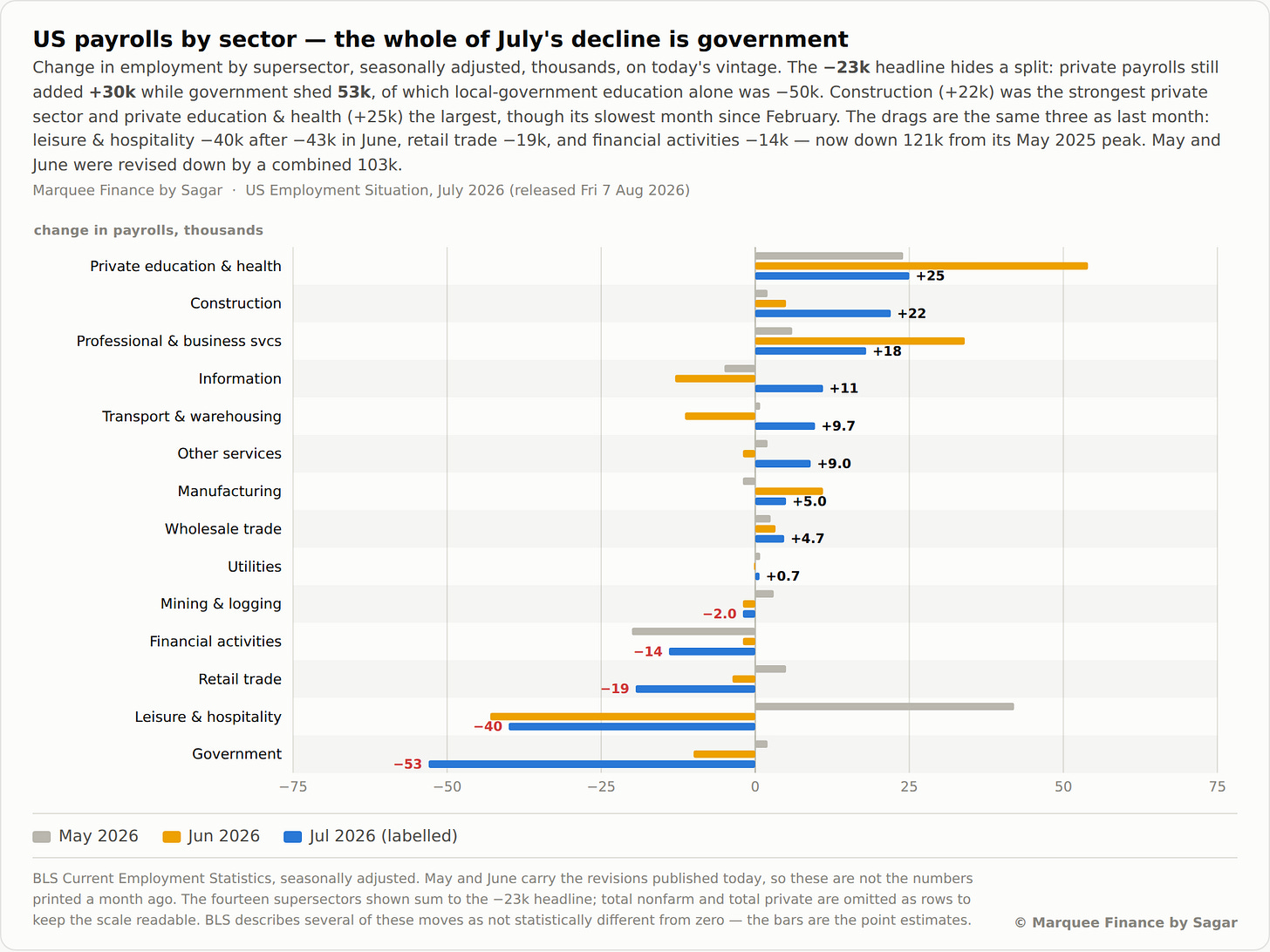
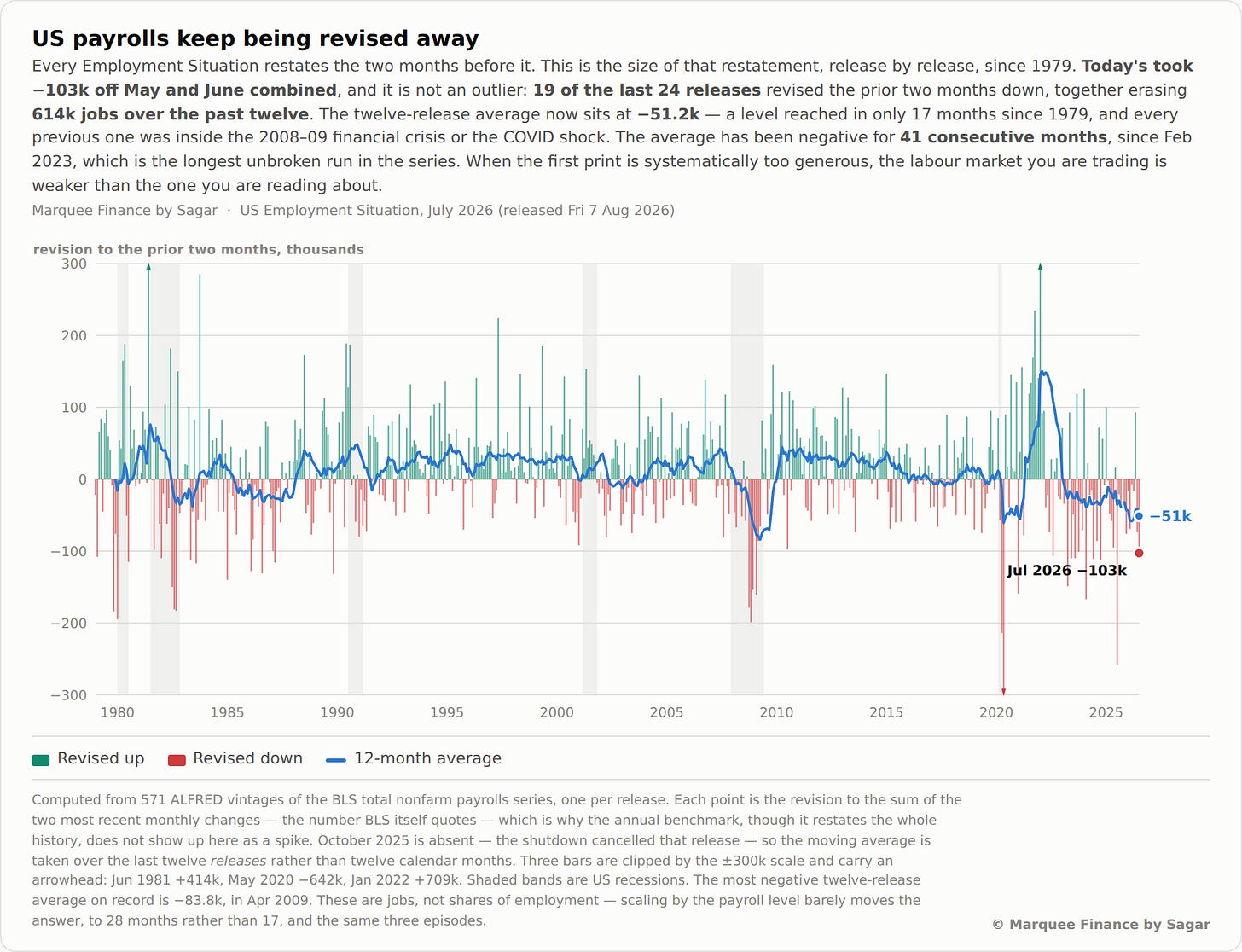
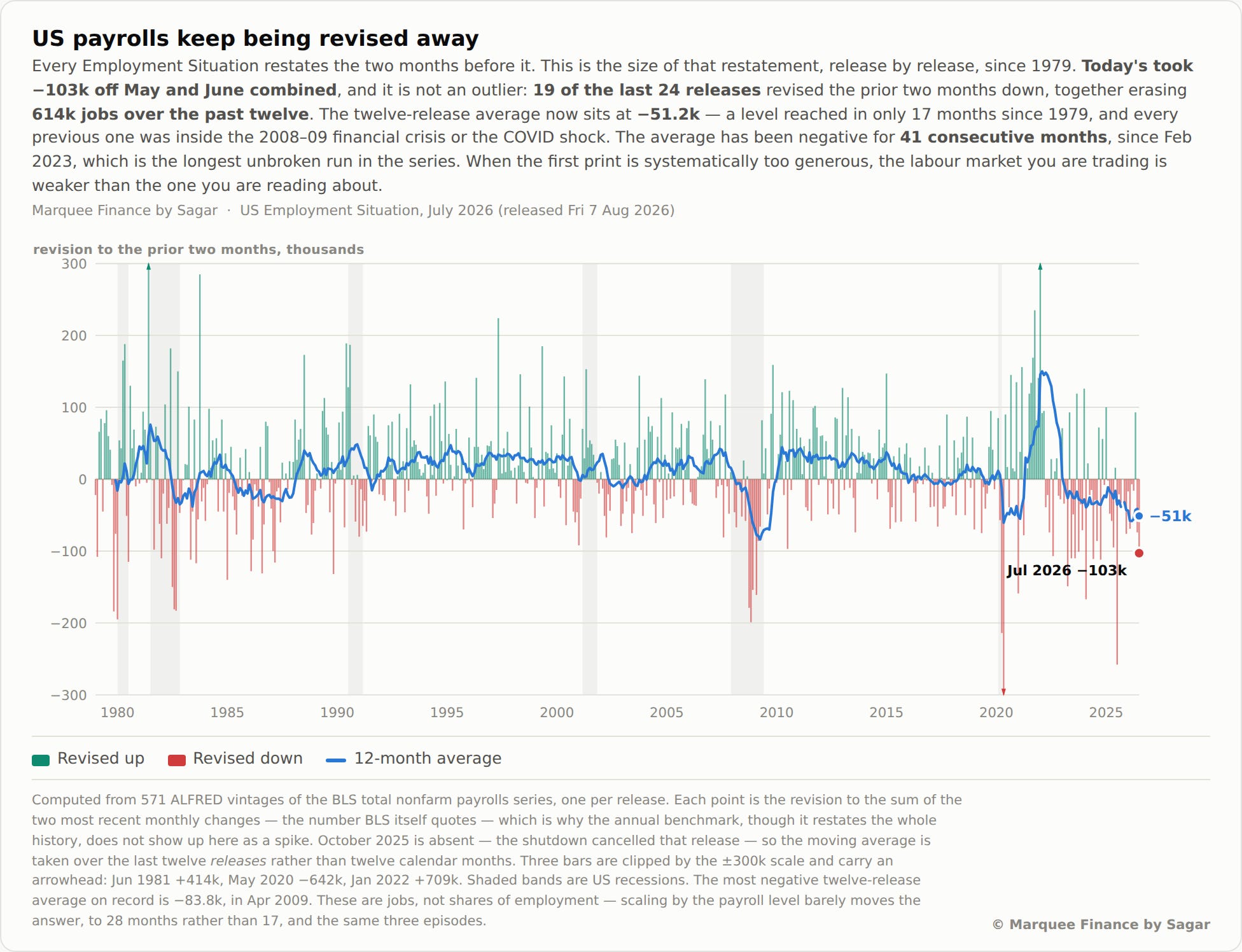
NFP-3: The revisions continue to trend lower. Yesterday’s revisions knocked off -103k jobs from both May and June combined. In a shocking stat, 19 of the last 24 releases have revised the prior two months.